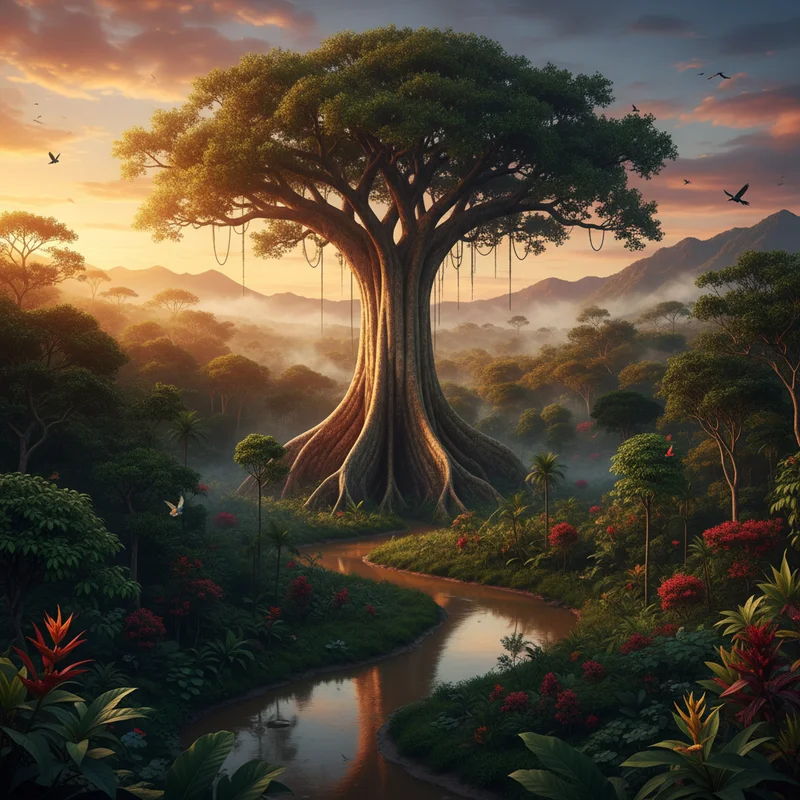

Amazon Rainforest
The Amazon Rainforest contains an estimated 10% of all known species on Earth, including approximately 40,000 plant species, 1,300 bird species, 3,000 fish species, and 2.5 million insect species. Scientists discover an average of one new species every two days in the Amazon basin. The forest floor alone contains more ant species than exist in the entirety of the British Isles. A single hectare of Amazonian forest may contain more tree species than all of North America combined.
The Yanomami territories harbour plants with medicinal properties still unknown to Western science. The Amazon River dolphin, the harpy eagle, the poison dart frog, and the giant otter represent merely the charismatic fraction of a biodiversity so overwhelming that complete cataloguing remains impossible. The forest's genetic library contains solutions to problems humanity has not yet learned to formulate.
Procrastination
Procrastination exhibits a taxonomic diversity that rivals any ecosystem. Behavioural psychologists have catalogued numerous subspecies including decisional procrastination, avoidant procrastination, arousal procrastination, and the recently identified revenge bedtime procrastination. Each variant demonstrates distinct behavioural markers and response patterns to intervention. The genus expands continuously as researchers identify new manifestations: precrastination (completing tasks too early to avoid thinking about them), productive procrastination (completing less important tasks to avoid more important ones), and meta-procrastination (procrastinating on implementing anti-procrastination strategies).
The supporting ecosystem of procrastination includes numerous symbiotic behaviours: unnecessary snacking, sudden interest in household organisation, compulsive social media checking, and the phenomenon of reading about productivity whilst avoiding productive work. This behavioural diversity suggests evolutionary adaptation to multiple environmental niches within human consciousness.