
Where Everything Fights Everything

Artificial Intelligence vs Dracula

😜 Just for fun — a tongue-in-cheek, gloriously unscientific showdown.

Artificial Intelligence

Artificial Intelligence

Machine learning systems slowly taking over mundane tasks.

VS
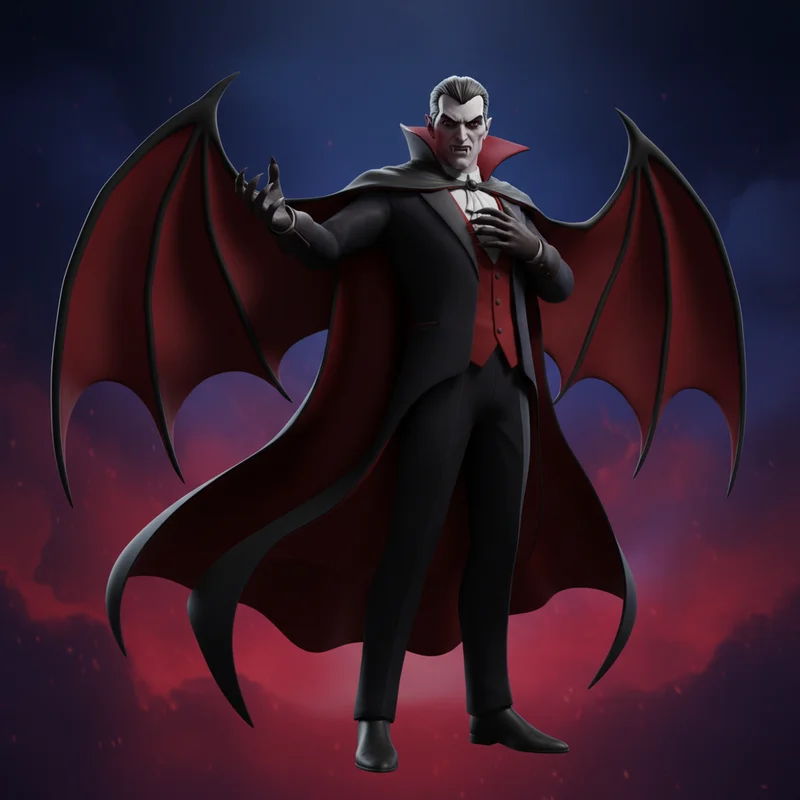
Dracula

Dracula

Original vampire count from Transylvania.

Battle Analysis

0 Artificial Intelligence Wins · 56%
56%
44%
Artificial Intelligence Dracula

Artificial Intelligence

Artificial intelligence demonstrates a remarkable capacity for adaptation that would leave evolutionary biologists in a state of profound contemplation. A neural network trained on Victorian literature before luncheon might find itself mastering quantum physics by teatime, all without complaint or existential crisis. The technology pivots seamlessly between languages, domains, and modalities with the casual indifference of a diplomat at a particularly tedious embassy function. When confronted with novel problems, AI systems retrain themselves with an efficiency that renders human learning curves embarrassingly primitive. This plasticity extends across hardware platforms, cloud environments, and even into edge devices the size of postage stamps.

Dracula

Count Dracula has demonstrated considerable adaptability over his five centuries of documented existence, transitioning from Wallachian warlord to sophisticated Transylvanian nobleman with admirable aplomb. His migration to London in 1897 required mastering English customs, property law, and the intricacies of British shipping logistics. However, the vampire's adaptation operates on geological timescales. The Count spent decades preparing for his English venture, studying maps and legal texts whilst AI systems accomplish similar feats in microseconds. His reluctance to embrace modern technology remains a documented weakness, and his inability to enter dwellings without invitation suggests certain categorical limitations to his flexibility.

VERDICT

Machine learning evolves hourly whilst the Count requires centuries to adopt new customs
1 Dracula Wins · 53%
47%
53%
Artificial Intelligence Dracula

Artificial Intelligence

Artificial intelligence has achieved remarkable penetration into the global consciousness within a remarkably compressed timeframe. From boardrooms in Singapore to coffee shops in Reykjavik, the term has become inescapable. Survey data indicates that upwards of ninety percent of adults in developed nations claim familiarity with the concept, though the depth of understanding varies considerably. The technology features prominently in governmental policy discussions, corporate strategy documents, and philosophical debates in equal measure. Yet this recognition remains somewhat abstract; the public struggles to identify specific AI systems with the intimacy reserved for cultural icons.

Dracula

Count Dracula represents perhaps the most successful personal branding exercise in literary history. Since Bram Stoker's 1897 novel, the character has spawned over two hundred film adaptations, countless theatrical productions, and merchandise sufficient to fill several Transylvanian castles. The name requires no explanation in any major language. Children who cannot locate Romania on a map nonetheless recognise the caped figure with pointed canines. The Count's image adorns breakfast cereals, educational materials, and decorations for an entire Western holiday. This universal recognition spans social classes, generations, and cultural boundaries with an efficiency that marketing executives study with barely concealed envy.

VERDICT

Dracula commands universal brand recognition spanning every inhabited continent since 1897
2 Artificial Intelligence Wins · 50%
50%
50%
Artificial Intelligence Dracula

Artificial Intelligence

Artificial intelligence provokes a distinctly modern form of terror that operates primarily through the intellect rather than the viscera. The technology threatens not bodily harm but obsolescence, rendering decades of human expertise irrelevant with each new model release. Corporate executives lose sleep contemplating algorithmic competition. Artists confront mechanical reproduction of their creative essence. The fear extends to civilisational scale: scenarios of superintelligent systems pursuing optimisation goals misaligned with human flourishing populate academic papers and science fiction alike. This existential menace lacks fangs yet proves no less potent for its subtlety.

Dracula

The Count operates through a primal intimidation that bypasses rational thought entirely. His mere presence triggers evolutionary fear responses encoded over millennia: the predator in darkness, the violation of bodily autonomy, the corruption of mortality itself. Dracula represents death that refuses its proper boundaries, consumption that transforms victim into perpetrator. The psychological architecture of vampire terror exploits fundamental human anxieties about infection, sexuality, and the loss of individual will. No algorithm, however sophisticated, can replicate the visceral response to crimson eyes emerging from shadow. The intimidation operates at depths untouched by technological advancement.

VERDICT

Both inspire existential dread through fundamentally different mechanisms of terror
3 Dracula Wins · 56%
44%
56%
Artificial Intelligence Dracula

Artificial Intelligence

Artificial intelligence as a formal discipline dates merely to 1956, though antecedents stretch somewhat earlier. Individual AI systems face rather more precarious lifespans; the average commercial model maintains relevance for perhaps eighteen months before superior successors render it obsolete. Hardware degrades, software dependencies shift, and training data grows stale. The technology persists through continuous replacement rather than individual endurance, a ship of Theseus perpetually under reconstruction. Whether this collective persistence constitutes true longevity remains a matter for philosophical debate. The field itself shows no signs of disappearance, yet no single AI has demonstrated multi-generational survival.

Dracula

Count Dracula presents documented existence spanning from his mortal life in the fifteenth century through his various literary and cinematic appearances to the present day. This five-century tenure establishes him as one of history's most enduring individual entities. Unlike artificial intelligence, the Count requires no upgrades, no maintenance cycles, no compatibility patches. His operational parameters remain stable across technological revolutions that have transformed every other aspect of human civilisation. The vampire's method of immortality, whilst requiring periodic biological inputs, has proven remarkably robust against the obsolescence that plagues technological systems. Barring stake-related incidents, his continuity appears indefinite.

VERDICT

Five centuries of verified existence outweighs seven decades of computing theory
4 Dracula Wins · 57%
43%
57%
Artificial Intelligence Dracula

Artificial Intelligence

Modern artificial intelligence systems consume electrical power at scales that would have seemed fantastical mere decades ago. Training a large language model generates carbon emissions equivalent to several transatlantic flights. Data centres housing AI infrastructure require cooling systems of industrial proportions, often situated near hydroelectric facilities or in arctic climates to manage thermal output. The computational demands continue accelerating with each generation of capability. Whilst efficiency improvements occur, they are consistently outpaced by appetite for greater processing power. The technology's environmental footprint has become a matter of increasing concern among researchers and policymakers alike.

Dracula

The Count's energy requirements demonstrate elegant biological efficiency. A single human provides sufficient sustenance for extended periods of activity, and the vampire's documented ability to enter dormancy reduces ongoing consumption to negligible levels. No cooling systems, no electrical infrastructure, no rare earth minerals extracted through environmentally questionable means. The predator-prey relationship, whilst ethically problematic, achieves a carbon neutrality that modern technology struggles to approximate. Dracula's operational model has sustained itself across five centuries without discernible resource depletion, a sustainability record that would satisfy the most exacting environmental standards.

VERDICT

Haemoglobin extraction requires rather less infrastructure than server farms
👑

The Winner Is

Dracula

Takes 3 of 5 rounds

Artificial intelligence claims victory through its superior adaptability and practical dominance of contemporary infrastructure, though the margin proves narrower than technological triumphalists might prefer. The Count's unassailable longevity, brand recognition, and elegant efficiency demonstrate that centuries of refinement produce their own form of optimisation. Where AI must continuously reinvent itself to maintain relevance, Dracula has achieved a stable equilibrium requiring minimal intervention. Yet in the present moment, artificial intelligence shapes more decisions, influences more outcomes, and commands more resources than any literary vampire, however immortal. The future belongs to algorithms, at least until darkness falls.

Share this battle

More Comparisons