
Where Everything Fights Everything

Artificial Intelligence vs Rocket

😜 Just for fun — a tongue-in-cheek, gloriously unscientific showdown.

Artificial Intelligence

Artificial Intelligence

Machine learning systems slowly taking over mundane tasks.

VS
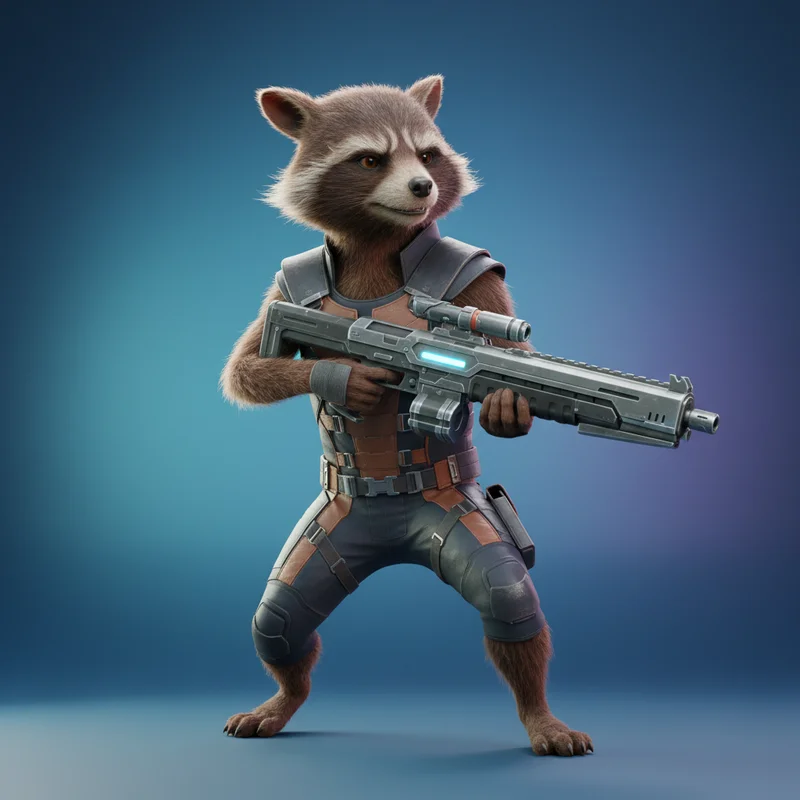
Rocket

Rocket

Spacecraft propulsion system reaching for the stars.

Battle Analysis

0 Artificial Intelligence Wins · 53%
53%
47%
Artificial Intelligence Rocket

Artificial Intelligence

The phenomenon of artificial intelligence has achieved a rather extraordinary position in the global consciousness. From the corridors of academic institutions to the kitchen tables of suburban households, the mere utterance of 'AI' triggers immediate recognition. Corporate boardrooms speak of it with reverence typically reserved for deities. Politicians invoke its name when seeking to appear forward-thinking. The technology has infiltrated public awareness with the quiet persistence of morning fog, until suddenly one realises visibility has changed entirely. Even those who cannot articulate what machine learning actually entails will nod knowingly at its mention, having absorbed through cultural osmosis a vague understanding that something significant is afoot.

Rocket

The rocket occupies a cherished position in human imagination, its silhouette instantly recognisable across all cultures and generations. Children draw its pointed form before they can spell; nations have built entire identities around their rocket programmes. The image of a rocket ascending through clouds has become shorthand for progress itself, adorning everything from cryptocurrency logos to vitamin packaging. Yet this recognition, whilst profound, remains somewhat static. The rocket's place in public consciousness was largely cemented during the Space Race, and whilst SpaceX has renewed interest, the concept itself has not expanded its cultural footprint in the manner of more invasive technologies. One admires rockets from afar; one lives with artificial intelligence.

VERDICT

Both command worldwide attention, yet one increasingly permeates daily discourse
1 Artificial Intelligence Wins · 75%
75%
25%
Artificial Intelligence Rocket

Artificial Intelligence

The integration of artificial intelligence into quotidian existence has proceeded with such thoroughness that most humans are now quite unaware of how often they defer to algorithmic judgement. The morning begins with AI-curated news feeds. Navigation applications shepherd millions through traffic. Email applications complete sentences on one's behalf, occasionally with alarming accuracy. Streaming services anticipate entertainment preferences with uncanny precision. Customer service enquiries are fielded by chatbots of increasing sophistication. The spell-checker, the recommendation engine, the fraud detection system quietly protecting one's bank account - all manifestations of artificial intelligence woven so deeply into the fabric of modern life that extraction would prove catastrophically disruptive.

Rocket

The rocket, for all its magnificence, remains a rather exclusive technology. The average human will pass their entire existence without directly utilising rocket propulsion for any purpose whatsoever. Satellite television and GPS represent indirect benefits, yet the rocket itself sits firmly in the category of 'observed from considerable distance.' One cannot summon a rocket to assist with spreadsheet calculations or recommend a restaurant for dinner. The technology serves humanity admirably in aggregate whilst touching individual lives only through intermediary systems. This is not a criticism - merely an observation that daily utility was never the rocket's intended purpose. It exists for grander, less frequent occasions.

VERDICT

Frequency of interaction reveals a rather dramatic disparity in practical application
2 Rocket Wins · 53%
47%
53%
Artificial Intelligence Rocket

Artificial Intelligence

Artificial intelligence presents a peculiar form of intimidation that operates largely in the abstract. The fear it engenders is philosophical rather than physical - a dawning comprehension that the boundaries between human and machine intelligence grow increasingly ambiguous. Employment anxiety permeates discussions, as workers contemplate their potential obsolescence. Scientists of considerable reputation have issued warnings about existential risks with straight faces. The intimidation factor is perhaps amplified by incomprehension; one cannot observe an algorithm in operation as one might observe a predator. The threat, if threat it be, arrives through spreadsheets and probability calculations rather than sound and fury. This makes it no less potent, merely differently terrifying.

Rocket

The rocket achieves intimidation through magnificently direct means. The sound of launch - that apocalyptic rumbling that resonates in the chest cavity before reaching the ears - registers on a primal level that bypasses rational thought entirely. Flames powerful enough to illuminate the countryside in broad daylight announce the violence of the endeavour. The rocket's earliest iterations were, quite literally, weapons of war, and this heritage remains legible in every launch. One cannot witness a rocket ascending without some unconscious acknowledgement that the forces involved would vaporise human tissue with casual indifference. The intimidation is honest, immediate, and requires no explanation. The rocket terrifies because it is genuinely terrifying.

VERDICT

Raw visceral terror competes with creeping existential dread
3 Artificial Intelligence Wins · 63%
63%
37%
Artificial Intelligence Rocket

Artificial Intelligence

The adaptability of artificial intelligence approaches the miraculous. A technology initially conceived for narrow calculations now composes music, diagnoses medical conditions, generates legal documents, creates visual art, predicts protein folding, and engages in philosophical discourse of questionable but improving quality. The same foundational principles apply across domains with modifications that seem almost casual in their simplicity. Train on legal texts, receive a legal assistant; train on medical literature, receive a diagnostic tool. This plasticity has transformed AI from a specialist technology into something approaching a universal solvent for cognitive tasks. No other technology in human history has demonstrated such promiscuous applicability across fundamentally dissimilar domains.

Rocket

The rocket, by contrast, excels through magnificent specialisation. Its purpose is movement through or beyond atmosphere, and this purpose it fulfils with extraordinary competence. Yet one cannot readily repurpose a rocket for agriculture, entertainment, or medical intervention. The adaptations that do occur - varying payload capacity, fuel types, landing capabilities - represent refinements within a fixed conceptual framework rather than fundamental reimagining. This is not a design flaw but a design feature; the rocket achieves its specific goals precisely because it does not attempt to achieve others. The laser focus of rocket engineering produces launch vehicles of remarkable capability, but capability confined to a relatively narrow operational envelope.

VERDICT

Flexibility of application reveals fundamentally different design philosophies
4 Artificial Intelligence Wins · 64%
64%
36%
Artificial Intelligence Rocket

Artificial Intelligence

Artificial intelligence systems certainly consume substantial electrical power - data centres housing large language models require megawatts of continuous supply, prompting legitimate environmental concerns. Yet the energy expenditure occurs for processing tasks that would otherwise require far greater human effort, measured in person-hours rather than kilowatt-hours. The efficiency gains become apparent when one considers alternatives: the energy required to train a million humans to perform medical diagnoses versus training a single model. The calculation remains imperfect, the comparison complicated, but artificial intelligence represents at minimum an attempt to achieve cognitive outcomes without proportional biological infrastructure. Efficiency trends favour continued improvement as hardware advances.

Rocket

The rocket's relationship with energy efficiency can only be described as combative. Launching mass beyond Earth's gravitational influence requires energy expenditure that verges on the profligate - vast quantities of fuel consumed to lift other fuel which itself will be consumed. The tyranny of the rocket equation ensures that efficiency improvements, whilst celebrated, occur within inherently wasteful parameters. A typical launch vehicle discards most of its own mass during ascent. The exhaust plume represents energy converted to heat with cheerful abandon. This is not poor engineering but honest physics; escaping a gravity well simply costs what it costs. Reusable rockets have improved matters, yet the fundamental thermodynamic challenge remains formidable.

VERDICT

Power consumption reveals contrasting relationships with thermodynamic reality
👑

The Winner Is

Artificial Intelligence

Takes 4 of 5 rounds

After rigorous examination across multiple dimensions, artificial intelligence emerges with a modest but meaningful advantage. The victory owes little to any inherent superiority and much to the particular criteria selected for evaluation. The rocket remains peerless in its domain - no amount of algorithmic sophistication will propel a satellite into orbit. Yet when assessed against measures of daily integration, adaptive capability, and spreading influence, artificial intelligence demonstrates broader applicability to the human condition as presently constituted. This represents a victory of ubiquity over magnificence, of quiet infiltration over spectacular announcement. The outcome would likely reverse entirely were the criteria adjusted to favour physical achievement over cognitive integration.

Share this battle

More Comparisons