Topic Battle

Where Everything Fights Everything

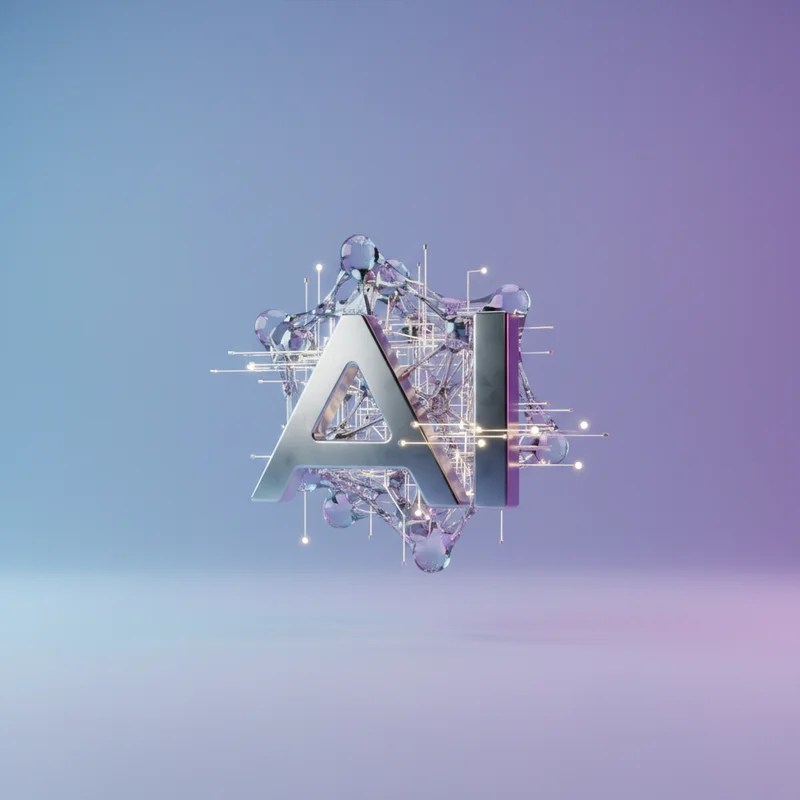
Artificial Intelligence

Artificial Intelligence

Machine learning systems slowly taking over mundane tasks.

VS
The Moon

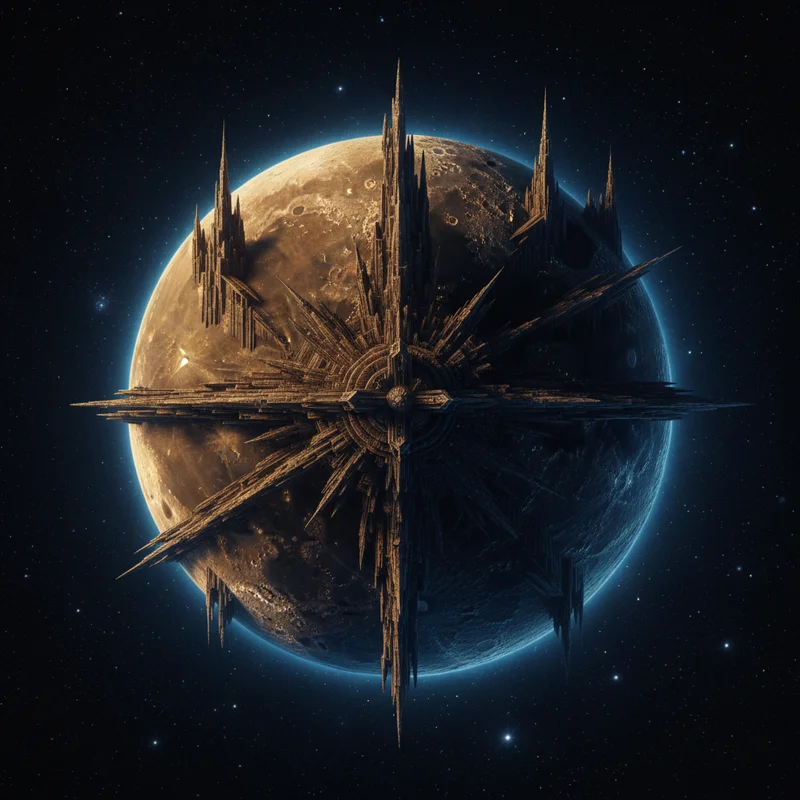
The Moon

Earth's natural satellite and space race destination.

Battle Analysis

Reliability The Moon Wins
30%
70%
Artificial Intelligence The Moon

Artificial Intelligence

AI systems exhibit a peculiar form of unreliability that researchers term 'hallucination'—the confident generation of plausible falsehoods. Machine learning models require constant retraining as data distributions shift. Server outages render AI services entirely inoperative. Algorithmic bias produces systematic errors affecting marginalised populations. The field's rapid advancement means that systems become obsolete within years, sometimes months. Even the most sophisticated models produce inconsistent outputs, their behaviour remaining partially opaque to their creators.

The Moon

The Moon has maintained its orbital parameters with metronomic precision for billions of years. Lunar eclipses can be predicted centuries in advance with accuracy measured in seconds. The tidal schedule publishes years ahead, and the Moon has never failed to appear for a scheduled moonrise. Its surface features have remained essentially unchanged since humans first documented them. Whilst it recedes from Earth at approximately 3.8 centimetres annually, this rate is so gradual that practical reliability remains absolute across any human timescale.

VERDICT

Billions of years of consistent orbital mechanics versus systems requiring constant maintenance.
Adaptability Artificial Intelligence Wins
70%
30%
Artificial Intelligence The Moon

Artificial Intelligence

Adaptability represents AI's most remarkable characteristic. Modern systems demonstrate transfer learning—skills acquired in one domain can be applied to entirely different contexts. A language model trained on text can be fine-tuned for medical diagnosis, legal analysis, or creative writing. Reinforcement learning enables systems to master novel games without human instruction. Neural architecture search allows AI to design improved AI systems autonomously. This capacity for rapid adaptation across domains represents an unprecedented form of technological flexibility.

The Moon

The Moon's adaptability is, by any reasonable measure, non-existent. It has occupied essentially the same orbit, displayed the same face to Earth, and maintained the same chemical composition since the Late Heavy Bombardment period. It cannot alter its trajectory, modify its surface features, or respond to changing circumstances. The Moon is, in the most fundamental sense, a rock—albeit an exceptionally large and influential one. Its constancy is precisely what makes it valuable, but adaptability it decidedly lacks.

VERDICT

AI adapts across infinite domains; the Moon has remained fundamentally unchanged for eons.
Daily utility Artificial Intelligence Wins
70%
30%
Artificial Intelligence The Moon

Artificial Intelligence

The penetration of AI into quotidian existence has reached extraordinary levels. Recommendation algorithms determine what we watch, read, and purchase. Voice assistants respond to millions of queries daily. Spam filters, autocorrect functions, and navigation systems all employ AI architectures. Medical diagnostics increasingly rely upon machine learning. Financial markets are substantially governed by algorithmic trading. The modern smartphone user engages with AI systems hundreds of times per day, largely without conscious awareness. This represents a utility so comprehensive as to be almost invisible.

The Moon

The Moon's daily utility operates on a rather different register. It governs tidal patterns that affect shipping, fishing industries, and coastal ecosystems globally. Its gravitational influence stabilises Earth's axial tilt, without which seasonal predictability would collapse. The lunar cycle influences animal behaviour, agricultural planning in traditional societies, and provides natural illumination during nocturnal hours. However, the average urban dweller, insulated by electric lighting and processed foods, may pass entire weeks without consciously benefiting from lunar influence.

VERDICT

AI's integration into modern infrastructure delivers conscious, measurable daily utility to billions.
Symbolic value The Moon Wins
30%
70%
Artificial Intelligence The Moon

Artificial Intelligence

AI carries profound symbolic weight in contemporary discourse. It represents humanity's Promethean ambition—the desire to create intelligence in our own image. It symbolises both technological optimism and existential risk, featuring prominently in discussions of humanity's future. The Turing Test has become a cultural touchstone. Yet AI's symbolic vocabulary remains contested and evolving, its meaning not yet crystallised in the collective unconscious. It is a symbol still in formation, its ultimate significance undetermined.

The Moon

The Moon's symbolic resonance spans every human culture. It represents femininity, madness, transformation, and the passage of time. Werewolves transform beneath it; lovers gaze upon it; poets have exhausted themselves describing it. The phrase 'reaching for the moon' encapsulates human aspiration itself. In Japanese aesthetics, moon-viewing constitutes a formal practice. Religions worldwide incorporate lunar symbolism. The Moon has accumulated symbolic meaning across 300,000 years of human consciousness—a depth of cultural saturation no technology can approach.

VERDICT

300,000 years of cultural symbolism across every human civilisation versus emerging techno-mythology.
Historical significance The Moon Wins
30%
70%
Artificial Intelligence The Moon

Artificial Intelligence

Artificial Intelligence, as a formal discipline, emerged from the Dartmouth Conference of 1956, making it approximately 69 years old at the time of this assessment. Its historical footprint, whilst increasingly substantial, remains confined to the latter portion of the 20th century and the early decades of the 21st. The field has produced landmark achievements: Deep Blue's victory over Kasparov in 1997, Watson's Jeopardy! triumph, and the recent emergence of large language models. Yet in the grand sweep of human history, AI remains a footnote—albeit one written in increasingly bold typeface.

The Moon

The Moon's historical significance defies quantification. Every civilisation that has possessed eyes has gazed upon it. The lunar cycle gave humanity its first calendar—the very word 'month' derives from 'moon'. Ancient Babylonians tracked its phases; the Islamic calendar remains lunar to this day. The Apollo 11 landing in 1969 represents humanity's greatest collective achievement, witnessed by 600 million people. Religious festivals, agricultural practices, and navigation across every inhabited continent have been governed by this singular celestial body for the entirety of recorded history.

VERDICT

4.5 billion years of existence versus 69 years presents an insurmountable historical disparity.
👑

The Winner Is

The Moon

46 - 54

This assessment reveals a contest between temporal scales that resist direct comparison. Artificial Intelligence excels in domains of immediate practical utility and adaptive capacity—it is, quite literally, designed to be useful and flexible. The Moon, however, operates upon geological and astronomical timescales that render human concerns nearly irrelevant. Its influence is not chosen but inescapable: gravitational, cultural, and symbolic. With a final score of 54-46, the Moon prevails not through superiority in any contemporary metric but through the sheer weight of its permanence. AI may yet eclipse this verdict—but for now, that which has illuminated human existence since before we descended from the trees retains its celestial primacy.

Artificial Intelligence
46%
The Moon
54%

Share this battle

More Comparisons