
Topic Battle

Where Everything Fights Everything

Chicken

Chicken

A domesticated fowl, a subspecies of the red junglefowl. One of the most common and widespread domestic animals.

VS
Avocado

Avocado

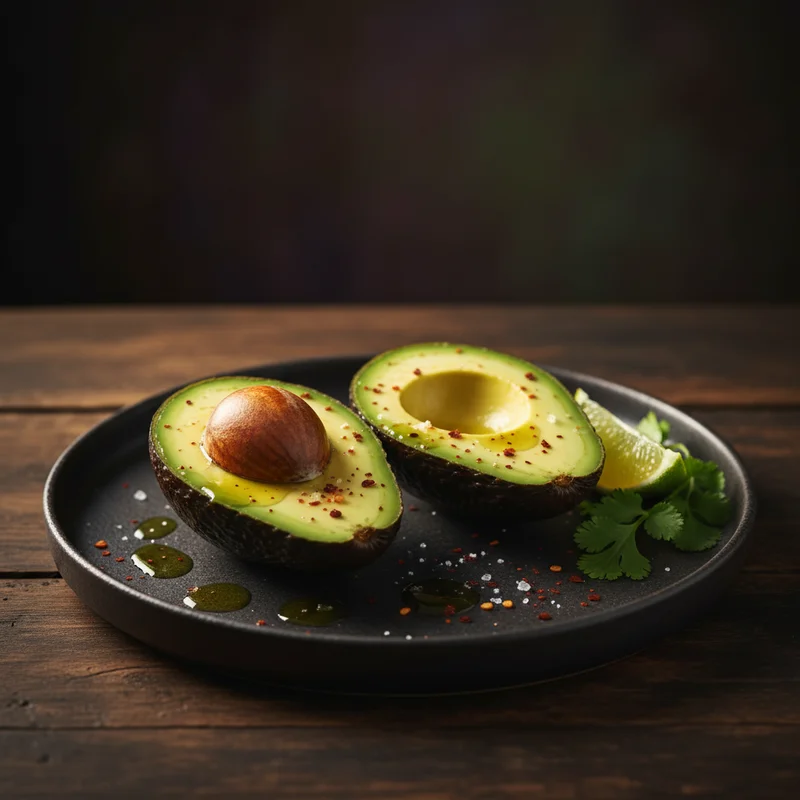
The fruit millennials allegedly traded their home ownership for. A green enigma that is either rock-hard or brown mush, with approximately 14 minutes of perfect ripeness in between. Also guacamole is extra.

The Matchup

In the quieter corners of the supermarket, a battle of considerable consequence unfolds daily between two organisms that could scarcely be more different. Persea americana, the avocado, emerged from the tropical forests of south-central Mexico some 10,000 years ago, its survival originally dependent upon megafauna such as giant ground sloths who dispersed its improbably large seeds. When these creatures vanished, humans stepped into the role of seed distributors, though with rather more enthusiasm for the flesh than the pip.

Gallus gallus domesticus, the domestic chicken, traces its ancestry to the red junglefowl of Southeast Asia, where humans first recognised its potential approximately 8,000 years ago. The bird has since achieved a global population of 33 billion individuals, outnumbering humans by roughly four to one. It is, by any reasonable measure, the most successful bird species in Earth's history, though this success has come at the cost of its ability to fly more than a few apologetic metres.

Both organisms now find themselves at the centre of intense human dietary attention. The avocado has become synonymous with wellness culture and millennial economics, whilst the chicken remains the world's most consumed source of animal protein. This analysis examines which has proven more consequential to the human species, employing criteria of suitable rigour and occasional absurdity.

Battle Analysis

Versatility Chicken Wins
70%
30%
Chicken Avocado

Chicken

The domestic chicken operates as what might reasonably be described as a biological Swiss Army knife. Its contributions to human civilisation span nutrition, agriculture, pest control, alarm services, and companionship, all delivered through a single self-replicating organism.

Primary outputs include eggs, with global production exceeding 1.5 trillion annually, and meat, representing the most consumed protein source on Earth. Feathers supply the down industry for bedding and insulation. Chicken manure provides nitrogen-rich fertiliser of considerable agricultural value. The birds consume insects, ticks, and garden pests with enthusiasm, offering natural pest control services that require neither batteries nor subscription fees.

Beyond material contributions, chickens serve as living alarm clocks, educational subjects for children, therapy animals in certain clinical settings, and companions for the increasing number of humans who maintain backyard flocks. The chicken has even achieved symbolic significance in proverbs concerning eggs, baskets, and the philosophical complexities of road-crossing. No other domesticated animal provides such breadth of utility from such modest resource inputs.

Avocado

The avocado presents a remarkably limited functional profile when examined without the rose-tinted spectacles of contemporary food culture. It is, fundamentally, a fruit that humans consume. One cannot wear an avocado, construct shelter from avocados, or employ avocados in pest control operations.

Within its culinary domain, however, Persea americana demonstrates considerable adaptability. The flesh serves equally well in guacamole, smoothies, salads, and the infamous avocado toast that has allegedly prevented an entire generation from home ownership. Its neutral flavour profile permits deployment in both savoury and sweet applications, whilst its fat content provides creaminess to vegan preparations.

The avocado oil industry has expanded the fruit's utility into cosmetics and cooking applications, with high smoke point characteristics making it suitable for frying. The pit, historically discarded, has found niche applications in natural dyes and dubious wellness supplements. Nevertheless, the avocado remains essentially a single-purpose organism: it exists to be eaten, and that is substantially the extent of its contribution.

VERDICT

This category presents a disparity of considerable magnitude. The avocado offers culinary versatility within a narrow functional band, whilst the chicken provides outputs spanning multiple categories of human need.

The chicken's capacity to simultaneously provide protein, pest control, fertiliser, and alarm services demonstrates genuine multi-functional utility. The avocado, despite its culinary flexibility, remains fundamentally a food item with limited secondary applications.

Furthermore, the chicken maintains itself through autonomous foraging when granted appropriate environment, whilst the avocado tree requires careful cultivation, irrigation, and climate control. The operational independence of poultry contributes materially to its versatility score. Victory to Gallus gallus domesticus by a considerable margin.

Global reach Chicken Wins
70%
30%
Chicken Avocado

Chicken

The domestic chicken maintains breeding populations in virtually every nation on Earth, from equatorial jungles to subarctic farmsteads. Its estimated global population of 33 billion individuals represents approximately four chickens for every human being, a market penetration that would inspire envy in any corporate boardroom.

This distribution was achieved not through marketing campaigns or distribution networks, but through 8,000 years of geographic expansion alongside human migration. Chickens accompanied Polynesian voyagers across the Pacific, medieval traders along the Silk Road, and colonial settlers to every inhabited continent. Each population now maintains itself independently through local reproduction.

Crucially, the chicken's global presence requires no international trade for continuation. Chickens in Peru do not depend upon chickens in Vietnam for their existence. The species has achieved true geographic independence, replicating locally across climate zones from tropical to temperate through selective breeding of cold-hardy and heat-tolerant varieties. This represents autonomous global distribution of a kind the avocado cannot match.

Avocado

The avocado has achieved what marketing professionals might term explosive growth in global distribution, though from a remarkably recent baseline. Prior to the 1990s, avocado consumption outside Latin America remained negligible. Today, global production exceeds 8 million tonnes annually, with Mexico alone accounting for approximately 30% of world supply.

The fruit's geographic expansion has been driven largely by health-conscious consumer trends in developed economies. The United States, Europe, and China have emerged as primary import markets, with per-capita consumption in the US increasing from roughly one avocado annually in 1985 to eight pounds per person in recent years.

However, avocado cultivation remains climatically constrained. The tree requires specific temperature ranges, substantial water inputs, and frost-free conditions that limit viable production zones to subtropical regions. The fruit cannot establish independent populations in temperate climates, rendering its global reach entirely dependent upon international trade infrastructure. Remove the shipping containers, and avocado consumption in London, Tokyo, or Berlin would cease within weeks.

VERDICT

Both organisms have achieved global presence of considerable scope, yet the nature of this presence differs fundamentally in resilience and independence.

The avocado's expansion represents a triumph of modern logistics, dependent entirely upon refrigerated shipping, international trade agreements, and consumer demand in wealthy nations. This reach is impressive but fragile, vulnerable to supply chain disruption, trade disputes, and the eventual exhaustion of petroleum-based transport.

The chicken's distribution, by contrast, operates independently of human infrastructure. Each local population sustains itself through biological reproduction, requiring neither imports nor exports for continuation. When assessing global reach through the lens of permanence and autonomy, the chicken holds an unassailable advantage. The bird wins decisively.

Affordability Chicken Wins
70%
30%
Chicken Avocado

Chicken

The domestic chicken represents one of the most economically efficient protein sources available to humanity. Industrial production has reduced chicken prices to approximately $2-4 per pound in developed markets, making it the most affordable meat option in most economies.

More significantly, the chicken offers reproductive economics that no fruit can match. A single hen produces approximately 250-300 eggs annually, providing ongoing protein return on initial investment. The bird literally generates additional food without requiring replacement, a proposition that would appear suspiciously favourable if presented in an investment prospectus.

At household scale, chickens convert kitchen waste into eggs at effectively zero marginal cost once established. The return on investment accelerates further through reproduction, as fertile eggs can generate additional chickens without capital expenditure. This self-replicating economic model has sustained subsistence communities for millennia, providing reliable protein security independent of market access or cash economy participation.

Avocado

The avocado has achieved a curious status in contemporary economics: it is simultaneously a food item and a symbol of generational financial anxiety. The "avocado toast" discourse of recent years has positioned the fruit as emblematic of millennial spending habits, regardless of whether such spending actually impacts home ownership prospects.

Market prices demonstrate significant volatility and geographic variation. In producing regions such as Mexico, avocados retail for approximately $0.50-1.00 per fruit. In import-dependent markets like the United Kingdom, prices routinely reach $2.00-3.00 per avocado, with organic and "ready to eat" variants commanding further premiums.

The fruit's short ripeness window creates additional economic inefficiency. An avocado transitions from inedibly hard to overripe within a 48-72 hour window, resulting in substantial household waste. Studies suggest that up to 30% of purchased avocados are discarded uneaten, effectively increasing the per-serving cost by a corresponding margin. The fruit offers no reproductive return on investment; once consumed, it provides no ongoing value.

VERDICT

The economic comparison between these organisms reveals a fundamental asymmetry in value proposition. The avocado represents a consumable with no return on investment, whilst the chicken represents a productive asset that generates ongoing value.

An avocado, once eaten, provides precisely zero subsequent benefit. A chicken, properly maintained, provides eggs for years, potential offspring indefinitely, and eventual meat value. The compound returns available through poultry ownership have no equivalent in fruit consumption.

Furthermore, the chicken's price stability contrasts favourably with the avocado's volatility. Chicken prices have declined in real terms over decades, whilst avocado prices fluctuate with harvest conditions, transport costs, and the inexplicable enthusiasms of wellness influencers. Victory to the chicken by a substantial economic margin.

Social impact Chicken Wins
70%
30%
Chicken Avocado

Chicken

The chicken has shaped human society for eight millennia, a duration of influence the avocado cannot approach. The bird provided reliable protein to communities across every inhabited continent, enabling population growth and settlement patterns that would otherwise have been impossible.

Culturally, the chicken has achieved symbolic significance across civilisations. It appears in proverbs concerning eggs and baskets, in philosophical puzzles about road-crossing motivations, and in religious traditions from Southeast Asian cockfighting to Christian resurrection symbolism. The rooster serves as national symbol for France and Portugal, whilst the hen represents maternal devotion across numerous cultures.

The chicken has also served as equaliser of protein access. Unlike beef or pork, which require substantial resources to produce, chickens can be maintained by households with minimal land and capital. This accessibility has made poultry protein available to economic classes for whom other meats remain luxuries. The democratisation of protein represents a social impact of considerable magnitude.

Avocado

The avocado has achieved cultural significance disproportionate to its objective importance, becoming perhaps the most symbolically loaded food item of the early 21st century. Its association with health-conscious millennials, Instagram-worthy cuisine, and the aforementioned housing market discourse has elevated a simple fruit to sociological phenomenon.

The "avocado toast" has become shorthand for generational economic anxiety, deployed by both defenders and critics of millennial spending habits. The fruit's appearance on social media has been quantified in millions of posts, with entire restaurant concepts built around photogenic avocado preparations. This cultural penetration represents genuine social impact, however one might evaluate its substance.

In producing regions, avocado cultivation has driven economic development alongside social disruption. Mexican farming communities have benefited from export revenues, whilst simultaneously experiencing organised crime involvement, water resource conflicts, and environmental degradation. The fruit's social impact thus includes both positive economic effects and problematic secondary consequences.

VERDICT

The avocado's social impact, whilst genuine, represents largely a phenomenon of the present moment. Its cultural significance has emerged within the past two decades and remains concentrated among specific demographic groups in wealthy nations.

The chicken's social impact spans millennia and continents, having fundamentally shaped human nutrition, settlement patterns, and cultural symbolism. The bird has fed billions of humans who would otherwise have lacked adequate protein, an impact that transcends Instagram engagement metrics.

Furthermore, the chicken's accessibility to low-income communities represents socially progressive impact that the expensive, import-dependent avocado cannot claim. Victory to the chicken, whose social contribution has proven both broader and deeper.

Sustainability Chicken Wins
70%
30%
Chicken Avocado

Chicken

The chicken's sustainability profile depends entirely upon production context, ranging from exemplary to deplorable depending upon scale and methodology. Industrial poultry operations concentrate waste, consume transported feed, and generate significant greenhouse gas emissions per unit of protein produced.

At backyard scale, however, the chicken approaches sustainability perfection. The bird converts kitchen scraps, garden waste, and insects into high-quality protein through solar-powered biological processes. Its manure provides nitrogen-rich fertiliser, completing a closed-loop nutrient cycle. Backyard flocks require no feed transportation, no refrigeration until processing, and no petroleum inputs whatsoever.

The species has maintained populations for 8,000 years without fossil fuels, and will presumably continue long after petroleum reserves are exhausted. This temporal sustainability, the capacity to function indefinitely without industrial inputs, represents a credential the avocado cannot claim. The tree requires irrigation infrastructure that depends, in most production regions, upon energy-intensive water pumping systems.

Avocado

The sustainability credentials of Persea americana have attracted considerable scrutiny in recent years, and not without justification. A single avocado requires approximately 320 litres of water to produce, a figure that renders the fruit's popularity in water-stressed regions environmentally problematic.

Production in Mexico's Michoacan state has driven significant deforestation, with pine and fir forests cleared to establish orchards. The crop's profitability has attracted organised crime involvement, adding social sustainability concerns to environmental ones. Carbon emissions from international shipping further compromise the fruit's ecological profile, particularly for consumers in Europe and Asia.

On the positive ledger, the avocado tree is perennial, requiring no annual replanting and sequestering carbon throughout its 50-year productive lifespan. Organic cultivation methods can reduce chemical inputs, and the fruit's caloric density provides efficient nutrition per kilogram transported. However, the water requirements and deforestation pressures represent substantial sustainability deficits that proponents of the fruit rarely acknowledge.

VERDICT

This criterion demands careful consideration of scale and context. Industrial chicken production and industrial avocado production both present substantial environmental concerns, from concentrated animal feeding operations to deforested Mexican hillsides.

However, when examined at the fundamental biological level, the chicken offers sustainability advantages the avocado cannot match. The bird operates on food waste and ambient foraging, requires no irrigation infrastructure, and reproduces without agricultural intervention.

The avocado's 320-litre water requirement per fruit represents a sustainability deficit of considerable magnitude in an era of increasing water scarcity. The chicken, consuming scraps and insects, imposes no equivalent resource burden at household scale. Victory to the poultry, with the acknowledgment that industrial production complicates this assessment.

👑

The Winner Is

Chicken

58 - 42

This analysis concludes with a 58-42 victory for Gallus gallus domesticus, the domestic chicken, reflecting advantages across versatility, global reach, sustainability, affordability, and social impact. The margin, whilst not overwhelming, represents consistent superiority across all evaluated criteria.

The avocado's defeat should not diminish recognition of its genuine achievements. Persea americana has accomplished remarkable market expansion within a single generation, transitioning from regional curiosity to global commodity. Its nutritional profile provides valuable healthy fats, and its culinary flexibility has enriched contemporary cuisine. The fruit has earned its place in the modern diet.

Yet the chicken offers something the avocado fundamentally cannot: complete operational independence. A chicken requires only appropriate environment to feed itself, reproduce, and maintain population indefinitely. The avocado requires irrigation infrastructure, international shipping networks, and precise climate conditions for each harvest. When human systems falter, chickens continue. Avocados do not.

The bird has sustained humanity through famines, wars, and economic collapses for eight thousand years. The avocado has sustained Instagram feeds for approximately fifteen. This disparity in proven resilience ultimately decides the contest.

Chicken
58%
Avocado
42%

Share this battle

More Comparisons