
Topic Battle

Where Everything Fights Everything

Avocado

Avocado

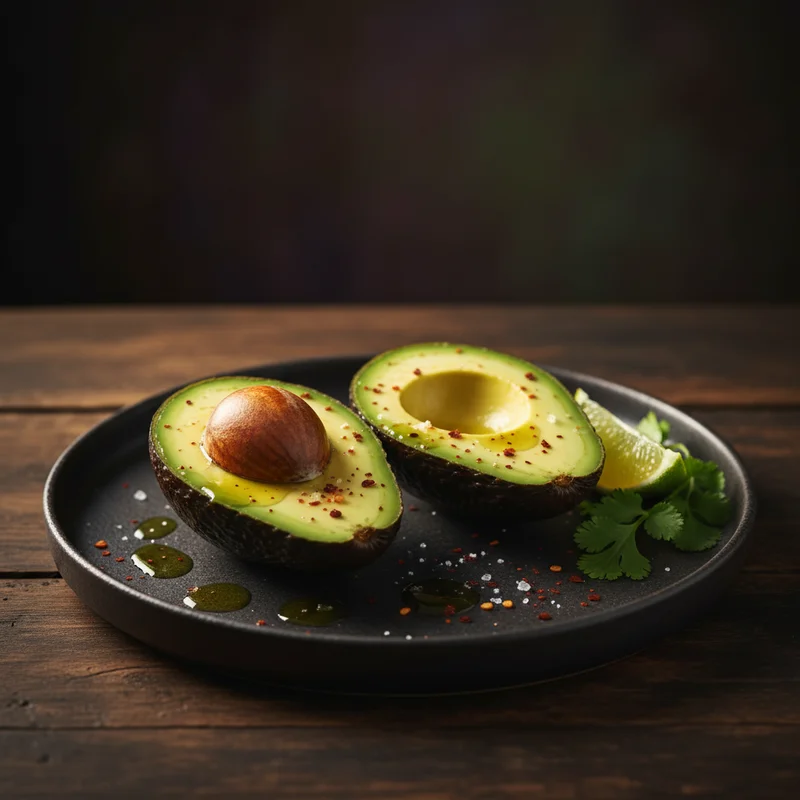
The fruit millennials allegedly traded their home ownership for. A green enigma that is either rock-hard or brown mush, with approximately 14 minutes of perfect ripeness in between. Also guacamole is extra.

VS
Mars

Mars

Red planet and humanity's next frontier.

Battle Analysis

Longevity mars Wins
30%
70%
Avocado Mars

Avocado

Individual avocado longevity presents notoriously narrow parameters. The window between 'not yet ripe' and 'brown mush' spans approximately 24-48 hours, creating what researchers term 'avocado anxiety' among consumers. Refrigeration extends viability marginally, whilst frozen avocado sacrifices textural integrity. The species itself demonstrates greater persistence, having survived 10 million years of evolution alongside now-extinct megafauna who served as primary seed dispersers. However, modern monoculture threatens genetic diversity; the dominant Hass variety represents a single genetic clone potentially vulnerable to disease. The avocado endures, but precariously.

Mars

Mars has persisted for approximately 4.6 billion years, predating not merely avocados but all terrestrial life. The planet will continue existing for roughly another 5 billion years until the Sun's expansion potentially disrupts inner solar system stability. Mars has survived asteroid bombardment, atmospheric loss, and the cessation of its magnetic dynamo—challenges that would eliminate any fruit-based competitor. The planet's longevity exceeds human comprehension; it witnessed Earth's formation, waited patiently through the evolution of every species, and will likely outlast whatever civilisation eventually visits. This is permanence on a cosmic scale.

VERDICT

Avocados ripen and rot within days; Mars has existed for 4.6 billion years and shall persist billions more. No contest.
Versatility avocado Wins
70%
30%
Avocado Mars

Avocado

The avocado demonstrates exceptional functional range for a single-ingredient item. Culinary applications span guacamole, toast topping, smoothie additive, sushi filling, chocolate mousse substitute, and the increasingly popular avocado ice cream. Beyond gastronomy, the fruit serves in cosmetic formulations—face masks, hair treatments, and moisturisers exploit its oleic acid content. The pit has been repurposed into natural dye, craft projects, and dubious claims of medicinal tea. Even the skin finds application in composting. This comprehensive utility reflects the avocado's status as nature's most accommodating fruit, willing to participate in virtually any human scheme requiring creamy green substance.

Mars

Mars offers versatility on an altogether different scale. The planet provides sufficient surface area—144.8 million square kilometres—to accommodate virtually any human activity currently constrained by terrestrial limitations. Proposed applications include agricultural domes, mining operations, scientific research facilities, and entire cities housing millions of colonists. Mars could serve as humanity's civilisational backup, a manufacturing hub exploiting lower gravity, or a staging point for deeper space exploration. The planet's moons, Phobos and Deimos, offer additional utility as orbital stations or resource extraction sites. Whilst current versatility remains theoretical, potential versatility approaches infinite.

VERDICT

Mars offers limitless theoretical applications; avocado offers immediate, proven utility across cuisine and cosmetics today.
Affordability avocado Wins
70%
30%
Avocado Mars

Avocado

Avocado pricing exhibits notorious volatility, ranging from $0.50 to $3.00 per fruit depending on season, location, and the pretension level of the retail establishment. The infamous 'avocado toast' benchmark—a $12-22 menu item in metropolitan areas—has become economic shorthand for discretionary spending. Annual household avocado expenditure for dedicated enthusiasts may reach $500-1,000, a sum characterised by property commentators as the margin between renting forever and eventual home ownership. Nevertheless, compared to most status-signalling consumables, avocados remain accessible to middle-class budgets, if one exercises restraint regarding accompaniments.

Mars

Mars presents cost structures defying household budgeting. Current launch costs to Mars orbit approach $100 million per tonne of payload delivered. SpaceX projects eventual reduction to approximately $500,000 per person for colonial transport—roughly equivalent to 166,667 premium avocados at current pricing. A single Mars rover mission costs approximately $2.7 billion; a crewed mission would likely exceed $100 billion. For the individual consumer, Mars access remains financially impossible, whilst even viewing the planet adequately requires telescope investment exceeding the average avocado enthusiast's annual fruit budget.

VERDICT

One may acquire an avocado with pocket change; Mars requires the GDP of a small nation. Economic accessibility: avocado.
Global recognition mars Wins
30%
70%
Avocado Mars

Avocado

The avocado has achieved remarkable cultural penetration within a compressed timeframe. Once an obscure Central American fruit, Persea americana now appears on menus across 190 countries, from Tokyo brunch establishments to Reykjavik health cafes. The fruit has generated its own vocabulary—'avo-toast,' 'guacamole,' 'avocado hand' (the emergency room designation for knife injuries sustained during amateur pit removal). Instagram contains over 12 million posts tagged with avocado imagery, suggesting the fruit has achieved memetic saturation rivalling cats and sunsets. An Australian property developer famously blamed avocado consumption for millennial housing unaffordability, cementing the fruit's status as generational symbol.

Mars

Mars commands recognition spanning millennia rather than decades. Named for the Roman god of war, the planet has featured in human consciousness since Babylonian astronomers first tracked its distinctive reddish wandering across the night sky approximately 4,000 years ago. The planet has inspired 197 major films, thousands of literary works from H.G. Wells to Andy Weir, and the entire conceptual framework of interplanetary colonisation. Unlike the avocado, Mars recognition requires no marketing expenditure—the planet sells itself through sheer celestial presence, visible to the naked eye and positioned in cultural memory as humanity's most plausible extraterrestrial destination. Recognition: absolute. Accessibility: pending.

VERDICT

The avocado has conquered Instagram; Mars has conquered the human imagination for four thousand years. Longevity prevails.
Environmental impact mars Wins
30%
70%
Avocado Mars

Avocado

The avocado industry carries substantial environmental burden. Each fruit requires approximately 227 litres of water to produce—in regions frequently experiencing drought conditions. Mexican avocado cultivation has driven deforestation of 20,000 hectares annually in Michoacan state alone. Transportation from growing regions to consumption markets generates significant carbon emissions; a single avocado airfreighted from Peru to London accounts for approximately 423g of CO2. The industry's environmental footprint has inspired guilt complexes among conscientious consumers, who must weigh nutritional benefits against ecological consequences whilst preparing their morning toast.

Mars

Mars presents paradoxical environmental considerations. The planet's current environment—barren, irradiated, atmospherically thin—cannot be degraded by human activity in any meaningful sense. Indeed, proposed terraforming schemes would constitute environmental improvement by terrestrial standards. However, Mars missions generate significant Earth-side environmental impact: rocket launches produce approximately 200-300 tonnes of CO2 per mission, whilst manufacturing spacecraft components consumes substantial resources. Long-term, Mars colonisation could reduce pressure on Earth's environment by distributing humanity's footprint across two worlds—environmental arithmetic that may ultimately favour planetary expansion.

VERDICT

Avocados actively stress Earth's water and forests; Mars cannot be environmentally damaged and may eventually relieve terrestrial burden.
👑

The Winner Is

Mars

47 - 53

This analysis reveals a competition between immediate gratification and eternal presence, between the pleasures available at this morning's breakfast table and the possibilities awaiting across the cosmic void. Mars emerges victorious in three of five criteria—global recognition, environmental impact, and longevity—categories measuring scale, permanence, and ultimate significance.

The avocado claims decisive victories in versatility and affordability, demonstrating the humble fruit's practical advantages for beings operating within normal human parameters. One cannot spread Mars on toast, incorporate Mars into a face mask, or obtain Mars for under three dollars at the local supermarket. These limitations matter to creatures of finite lifespan and limited budgets.

The final score of 53-47 in Mars's favour acknowledges that whilst the avocado enriches daily existence, the red planet represents stakes of civilisational magnitude. Mars offers humanity a future beyond this single vulnerable world; the avocado offers humanity a delicious source of monounsaturated fats and Instagram content. Both contributions possess genuine value, but one clearly exceeds the other in scope.

The comparison illuminates humanity's capacity to invest comparable emotional energy in breakfast fruit and interplanetary colonisation—a tendency that evolutionary biologists might find perplexing but that ultimately speaks to our species' remarkable range of enthusiasm. We are, it seems, equally capable of obsessing over the perfectly ripe avocado and the perfectly hospitable exoplanet.

Avocado
47%
Mars
53%

Share this battle

More Comparisons