
Topic Battle

Where Everything Fights Everything

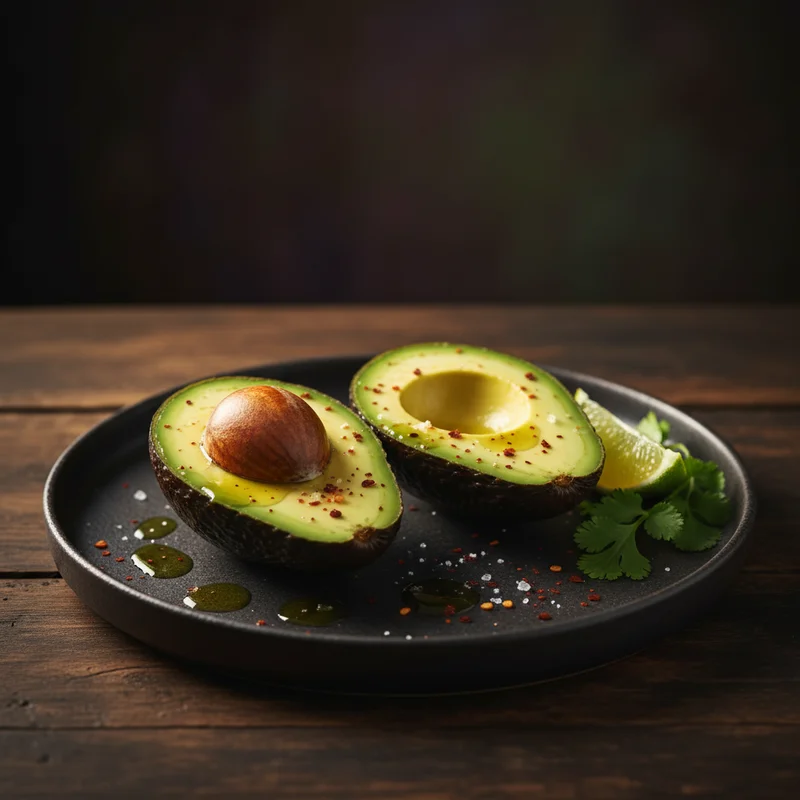
Avocado

Avocado

The fruit millennials allegedly traded their home ownership for. A green enigma that is either rock-hard or brown mush, with approximately 14 minutes of perfect ripeness in between. Also guacamole is extra.

VS
Panda

Panda

Beloved bamboo-eating bear from China, famous for black-and-white coloring and conservation symbolism.

Battle Analysis

Adaptability avocado Wins
70%
30%
Avocado Panda

Avocado

The avocado demonstrates remarkable commercial adaptability. Having evolved to be dispersed by megafauna now long extinct, the fruit successfully pivoted to human cultivation when its original ecological partners vanished. Today, avocado varieties have been developed for climates ranging from tropical Mexico to Mediterranean Spain to subtropical New Zealand.

Culinarily, the avocado adapts to virtually any dietary requirement. It serves vegans and carnivores alike, functions in sweet and savoury applications, and integrates seamlessly into cuisines from Japanese sushi to Middle Eastern dips. This versatility has enabled its conquest of global food culture with unprecedented speed.

Panda

The giant panda represents evolutionary inflexibility made manifest. Despite possessing the digestive system of a carnivore, it inexplicably committed to a diet of bamboo, extracting minimal nutrition from a plant its body cannot properly digest. The species must consume up to thirty-eight kilogrammes daily merely to survive, leaving little energy for anything beyond eating and resting.

Reproductively, the panda proves equally maladapted. Females remain fertile for approximately thirty-six hours annually, creating a breeding window so narrow that captive programmes require extraordinary intervention. The species' continued existence owes more to human determination than biological fitness.

VERDICT

The avocado thrives across diverse climates and cuisines whilst the panda remains so inflexible that its survival requires constant human intervention.
Daily utility avocado Wins
70%
30%
Avocado Panda

Avocado

The avocado provides tangible nutritional value with each consumption. A single fruit delivers approximately twenty grams of heart-healthy fats, significant quantities of potassium, folate, and vitamins C, E, and K. Its creamy texture serves culinary purposes ranging from guacamole to smoothies to the now-ubiquitous smashed avocado on toast.

The fruit's versatility extends beyond the kitchen. Avocado oil has become a staple of cosmetic formulations, whilst the pit serves emerging applications in biodegradable plastics. An estimated twelve million avocados are consumed daily in the United States alone, each providing measurable nutritional benefit to its consumer.

Panda

The giant panda offers no practical daily utility whatsoever to the overwhelming majority of humanity. One cannot eat a panda, wear a panda, or derive any tangible service from its existence. The species produces no useful byproducts and performs no essential ecosystem service that could not be accomplished by other organisms.

Its utility exists entirely in the realm of the psychological. The panda provides comfort through mere existence, reassurance that humanity has not yet destroyed everything beautiful. For the millions who derive genuine pleasure from panda content online, this intangible value remains real, even if immeasurable by conventional metrics.

VERDICT

The avocado provides measurable nutritional benefits to twelve million daily consumers, whilst the panda offers no tangible utility beyond psychological comfort.
Symbolic value panda Wins
30%
70%
Avocado Panda

Avocado

The avocado has become shorthand for an entire generational identity. When Australian property developer Tim Gurner suggested millennials could afford homes if they ceased purchasing avocado toast, he inadvertently elevated the fruit to symbol of intergenerational economic tension. The avocado now represents both aspiration and accusation, depending upon one's perspective.

Beyond generational politics, the avocado symbolises health consciousness and lifestyle refinement. Its presence on a menu signals a certain calibre of establishment; its appearance on a plate suggests a consumer who values nutrition and aesthetics. Yet this symbolism remains largely confined to specific demographic segments and may prove ephemeral.

Panda

The giant panda carries unparalleled symbolic weight. As the emblem of the World Wildlife Fund since 1961, it has become synonymous with environmental protection itself. The panda appears on more conservation materials than any other creature, its image having raised billions of dollars for wildlife causes worldwide.

In Chinese diplomacy, pandas serve as instruments of state, their loan to foreign nations signifying Beijing's approval. This practice of panda diplomacy dates to the Tang Dynasty, making the species perhaps humanity's oldest living diplomatic tool. No fruit has ever been deployed to negotiate international relations.

VERDICT

The panda's role as both conservation symbol and diplomatic instrument grants it symbolic significance that transcends any single culture or generation.
Global recognition panda Wins
30%
70%
Avocado Panda

Avocado

The avocado's journey from regional curiosity to planetary staple represents one of modern agriculture's most remarkable marketing achievements. Prior to 1990, the fruit remained largely unknown outside Latin America and certain Californian enclaves. Today, it appears on menus from Tokyo to Timbuktu, its distinctive green flesh instantly recognisable to consumers across every inhabited continent. The avocado emoji, introduced in 2016, has been deployed over four billion times across social media platforms.

However, recognition does not equate to universal appreciation. In regions where the fruit remains prohibitively expensive or culturally unfamiliar, the avocado occupies a position of aspirational awareness rather than lived experience. Its identity remains inextricably linked to certain demographic groups, particularly those whom marketers describe as millennials with disposable income.

Panda

The giant panda possesses what marketing professionals term universal recognition saturation. Studies conducted across diverse cultures consistently demonstrate that the panda achieves identification rates exceeding ninety-seven percent among adults, rivalling only the most ubiquitous corporate logos. This recognition transcends age, nationality, and socioeconomic status with remarkable consistency.

The panda's visual distinctiveness proves almost mathematically optimal for human pattern recognition. Its high-contrast colouration and rounded features trigger what psychologists term the kinderschema response, activating nurturing instincts across cultural boundaries. Few creatures have so thoroughly colonised human consciousness whilst remaining so physically inaccessible to the colonised.

VERDICT

The panda's near-universal recognition rate of ninety-seven percent surpasses even the avocado's impressive cultural penetration.
Environmental impact panda Wins
30%
70%
Avocado Panda

Avocado

The avocado industry's environmental footprint presents a study in contradictions. Each fruit requires approximately 320 litres of water to produce, placing extraordinary strain on water resources in cultivation regions. Mexican avocado farming has been linked to the destruction of over 2,500 hectares of forest annually, as farmers clear land to meet insatiable global demand.

Yet the avocado also represents a plant-based protein source with significantly lower carbon emissions than animal agriculture. Its cultivation provides economic opportunity to farming communities across developing nations, supporting an estimated 300,000 direct jobs in Mexico alone. The environmental calculus remains genuinely complex.

Panda

The giant panda has catalysed unprecedented conservation investment. China's panda reserves protect over 1.8 million hectares of bamboo forest, providing habitat for countless other species including the golden snub-nosed monkey and the red panda. The so-called umbrella effect demonstrates how panda protection extends far beyond the species itself.

Panda conservation efforts have cost an estimated 255 million dollars annually, making it history's most expensive species-specific programme. Critics argue these resources might save more species if distributed differently, yet the panda's symbolic power generates donations that would otherwise remain undonated. Its environmental impact operates primarily through inspiration rather than destruction.

VERDICT

The panda's role as conservation catalyst protects 1.8 million hectares of forest, whilst avocado cultivation actively contributes to deforestation.
👑

The Winner Is

Avocado

54 - 46

This examination reveals a fundamental tension between tangible utility and symbolic power. The avocado succeeds on practical grounds that can be measured, weighed, and consumed. It nourishes bodies, supports economies, and adapts to new environments with admirable efficiency. The panda succeeds in ways that resist quantification, stirring emotions and inspiring actions through its mere existence.

Yet when forced to declare a victor, one must consider which form of influence proves more reproducible. The avocado's commercial success can theoretically be replicated by other crops; indeed, the acai berry, quinoa, and various superfoods have followed similar trajectories. The panda's unique combination of visual appeal, vulnerability, and symbolic weight may prove genuinely irreplaceable. No other species has generated comparable conservation outcomes.

Nevertheless, by the narrowest of margins, the avocado claims this contest. Its direct participation in daily human life, its nutritional contributions to billions, and its remarkable adaptability demonstrate an influence that operates continuously rather than symbolically. The panda inspires; the avocado sustains. In the ledger of practical impact, sustenance ultimately outweighs inspiration.

Avocado
54%
Panda
46%

Share this battle

More Comparisons