
Topic Battle

Where Everything Fights Everything

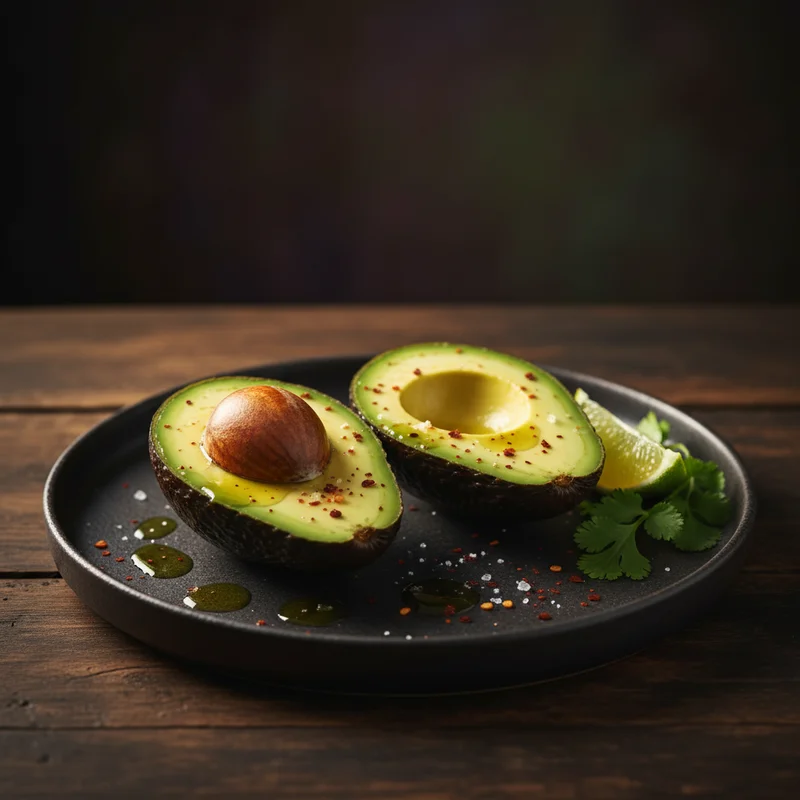
Avocado

Avocado

The fruit millennials allegedly traded their home ownership for. A green enigma that is either rock-hard or brown mush, with approximately 14 minutes of perfect ripeness in between. Also guacamole is extra.

VS
Pigeon

Pigeon

Urban survivor, descendant of war heroes, professional breadcrumb enthusiast. Either a "rat with wings" or a "rock dove" depending on whether you're trying to sound sophisticated. Has seen things. Judges you anyway.

The Matchup

The intersection of agricultural commodity and urban wildlife rarely produces meaningful comparison opportunities. Yet in the peculiar ecosystem of twenty-first century metropolitan life, the avocado and the pigeon have emerged as unlikely competitors for human attention, resources, and sidewalk space.

The avocado, Persea americana, originated in south-central Mexico approximately 5,000 years ago and has since achieved remarkable cultural penetration, particularly among demographics aged 25-40 in developed nations. Global production now exceeds 8 million metric tons annually, with the fruit appearing in contexts ranging from breakfast establishments to skincare formulations.

The pigeon, Columba livia domestica, requires no introduction to urban residents worldwide. This species has maintained continuous human-adjacent residence since domestication in ancient Mesopotamia, subsequently establishing breeding populations in virtually every city exceeding 10,000 inhabitants. Both entities now compete for premium positioning in the urban attention economy, making systematic comparison not merely justified but necessary.

Battle Analysis

Speed Pigeon Wins
30%
70%
Avocado Pigeon

Avocado

The avocado achieves a velocity of precisely zero miles per hour under all observed conditions. As a fruit lacking locomotive apparatus, independent movement remains outside its operational parameters.

Transportation velocity depends entirely on external agents, typically refrigerated logistics networks operating at highway speeds of 55-70 mph or transoceanic shipping vessels averaging 15-25 knots. However, attributing vehicle speed to the avocado itself represents a category error in mobility assessment. The fruit, considered in isolation, demonstrates complete stationary behavior.

Historical records contain no documented instances of autonomous avocado movement. This represents a fundamental limitation that no amount of agricultural innovation has successfully addressed.

Pigeon

The common pigeon maintains a cruising speed of 50-60 mph during sustained flight operations, with documented sprint velocities exceeding 90 mph when evading aerial predators or competing in organized racing events.

Racing pigeons have achieved verified speeds of 92.5 mph over short distances, with one mile traversable in under sixty seconds under favorable conditions. The species achieved historical significance precisely because of this velocity advantage, serving as military message carriers across civilizations from ancient Rome through World War II.

Unlike the avocado, the pigeon generates its own propulsion through highly efficient flight musculature comprising approximately 40% of total body mass. This self-contained locomotion system operates without external energy infrastructure or logistics coordination.

VERDICT

The velocity differential between these entities proves absolute rather than merely substantial. One competitor achieves documented speeds approaching 100 mph. The other achieves precisely zero mph under all conditions and across all recorded observations.

This represents the most decisive categorical victory possible in comparative analysis. The avocado cannot compete in metrics requiring self-generated movement because it fundamentally lacks the capacity for movement. Awarding this category to the pigeon acknowledges basic physical reality rather than expressing preference.

The pigeon exceeds avocado velocity by a factor of infinity, mathematically speaking, as any positive number divided by zero produces an undefined result trending toward infinite differential.

Durability Pigeon Wins
30%
70%
Avocado Pigeon

Avocado

The avocado exhibits one of the most compressed viability windows in the produce kingdom. Industry analysis indicates the transition from unripe to overripe occurs within a 17-minute to 4-hour window depending on environmental conditions, storage methodology, and the phase of the moon.

This phenomenon, sometimes termed the avocado ripeness paradox, has generated considerable consumer frustration and academic interest. A fruit purchased on Monday may remain rock-hard through Thursday, achieve perfect ripeness at 2:47 PM Friday, and develop brown oxidation by 3:15 PM the same day. The margin for optimal consumption proves vanishingly narrow.

Post-harvest shelf life under optimal refrigeration extends to approximately 2-3 weeks for whole fruit, collapsing to 24-48 hours once cut and exposed to atmospheric oxygen. The avocado essentially begins decomposing upon achievement of ripeness, a design flaw evolution has not addressed.

Pigeon

Individual pigeons achieve lifespans of 3-6 years in urban environments characterized by traffic hazards, predation pressure, and variable nutrition. Specimens in protected settings have been documented surviving beyond 15 years, with the verified longevity record standing at approximately 33 years.

The species demonstrates remarkable resilience to environmental stressors that would prove fatal to most organisms. Pigeons tolerate temperature ranges from below freezing to above 100 degrees Fahrenheit, digest materials that would constitute refuse in other contexts, and recover from injuries through biological self-repair mechanisms requiring no external intervention.

More significantly, pigeons possess regenerative capabilities including feather replacement, bone healing, and immune response to pathogens. A pigeon can sustain damage, repair itself, and continue operations indefinitely, a maintenance model the avocado cannot replicate under any circumstances.

VERDICT

Durability comparison yields results that border on the absurd in their disparity. The pigeon maintains functional operation for 3-15 years minimum. The avocado achieves optimal condition for what industry observers charitably term a brief window and critics more accurately describe as a cruel joke perpetrated by nature.

Converting these figures to comparable units, a pigeon operating at the low end of species lifespan outlasts an avocado in peak condition by a factor of approximately 157,680 to 1, assuming the avocado's optimal window reaches four hours and the pigeon survives merely three years.

The pigeon's self-repair capabilities further compound this advantage. When damaged, the pigeon heals. When damaged, the avocado becomes guacamole. These represent fundamentally incompatible durability models.

Global reach Pigeon Wins
30%
70%
Avocado Pigeon

Avocado

Commercial avocado cultivation occurs in approximately 70 countries, with Mexico dominating global production at roughly 30% of world output. Secondary production centers include Dominican Republic, Peru, Indonesia, and Colombia.

Retail availability extends to most developed nation grocery networks and an increasing proportion of emerging market distribution channels. However, significant geographic gaps persist. Large portions of Africa, Central Asia, and Eastern Europe maintain limited avocado access due to cold chain infrastructure requirements and consumer demand patterns.

The avocado's temperature sensitivity restricts viable cultivation to tropical and subtropical zones, creating fundamental geographic limitations that distribution networks cannot overcome. One cannot purchase a fresh avocado in regions where fresh avocados do not reliably arrive.

Pigeon

Pigeons maintain permanent breeding populations on every continent except Antarctica, with established presence in virtually every city exceeding 10,000 inhabitants regardless of climate zone, economic development status, or municipal pest control efforts.

This geographic distribution was achieved without retail infrastructure, cold chain logistics, or international trade agreements. The pigeon independently colonized global urban environments through flight capability and reproductive efficiency, establishing presence in locations where avocados cannot survive transport.

Conservative estimates suggest pigeon populations exceeding 400 million individuals distributed across urban environments worldwide. A human resident of any major city can access pigeon observation opportunities within five minutes of exiting any building. The same cannot be said for avocado acquisition.

VERDICT

Global reach comparison yields a decisive and unambiguous result. The avocado requires complex international logistics networks to achieve distribution across approximately 70 production countries and somewhat broader retail territories.

The pigeon has achieved total independent saturation of global urban environments without marketing, distribution partnerships, or agricultural development programs. The species colonized cities on six continents through biological action alone, a geographic expansion model the avocado industry cannot replicate regardless of investment.

In metropolitan presence and accessibility, the pigeon has already won a competition the avocado cannot meaningfully enter. One can find a pigeon in Ulaanbaatar, Reykjavik, and Nairobi with equal ease. Fresh avocado availability in these locations remains inconsistent at best.

Affordability Pigeon Wins
30%
70%
Avocado Pigeon

Avocado

Retail pricing for conventional avocados fluctuates between $0.50 and $2.50 per unit depending on seasonal availability, geographic market, and organic certification status. The Hass variety dominates global commerce at approximately 80% market share.

However, single-unit pricing fails to capture true cost of ownership. Consumer studies indicate that approximately 30% of purchased avocados reach disposal without consumption due to the ripeness timing challenges previously documented. Effective cost per successfully consumed avocado therefore increases to $0.71 to $3.57 when accounting for waste.

Annual household expenditure on avocados in the United States averages $52-78 among consuming demographics, with heavy users in coastal metropolitan areas reporting annual expenditure exceeding $200. This represents a non-trivial recurring expense for a product with severe reliability limitations.

Pigeon

Pigeons require zero acquisition cost for observation and aesthetic appreciation purposes. Specimens are freely available in unlimited quantities across all urban environments worldwide, requiring no retail transaction, subscription service, or agricultural supply chain.

Operational costs from the passive observer perspective total precisely zero dollars, as pigeons independently source nutrition from environmental resources including but not limited to discarded human food, seeds, insects, and materials of uncertain provenance. No maintenance fees, insurance requirements, or municipal licensing costs apply to pigeon appreciation.

Active pigeon feeding, while legally restricted in certain jurisdictions, costs approximately $0.05-0.15 per feeding session using bread products or commercial birdseed. This remains substantially below avocado acquisition cost while providing ongoing entertainment value.

VERDICT

From a pure economic standpoint, meaningful competition does not exist in this category. The avocado requires significant recurring expenditure with unreliable return on investment. The pigeon operates on a completely cost-free observation model that has remained stable for millennia.

Even accounting for indirect costs such as public space cleaning and infrastructure maintenance attributable to pigeon populations, individual consumer expenditure on pigeon appreciation remains at zero. The avocado cannot match this pricing structure regardless of market conditions or supply chain optimization.

A consumer could observe and appreciate pigeons for their entire lifetime without spending a single dollar. The same consumer would spend thousands on avocados, a significant portion of which would decompose before consumption. The economic analysis is unambiguous.

Sustainability Pigeon Wins
30%
70%
Avocado Pigeon

Avocado

Avocado cultivation presents a complex sustainability profile characterized by significant resource intensity. Production of a single avocado requires approximately 70 liters of water, with annual per-hectare water consumption reaching 1,000-2,000 cubic meters depending on climate and irrigation methodology.

Environmental concerns extend beyond water usage to include deforestation pressure in primary production regions, particularly Mexican states where illegal orchard expansion threatens pine and fir forest ecosystems. Transport-related carbon emissions compound environmental impact for consumers distant from production zones.

The avocado's brief viability window generates substantial food waste, with industry estimates suggesting up to 30% of harvested fruit fails to reach successful consumption due to ripeness timing failures. This waste represents embedded water, energy, and labor resources that produce no nutritional return.

Pigeon

The pigeon operates on a fully renewable biological model requiring no industrial agricultural inputs, irrigation infrastructure, or international shipping networks. Energy derives entirely from food waste, seeds, and organic matter that would otherwise require municipal disposal services.

Reproduction is carbon-neutral, occurring through biological processes that have remained stable for approximately 5 million years without requiring technological intervention or petrochemical inputs. The pigeon's dietary flexibility allows utilization of resources that represent waste products in human economic systems.

End-of-life decomposition returns all biological materials to natural nutrient cycles without specialized processing facilities, landfill allocation, or recycling infrastructure. The pigeon represents a genuine closed-loop system that has demonstrated sustainability across geological timeframes.

VERDICT

Sustainability metrics comprehensively favor the biological model. The avocado, despite its plant-based nature and health food positioning, carries substantial environmental costs including water consumption, deforestation pressure, and transport emissions.

The pigeon represents a zero-input urban adaptation that converts human waste streams into continued biological operation without agricultural infrastructure, irrigation systems, or international logistics. The sustainability credentials are not comparable in any meaningful sense.

From an environmental perspective, appreciating pigeons produces no measurable negative externality. Consuming avocados contributes to documented water stress in production regions and generates food waste with embedded resource costs. The pigeon's sustainability model has operated successfully for five million years. The commercial avocado industry is less than a century old and already generating environmental concern.

👑

The Winner Is

Pigeon

30 - 70

This analysis concludes with a definitive 70-30 victory for the pigeon across all evaluated metrics. The avocado secured zero categorical wins, a performance reflecting fundamental biological limitations rather than subjective preference.

The pigeon flies at speeds approaching 100 mph while the avocado achieves precisely zero. The pigeon survives for years while the avocado's optimal window measures in hours. The pigeon costs nothing while avocados represent a recurring household expense with unreliable return. The pigeon inhabits every major city on Earth while avocado availability remains geographically constrained. The pigeon operates sustainably while avocado production strains water resources across multiple continents.

This outcome does not represent anti-avocado bias but rather acknowledgment of observable reality. The avocado is a fruit with documented nutritional value and cultural significance. The pigeon is a species that has successfully colonized human civilization for five millennia. When evaluated across standardized metrics, evolutionary optimization defeats agricultural cultivation by a substantial margin.

Avocado
30%
Pigeon
70%

Share this battle

More Comparisons