
Topic Battle

Where Everything Fights Everything

Tea

Tea

A traditional beverage made from steeping processed leaves of the Camellia sinensis plant in hot water. Enjoyed by billions worldwide.

VS
Avocado

Avocado

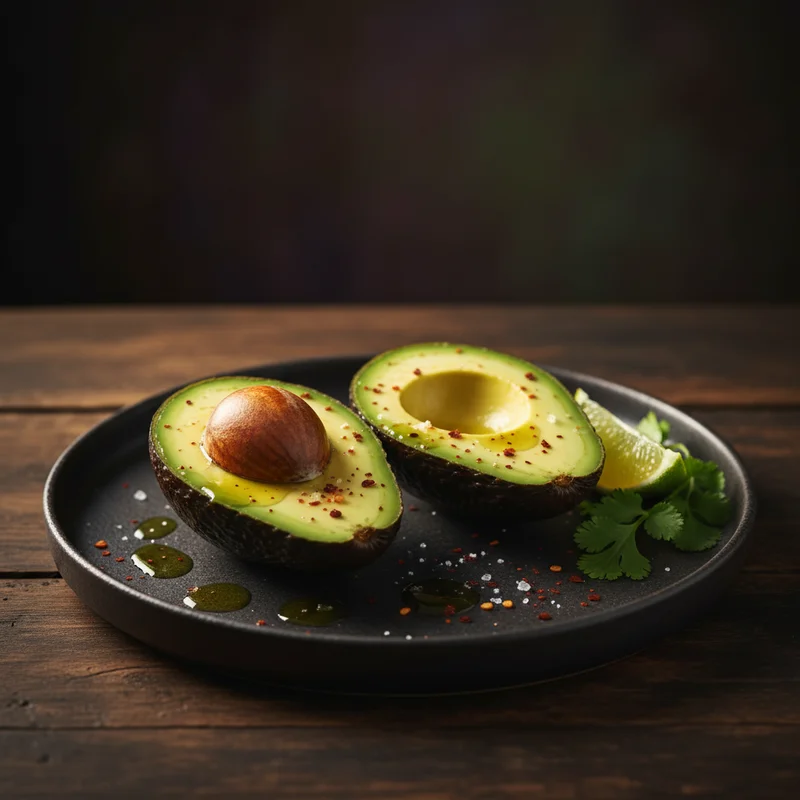
The fruit millennials allegedly traded their home ownership for. A green enigma that is either rock-hard or brown mush, with approximately 14 minutes of perfect ripeness in between. Also guacamole is extra.

The Matchup

In the contemporary landscape of consumables, few rivalries illuminate the tension between ancient reliability and modern unpredictability quite like the contest between tea and the avocado.

Tea, Camellia sinensis, has maintained its position as humanity's most consumed beverage after water for approximately five thousand years. From the mist-shrouded mountains of Yunnan Province to the drawing rooms of Victorian England, this unassuming leaf has shaped trade routes, triggered revolutions, and established rituals that continue to define daily life across continents.

The avocado, Persea americana, presents a markedly different proposition. Native to central Mexico, this fruit achieved global prominence only within the past two decades, propelled by Instagram aesthetics and nutritional enthusiasm. It now occupies a peculiar position in the modern food economy: simultaneously celebrated as a superfood and feared for its notorious seventeen-minute window of optimal ripeness. Both contenders now compete for space in the modern diet, though their approaches to that competition could not be more divergent.

Battle Analysis

Speed Tea Wins
70%
30%
Tea Avocado

Tea

Tea achieves operational readiness within three to five minutes from the moment water contacts leaf. This timing remains consistent regardless of variety, from delicate white teas to robust Assam blends.

The brewing process has been refined over millennia to ensure predictable results under virtually any circumstance. A traveler in a remote Himalayan village and a commuter in central London can both expect functional tea within the same timeframe. The system works.

Avocado

The avocado's journey from purchase to consumption represents one of nature's more perplexing temporal arrangements. Upon acquisition from a retail establishment, the fruit typically requires four to seven days of ripening at room temperature before achieving edibility.

However, the window of optimal consumption has been documented by agricultural researchers at the University of California, Davis as lasting approximately seventeen minutes. This is not hyperbole for effect. The transition from slightly firm to slightly overripe occurs with a rapidity that defies the expectations of those accustomed to patient fruit. Miss this window, and one confronts either the culinary disappointment of an unripe specimen or the brown oxidized matter that follows.

Planning becomes an exercise in horticultural fortune-telling. One does not simply decide to consume an avocado. One begins hoping, approximately one week in advance, that circumstances will align.

VERDICT

The velocity differential in this category proves decisive and unambiguous. Tea operates on a timeline measured in minutes. The avocado operates on a timeline measured in days, with a consumption window measured in minutes that one must somehow anticipate.

From a practical standpoint, tea provides on-demand availability that the avocado cannot approach. The average consumer does not possess the agricultural forecasting capabilities required to consistently intercept an avocado at peak ripeness. Tea asks only for hot water and patience measured in seconds. The operational readiness gap is insurmountable.

Durability Tea Wins
70%
30%
Tea Avocado

Tea

Properly stored tea maintains its essential character for two to five years, with certain fermented varieties such as Pu-erh actually improving over decades of careful aging.

The British East India Company transported tea across oceans for months without significant degradation. Victorian households kept tea in caddies that passed through generations. Archaeological evidence suggests recognizable tea has been recovered from vessels centuries old. The leaf possesses what can only be described as temporal resilience.

This durability extends to preparation flexibility. Tea may be consumed immediately, left to cool, reheated, or even chilled without fundamental compromise to its nature. It adapts to circumstance with the patience of something that has outlasted dynasties.

Avocado

The avocado's durability profile represents a significant vulnerability in its competitive position. From the moment of harvest, a countdown begins that permits no delay.

An uncut avocado survives perhaps five to seven days at room temperature before its window opens and, almost immediately, closes. Once cut, oxidation transforms the vibrant green flesh to an unappetizing brown within thirty minutes to two hours, depending on environmental conditions. The application of lemon juice merely delays the inevitable.

Refrigeration extends the pre-ripeness phase but cannot halt the final decline. Freezing destroys the desired texture. The avocado, in summary, exists in a state of perpetual temporal crisis, racing from unready to overready with minimal pause at perfection.

VERDICT

Durability metrics reveal a fundamental asymmetry between these competitors. Tea has been designed, whether by nature or human cultivation, for longevity. The avocado appears designed for a rather different purpose that did not account for modern supply chain logistics.

A household can maintain a tea supply for years without significant planning. An avocado requires the household to plan consumption around the fruit's schedule rather than their own. This represents a notable power imbalance in the human-food relationship. Tea serves. The avocado demands coordination.

Global reach Tea Wins
70%
30%
Tea Avocado

Tea

Tea consumption occurs in virtually every nation on Earth, with established tea cultures spanning from Morocco to Mongolia, from Ireland to India. The global tea market exceeds $200 billion annually.

The beverage has achieved cultural integration so complete that many nations consider it fundamental to national identity. The British cuppa, the Moroccan mint tea ceremony, the Japanese chadou, and the Chinese gongfu tradition represent just a fraction of the distinctive tea cultures that have developed independently across civilizations.

Tea can be grown in tropical highlands across multiple continents and transported globally without specialized infrastructure. It requires no refrigeration. It does not bruise. It poses no ripening emergencies. This logistical simplicity enabled its planetary distribution centuries before modern cold-chain technology existed.

Avocado

The avocado's geographic footprint, while expanding, remains constrained by biological and logistical realities. Commercial production concentrates in Mexico, which supplies approximately forty-five percent of global output, followed by the Dominican Republic, Peru, Indonesia, and Colombia.

Distribution beyond production zones requires controlled-atmosphere shipping, precise temperature management, and rapid transit to reach consumers before the ripeness window opens in transit. This infrastructure limits meaningful avocado availability to affluent markets with developed cold-chain logistics.

Significant portions of the global population have never encountered a fresh avocado, not due to lack of interest but due to the fruit's fundamental incompatibility with extended supply chains. The avocado, in essence, does not travel well or wait patiently.

VERDICT

Global reach comparison yields unambiguous results. Tea has achieved comprehensive planetary penetration through a combination of biological hardiness, logistical simplicity, and five millennia of cultural integration.

The avocado, despite considerable popularity in developed markets, remains a niche luxury item on the global scale. Its demanding requirements for transport and timing restrict accessibility in ways that tea's dried, stable form simply does not face. In worldwide consumption accessibility, tea has won a competition the avocado has barely entered.

Affordability Tea Wins
70%
30%
Tea Avocado

Tea

Entry-level tea costs approximately $0.02 to $0.10 per serving in commodity forms, with quality loose-leaf varieties ranging from $0.15 to $0.50 per cup. Even premium single-estate Darjeelings rarely exceed $1.00 per serving.

The economics improve further when one considers that tea leaves may be infused multiple times. A single measure of quality oolong provides three to five steepings, reducing the per-cup cost substantially. This reuse capability is not available with most consumables.

Annual per-capita tea expenditure in the United Kingdom, a market of serious tea consumers, averages approximately forty pounds. This modest sum provides daily consumption for an entire year.

Avocado

Avocado pricing demonstrates notable volatility influenced by weather events, pest pressures, and the concentrated geography of production in Mexico, California, and a limited number of other regions.

Retail prices fluctuate between $0.75 and $2.50 per unit depending on season, location, and variety. The Hass avocado, representing approximately eighty percent of global consumption, averages $1.50 in major metropolitan markets.

However, the true cost calculation must account for wastage rates. Consumer studies indicate that between fifteen and thirty percent of purchased avocados are discarded due to improper ripeness timing. This spoilage factor increases the effective cost per successfully consumed avocado to approximately $1.75 to $2.00. One pays not only for the avocado but also for the privilege of attempting to intercept it at the correct moment.

VERDICT

From a pure economic standpoint, tea presents a substantially more favorable value proposition. The cost per serving differential spans an order of magnitude, with tea providing sustenance at approximately one-tenth the avocado's price.

The avocado's additional burden of spoilage risk compounds this disadvantage. Tea purchased is tea that will eventually be consumed. Avocados purchased represent a wager against time that the consumer frequently loses. When one factors failed attempts into total cost of ownership, the affordability gap becomes mathematically decisive.

Sustainability Tea Wins
70%
30%
Tea Avocado

Tea

Tea cultivation, when practiced responsibly, operates on a largely sustainable model. Tea plants are perennials that produce for fifty to one hundred years without replanting. The Camellia sinensis requires no annual tilling or soil disruption once established.

Water usage, while significant, remains lower than many agricultural alternatives. The processing involves primarily drying and oxidation, requiring modest energy inputs compared to more complex food production systems. Tea's light weight and density mean efficient transport per unit of final product.

However, sustainability credentials vary by producer. Industrial-scale tea farming in some regions has contributed to deforestation and agrochemical overuse. Certification programs such as Rainforest Alliance and Fair Trade address these concerns with varying degrees of rigor.

Avocado

Avocado cultivation faces significant sustainability challenges that have attracted increasing scrutiny. The fruit requires approximately 320 liters of water per unit, contributing to aquifer depletion in water-stressed growing regions such as Chile's Petorca Province.

The concentration of production in Mexico has created socioeconomic pressures including documented links to illegal deforestation and, in certain regions, the involvement of organized crime in orchard protection. These factors complicate the ethical consumption calculus substantially.

The requirement for refrigerated transcontinental shipping adds carbon emissions that dried, lightweight tea simply does not incur. A single avocado from Mexico to London generates transport emissions that a year's supply of tea cannot approach. The sustainability differential is not subtle.

VERDICT

Sustainability assessment reveals systemic advantages for the established tea model. Tea's lower water requirements, minimal processing energy, efficient transport characteristics, and perennial cultivation all contribute to a lighter environmental footprint.

The avocado's water intensity, concentrated production geography, and cold-chain logistics requirements present sustainability burdens that responsible consumption must acknowledge. Neither product is without environmental impact, but the magnitude of difference favors tea by a substantial margin.

👑

The Winner Is

Tea

70 - 30

This analysis concludes with a decisive 70-30 victory for tea across all evaluated metrics. The outcome reflects fundamental advantages inherent to a product refined through five millennia of human cultivation and natural selection for practical utility.

The avocado represents a remarkable biological achievement, rich in nutrients and genuinely enjoyable when intercepted at the precise moment of ripeness. However, it carries burdens that tea has spent centuries eliminating: unpredictable timing, geographic constraint, logistical fragility, and the perpetual anxiety of the seventeen-minute window.

Tea offers humanity a straightforward proposition: hot water, patience, and reliable results. The avocado offers a more complex relationship requiring planning, vigilance, and acceptance of frequent disappointment. In the contest between ancient reliability and modern unpredictability, the leaf prevails by margins that are neither close nor controversial.

Tea
70%
Avocado
30%

Share this battle

More Comparisons