
Bear
Bears exist in a state of absolute authenticity that fictional characters cannot approach. Every behaviour, every physical adaptation, every ecological relationship represents millions of years of genuine evolutionary pressure. When a grizzly catches salmon mid-leap, it performs an action refined across countless generations—not scripted, not animated, not focus-grouped. Bears experience hunger, fear, maternal devotion, and territorial aggression as genuinely felt states rather than narrative conveniences. Their existence requires no suspension of disbelief, no corporate maintenance, no brand management. A bear is simply, irreducibly, authentically a bear.
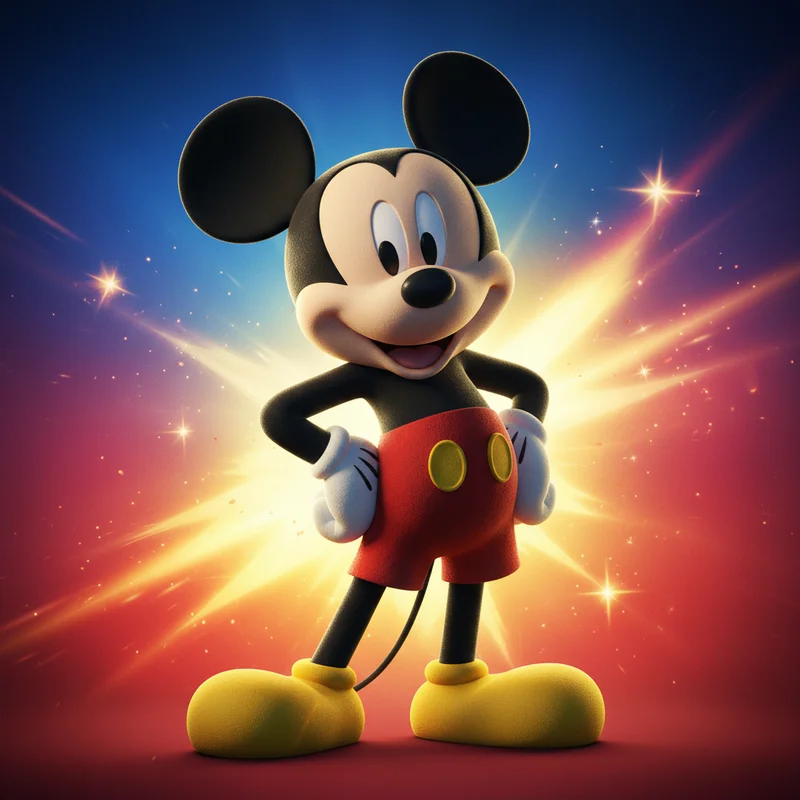
Mickey Mouse
Mickey Mouse exists as a carefully constructed simulacrum of personality, maintained by teams of brand managers, lawyers, and creative directors. The character's voice, appearance, and behaviour are controlled with precision rivalling pharmaceutical manufacturing. Mickey cannot age, cannot die, cannot behave inconsistently with brand guidelines established across decades of market research. Every smile is calculated, every adventure approved by committee, every product placement negotiated. The character represents not authentic existence but optimised commercial appeal—a hollow vessel filled with whatever attributes testing suggests will maximise engagement and revenue.