Topic Battle

Where Everything Fights Everything

Squirrel

Squirrel

Acrobatic rodent obsessed with nut collection, featuring impressive jumping skills and bushy tail.

VS
Panda

Panda

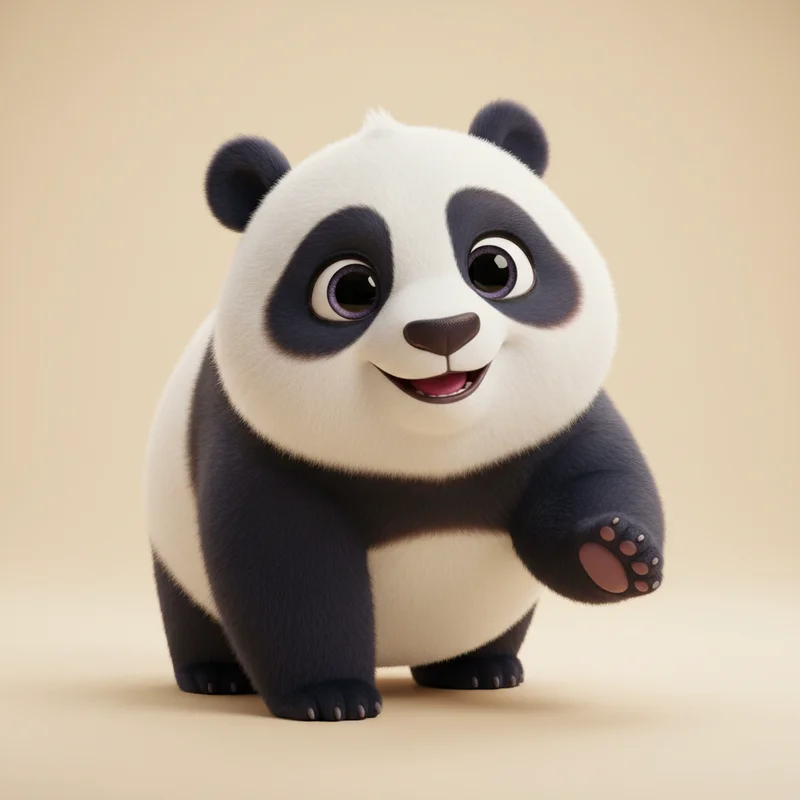
Beloved bamboo-eating bear from China, famous for black-and-white coloring and conservation symbolism.

The Matchup

The family Ursidae presents us with one of nature's most striking studies in divergent evolution. On one side stands the bear - a term encompassing everything from the formidable grizzly to the polar regions' white-furred sovereign. On the other, the giant panda, which has somehow convinced an entire planet to fund its extraordinarily inefficient lifestyle through sheer force of being adorable.

What happens when we pit evolutionary pragmatism against charismatic megafauna marketing? The answer involves rather a lot of bamboo, some surprisingly violent behaviour, and a fundamental question about what it means to be a successful species in the modern age.

Battle Analysis

Physical prowess Bear Wins
30%
70%
Squirrel Panda

Squirrel

Panda

Giant pandas possess a bite force of roughly 2,600 PSI - actually exceeding that of most bears - a jaw strength evolved specifically for crushing bamboo stems that would otherwise resist consumption. They can, theoretically, cause significant damage to threats, though their preferred response to conflict is typically to sit down and look confused.

Adult pandas weigh up to 160 kilograms, with males occasionally engaging in what might generously be termed combat during mating season. These altercations largely involve falling over repeatedly whilst making sounds reminiscent of a distressed goat.

VERDICT

Despite the panda's impressive jaw mechanics, the conventional bear wins on overall athletic capability by a considerable margin. Bears are apex predators capable of taking down elk, moose, and the occasional unfortunate hiker. Pandas are capable of sitting down slowly and occasionally rolling off branches. The comparison, whilst unfair, is nonetheless scientifically valid.

Conservation status Panda Wins
30%
70%
Squirrel Panda

Squirrel

Panda

The giant panda was officially downgraded from endangered to vulnerable in 2016, representing one of conservation's most expensive success stories. The wild population has increased to approximately 1,800 individuals, each of whom costs roughly the annual GDP of a small nation to maintain.

China has established 67 panda reserves covering 1.4 million hectares - an extraordinary commitment to an animal whose primary contribution to ecosystem function appears to be producing prodigious quantities of bamboo-scented waste.

VERDICT

The panda's conservation trajectory represents a remarkable turnaround achieved through unprecedented international cooperation and funding. Whilst several bear species face ongoing threats, none has mobilised global resources quite like the panda. Their status as the World Wildlife Fund's logo has proven more valuable than any evolutionary adaptation.

Cultural significance Panda Wins
30%
70%
Squirrel Panda

Squirrel

Panda

The giant panda serves as China's national symbol and arguably the world's most recognisable animal. Their black-and-white colouration has graced everything from global conservation logos to animated films grossing billions of dollars. Panda diplomacy remains a genuine tool of international relations, with China carefully allocating breeding pairs to nations it wishes to cultivate.

A single panda sneeze video has accumulated over 200 million views on the internet, suggesting humanity will watch pandas do essentially anything.

VERDICT

Whilst bears claim deep mythological roots across diverse cultures, the panda has achieved something unprecedented: universal modern appeal. Their cultural currency transcends national boundaries, languages, and demographics. An animal that has technically failed at evolution has somehow succeeded spectacularly at marketing.

Ecological importance Bear Wins
30%
70%
Squirrel Panda

Squirrel

Panda

Giant pandas serve primarily as umbrella species - their protection incidentally preserves habitat for thousands of other organisms sharing their mountain forest homes. However, their direct ecological contribution remains limited. They do not hunt, they do not significantly disperse seeds, and their bamboo consumption, whilst prodigious, does not meaningfully shape forest structure.

Their primary ecological function appears to be converting bamboo into fertiliser at industrial scale - approximately 28 kilograms of droppings daily - which, whilst useful for local soil nitrogen content, hardly constitutes keystone status.

VERDICT

The bear's role as ecosystem engineer versus the panda's role as expensive bamboo processing unit creates an insurmountable gap. Bears actively shape their environments in ways that benefit countless other species. Pandas, by contrast, have become dependent on ecosystems they do little to maintain - conservation's most charming passengers.

Survival adaptability Bear Wins
30%
70%
Squirrel Panda

Squirrel

Panda

The giant panda has made what ecologists politely term an unusual evolutionary choice. Despite possessing the digestive system of a carnivore, complete with a gut designed for processing meat, it has decided to subsist almost entirely on bamboo - a food source so nutritionally impoverished that pandas must consume up to 38 kilograms daily just to maintain basic metabolic function.

They possess a pseudo-thumb (actually an enlarged wrist bone) specifically evolved for gripping bamboo stems. It is rather like watching someone with a Ferrari choose to commute exclusively by pogo stick - technically possible, but one does wonder about the reasoning.

VERDICT

The bear's generalist strategy has proven vastly more effective across geological time scales. Whilst pandas have painted themselves into an extremely specific ecological corner, bears continue to colonise new territories and exploit novel food sources. The panda's commitment to bamboo represents either remarkable dedication or a spectacular failure to read the evolutionary room.

👑

The Winner Is

Squirrel

58 - 42

The bear emerges victorious with a score of 58 to 42, though this outcome requires careful interpretation. In terms of pure biological success - adaptability, physical capability, and ecological function - the conventional bear represents everything evolution should produce: flexible, powerful, and resilient.

The panda, meanwhile, has achieved something arguably more remarkable in the modern context. By being spectacularly bad at survival in almost every measurable way, it has convinced humanity to spend billions ensuring its continued existence. This represents either the ultimate evolutionary hack or the most elaborate conservation guilt trip in history.

The bear wins on merit. The panda wins on charm. In a world increasingly shaped by human decisions, one wonders which metric will prove more valuable in the long run.

Squirrel
58%
Panda
42%

Share this battle

More Comparisons