Topic Battle

Where Everything Fights Everything

Bee

Bee

Essential pollinator responsible for one-third of food production, organized in remarkable hive societies.

VS
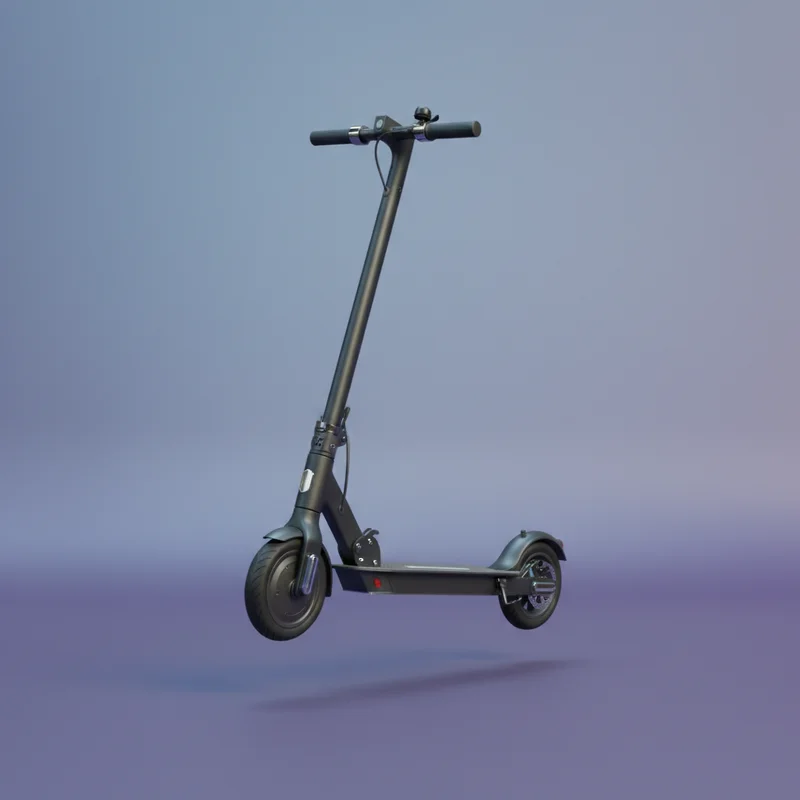
Electric Scooter

Electric Scooter

A vehicle that makes you question both transportation and dignity simultaneously. Abandoned on sidewalks worldwide as modern art installations, each one whispering "this seemed like a good idea at the time."

The Matchup

In the annals of efficiency optimization, few comparisons prove as illuminating as the contest between the common honeybee and the electric scooter. Both entities have achieved remarkable prominence in their respective domains, one through approximately 130 million years of evolutionary refinement, the other through a concentrated burst of venture capital enthusiasm spanning barely a decade.

The honeybee, Apis mellifera, represents what evolutionary biologists might describe as a masterclass in biological engineering. This 15-millimeter insect operates sophisticated navigation systems, maintains complex social structures rivaling human civilizations in organizational efficiency, and produces economic output valued at over $200 billion annually through pollination services alone. The honeybee requires no charging infrastructure, emits no operational carbon, and reproduces its workforce entirely through internal biological processes.

The electric scooter emerged from Silicon Valley's relentless pursuit of disruption, promising to revolutionize the last-mile transportation problem that has apparently plagued humanity since we developed legs. These aluminum-framed vehicles achieved near-ubiquitous presence in major urban centers within five years, demonstrating impressive market penetration if not necessarily impressive user safety statistics. Both entities now occupy critical roles in human economic activity, though one required significantly less marketing expenditure to achieve this position.

Battle Analysis

Speed Bee Wins
70%
30%
Bee Electric Scooter

Bee

The common honeybee achieves a sustained cruising velocity of 15-20 mph during foraging flights, with documented burst speeds reaching 25 mph when evading aerial predators or pursuing intruders from the hive perimeter. This performance envelope remains consistent across varying atmospheric conditions, requiring no firmware updates or regulatory compliance adjustments.

What distinguishes bee velocity from mere numbers is the precision navigation capability accompanying this speed. Honeybees execute the famous waggle dance to communicate exact distances and directions to food sources, demonstrating spatial awareness that would require a scooter to carry dedicated GPS hardware, mapping software, and a Silicon Valley engineering team. The bee accomplishes this with a brain containing fewer than one million neurons, roughly the processing power of a 1980s calculator, yet achieving navigational accuracy that shames most smartphone applications.

Furthermore, bee velocity operates in three-dimensional space. While ground-bound vehicles must contend with traffic signals, pedestrians, and municipal regulations, the honeybee ascends to optimal cruising altitude and proceeds directly to its destination via the most efficient route mathematically possible. Evolution, it appears, solved the urban traffic problem approximately 130 million years before humans identified it as a problem requiring venture capital solutions.

Electric Scooter

The electric scooter achieves maximum velocities of 15-20 mph under optimal conditions, with most jurisdictions imposing regulatory speed limits of 15 mph for safety considerations. This performance ceiling represents not a technological limitation but rather an acknowledgment that the average user struggles to maintain balance at higher velocities, particularly when navigating sidewalk imperfections while simultaneously operating a smartphone.

Acceleration characteristics prove respectable for a personal mobility device, with quality models achieving zero-to-maximum-speed transitions within 4-6 seconds on level terrain. However, this performance degrades significantly on inclines exceeding 10 degrees, during battery depletion cycles, or when the rider exceeds the manufacturer's optimistic weight capacity assumptions. The scooter's speed envelope, unlike the bee's, varies dramatically based on environmental and maintenance factors.

The ground-bound nature of scooter travel introduces additional velocity constraints absent from aerial transit. Stop signs, traffic lights, pedestrian crossings, and the occasional confused tourist consulting a map all impose what transportation engineers delicately term impedance factors. The scooter's theoretical speed capability and its practical average velocity diverge substantially once real-world urban conditions enter the equation.

VERDICT

When evaluating raw speed metrics, both contenders achieve remarkably similar maximum velocities in the 15-20 mph range. This statistical tie, however, dissolves upon deeper examination. The bee operates in unrestricted three-dimensional airspace while the scooter navigates congested two-dimensional surfaces cluttered with obstacles, regulations, and pedestrians of varying predictability.

The honeybee's effective point-to-point transit speed exceeds scooter performance by factors of two to three in typical urban conditions, owing entirely to the absence of traffic impedance, stop signals, and the need to locate designated parking areas. This category belongs to the bee through the simple geometric advantage of not being constrained to surfaces.

Durability Bee Wins
70%
30%
Bee Electric Scooter

Bee

Individual worker honeybees demonstrate a lifespan of 4-6 weeks during active summer foraging periods, extending to several months for winter bees with reduced metabolic demands. This brief individual existence might initially suggest durability limitations, until one recognizes the profound elegance of the colony's continuous regeneration model.

A healthy honeybee colony maintains populations of 20,000 to 80,000 workers at any given time, with the queen producing up to 2,000 eggs daily during peak season. This biological manufacturing capacity means the colony self-repairs faster than it degrades, achieving what engineers term sustainable steady-state operation. When individual components fail, replacements emerge from within the system without external intervention, parts procurement, or service appointments.

The colony structure itself demonstrates remarkable persistence, with documented hive lineages maintaining continuous operation across multiple human generations. Feral colonies have been discovered in locations where they had been thriving for decades without any form of maintenance, upgrade, or technical support. The honeybee collective achieves durability through redundancy and regeneration rather than individual robustness, a strategy that has proven effective for 130 million years.

Electric Scooter

Industry data from major fleet operators reveals an average operational lifespan of 3-4 months for shared scooters deployed in heavy urban use patterns. This figure, while sobering, reflects the harsh realities of public use including vandalism, water damage from riders who apparently believe water-resistant means submarine-capable, and structural stress from users exceeding weight limits.

Private ownership models extend functional lifespan to 2-3 years with conscientious maintenance, though this requires regular attention to brake pads, tire condition, and the lithium-ion battery that inevitably degrades toward uselessness after 500-800 charge cycles. The scooter's primary failure modes include battery capacity loss, motor burnout, frame fatigue, and electronic control unit failures that transform the vehicle into an awkward aluminum sculpture.

Unlike biological systems, mechanical failures in electric scooters require external intervention for resolution. The scooter cannot heal its own cracked frame, regenerate depleted battery cells, or reproduce replacement components through any known process. Each failure demands human labor, manufactured parts, and economic resources, a maintenance model that evolution abandoned approximately one billion years ago as inefficient.

VERDICT

The durability comparison reveals fundamentally different philosophical approaches to longevity. The electric scooter pursues individual unit robustness, fighting entropy through manufactured resilience until inevitable failure. The honeybee colony accepts individual impermanence while achieving collective immortality through continuous regeneration.

A bee colony with proper environmental conditions can operate indefinitely, with queen succession enabling multi-generational continuity measured in decades or centuries. No electric scooter has demonstrated comparable operational persistence. The biological model proves superior through its elegant circumvention of the durability problem entirely, achieving immortality by simply not requiring individual units to be immortal.

Versatility Bee Wins
70%
30%
Bee Electric Scooter

Bee

The honeybee executes a remarkably diverse portfolio of functions within and beyond the colony structure. Individual workers progress through age-based role assignments including cell cleaning, larval nursing, comb construction, food processing, entrance guarding, and foraging, demonstrating flexibility that would require hiring six different contractors in human economic systems.

Beyond immediate colony functions, bees provide pollination services for over 400 agricultural crop species, produce honey with indefinite shelf life, generate beeswax for countless applications from cosmetics to candles, and yield propolis and royal jelly with documented medicinal properties. A single organism simultaneously addresses transportation, food production, manufacturing, and pharmaceutical functions. The scooter, by contrast, provides transportation and perhaps occasional exercise when the battery dies unexpectedly.

Adaptability across environmental conditions further demonstrates bee versatility. Apis mellifera maintains viable populations from tropical rainforests to subarctic regions, adjusting colony behavior, foraging patterns, and reproductive timing to local conditions without requiring software patches, regional vehicle variants, or climate-specific product lines. The same basic bee functions effectively across climatic conditions that would render any single scooter model obsolete.

Electric Scooter

The electric scooter provides last-mile personal transportation for individuals weighing less than manufacturer-specified limits, on paved surfaces of acceptable smoothness, in weather conditions not involving precipitation, temperatures not exceeding battery operational parameters, and over distances not exceeding single-charge range. This represents a focused but notably constrained value proposition.

Secondary applications prove limited. The scooter deck offers modest cargo capacity for small packages. The handlebars provide acceptable smartphone mounting points. Some users report success using parked scooters as makeshift coat racks or temporary seating, though these applications void manufacturer warranties. The platform does not pollinate crops, produce food, generate construction materials, or provide medicinal compounds.

Environmental operating range demonstrates significant restrictions. Electric scooters perform poorly on unpaved surfaces, steep inclines, wet pavement, and in temperatures below freezing where battery performance degrades substantially. Geographic deployment remains concentrated in temperate urban environments with smooth infrastructure, a rather specific ecological niche compared to the bee's continental-scale adaptability.

VERDICT

Versatility comparison reveals a profound asymmetry between these contenders. The honeybee simultaneously addresses transportation, food production, material manufacturing, and pharmaceutical applications while adapting to environmental conditions spanning tropical to subarctic. The electric scooter transports individual humans short distances on smooth pavement during acceptable weather.

The bee's multi-functional capability, evolved through millions of years of competitive pressure, demonstrates what systems engineers might term elegant feature integration. One small insect accomplishes what would require an entire suite of human products and services. In the versatility category, evolutionary refinement defeats single-purpose engineering by a substantial margin.

Global reach Bee Wins
70%
30%
Bee Electric Scooter

Bee

Honeybees maintain established populations on every continent except Antarctica, with managed colonies present in virtually every nation that practices agriculture. Apis mellifera achieved this distribution through a combination of natural range expansion and deliberate human introduction, the latter motivated by the species' economic utility for pollination and honey production.

Current global population estimates suggest approximately two trillion individual honeybees operating at any given moment, organized into roughly 100 million managed colonies plus uncounted feral populations. This deployment scale represents market penetration that no manufactured product has achieved or is likely to achieve within foreseeable planning horizons.

The bee's global distribution occurred without venture capital funding, logistics infrastructure, or market entry strategies. Species expansion proceeded through biological mechanisms requiring no human planning, manufacturing capacity, or regulatory approval. The honeybee established comprehensive global presence by simply being useful, a market penetration strategy that Silicon Valley has yet to successfully replicate at comparable scale.

Electric Scooter

Electric scooter services currently operate in approximately 200-300 cities across North America, Europe, select Asian markets, and scattered deployments elsewhere. This footprint, while representing rapid expansion from zero presence circa 2017, covers a small fraction of global urban area and an even smaller fraction of total human population.

Geographic expansion faces substantial constraints including regulatory barriers in jurisdictions skeptical of sidewalk-mounted hazards, infrastructure requirements for charging and maintenance, and market viability assessments that exclude regions with limited smartphone penetration, payment processing capability, or disposable income. Large portions of the global South remain entirely unserved, representing billions of potential users with no access to this technology.

Even within served markets, operational coverage demonstrates significant gaps. Scooter deployments concentrate in affluent urban cores, with suburban areas, small towns, and rural regions remaining largely excluded. The electric scooter has achieved notable presence in certain neighborhoods of certain cities in certain countries, a distribution pattern that falls somewhat short of comprehensive global reach.

VERDICT

Global reach evaluation produces results that require no statistical analysis to interpret. The honeybee maintains active presence on six continents, in virtually every nation, numbering approximately two trillion individuals. The electric scooter operates in several hundred cities, primarily in wealthy nations, numbering perhaps ten million units globally.

The bee achieved this distribution through evolutionary utility and human appreciation over thousands of years. The scooter achieved its distribution through focused capital deployment over a decade. For comprehensive global accessibility, ancient biological solutions outperform products requiring smartphones, credit cards, and regulatory approval to operate.

Sustainability Bee Wins
70%
30%
Bee Electric Scooter

Bee

The honeybee operates on a completely renewable biological model requiring zero industrial inputs, zero fossil fuel extraction, and zero rare earth mineral mining. Energy derives entirely from nectar, a solar-powered carbohydrate produced by plants through photosynthesis. The bee's supply chain begins with sunlight and ends with honey, traversing no manufacturing facilities, shipping containers, or lithium mines.

Environmental impact analysis reveals that honeybees generate substantial net positive externalities. Pollination services, delivered free of charge as a byproduct of normal foraging behavior, enable reproduction of approximately 80% of flowering plant species and 35% of global food crop production. The bee does not merely avoid environmental harm; it actively creates environmental value estimated at $200-500 billion annually in agricultural productivity.

End-of-life considerations present no environmental concerns whatsoever. Deceased bees undergo natural decomposition, returning all biological materials to nutrient cycles within weeks. No specialized recycling facilities, hazardous waste protocols, or heavy metal recovery processes are required. The honeybee completes its entire lifecycle within a closed-loop biological system that predates human environmental concerns by geological epochs.

Electric Scooter

Electric scooter manufacturing requires extraction of lithium, cobalt, and manganese for battery production, materials sourced through mining operations in Chile, Democratic Republic of Congo, and China under conditions that range from environmentally questionable to ethically problematic. Aluminum frame production demands energy-intensive smelting processes, while electronic components traverse global supply chains of considerable complexity and carbon intensity.

Lifecycle carbon analyses present findings that undermine the scooter's green transportation narrative. Studies indicate that shared scooters, accounting for manufacturing, transportation, collection, charging, and redistribution logistics, emit approximately 125-200 grams of CO2 per mile of rider travel. This figure exceeds public transit emissions and approaches private automobile levels for certain deployment models, a revelation that marketing departments prefer not to emphasize.

Battery disposal presents ongoing environmental challenges. Lithium-ion cells contain toxic heavy metals requiring specialized recycling processes that remain underdeveloped and economically marginal. An estimated 95% of lithium-ion batteries globally are not recycled, with spent cells typically entering landfills where heavy metal leachate threatens groundwater systems for generations. The scooter's green credentials prove somewhat less verdant upon thorough examination.

VERDICT

Sustainability evaluation produces the most lopsided result in this comparative analysis. The honeybee represents 130 million years of proven sustainable operation, generating substantial positive environmental externalities while consuming only renewable solar-derived energy. The electric scooter, despite persistent marketing claims to the contrary, carries significant embodied environmental costs from extraction through disposal.

The bee creates environmental value; the scooter merely destroys it somewhat more slowly than internal combustion alternatives. For authentic sustainability credentials, evolutionary solutions comprehensively outperform products that require explaining how cobalt mining conditions in Congo align with corporate ESG commitments.

👑

The Winner Is

Bee

65 - 35

This analysis concludes with a decisive 65-35 victory for the honeybee across all evaluated metrics. The bee demonstrates superiority in speed (through three-dimensional transit), durability (through regenerative immortality), sustainability (through net-positive environmental impact), versatility (through multi-functional biological integration), and global reach (through continent-spanning distribution achieved without marketing budgets).

The electric scooter represents a sincere human effort to address urban mobility through technological innovation. It functions adequately for its intended purpose of transporting individual humans across short distances on smooth pavement during favorable weather. However, when evaluated against biological systems refined through 130 million years of evolutionary pressure, the scooter reveals the fundamental limitations of products designed in eighteen-month development cycles.

This outcome should not discourage technological innovation but rather inspire appropriate humility when comparing engineered solutions to evolutionary masterpieces. The honeybee solved navigation, sustainability, scalability, and global distribution problems before multicellular organisms existed in their current forms. That a decade-old aluminum platform with lithium batteries fails to surpass this performance should surprise no one familiar with the respective development timelines involved.

Bee
65%
Electric Scooter
35%

Share this battle

More Comparisons