
Topic Battle

Where Everything Fights Everything

Capybara

Capybara

The world's largest rodent and unofficial mascot of unbothered living. A creature so chill that every other animal wants to sit on it. Has achieved a level of inner peace most humans will never know.

VS
Chaos

Chaos

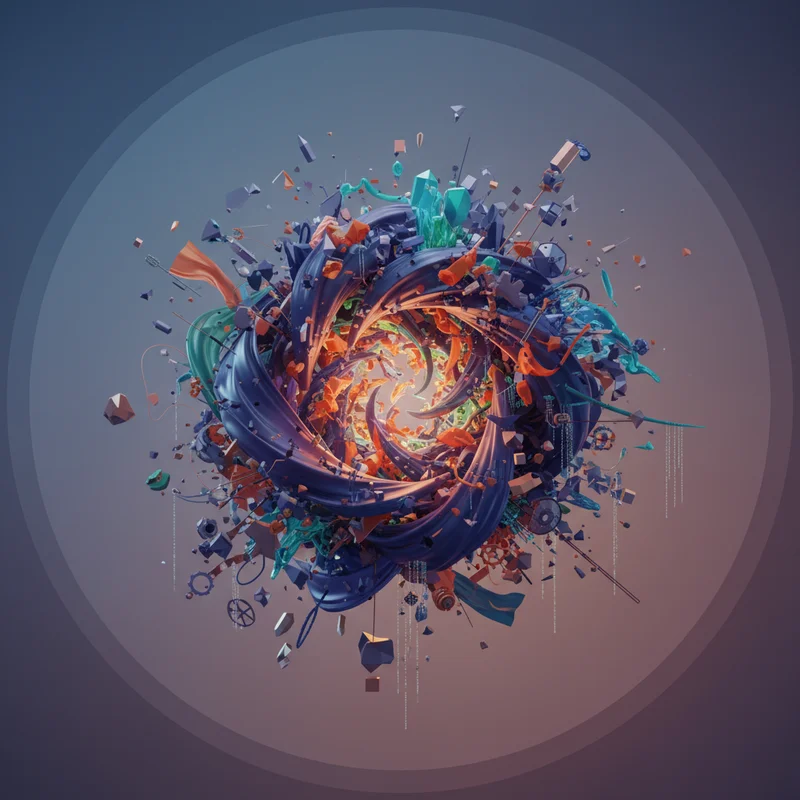
Disorder and unpredictability in systems.

Battle Analysis

Resilience chaos Wins
30%
70%
Capybara Chaos

Capybara

The capybara has survived for approximately 4 million years as a distinct species, navigating ice ages, predator evolution, and dramatic habitat changes. Their survival strategy combines social cohesion, semi-aquatic evasion, and remarkably efficient digestion of low-nutrition grasses. When faced with predators—jaguars, caimans, anacondas—capybaras flee to water, where they can remain submerged for up to five minutes.

More impressively, capybaras have demonstrated psychological resilience against the chaos of modern human encroachment. Rather than fleeing civilisation, they have integrated into urban environments, appearing in gated communities, golf courses, and public parks across South America. Their response to disruption is not panic but placid adaptation, a resilience born of temperament rather than aggression.

Chaos

Chaos exhibits resilience of a fundamentally different nature: it cannot be diminished, only locally and temporarily opposed. Every ordered system—from crystals to corporations—represents a brief rebellion against entropy that ultimately fails. The physicist Erwin Schrodinger noted that life itself functions by extracting order from its environment, but this merely exports chaos elsewhere; the net entropy of any closed system always increases.

Human civilisation has dedicated considerable resources to opposing chaos: filing systems, governments, regular maintenance schedules. None of these efforts diminishes chaos globally; they merely concentrate order temporarily in localised regions whilst increasing disorder elsewhere. Chaos cannot be defeated; it can only be postponed.

VERDICT

Chaos is mathematically guaranteed to persist beyond all ordered systems, including the universe itself
Accessibility capybara Wins
70%
30%
Capybara Chaos

Capybara

Accessing a capybara experience requires considerable logistical coordination. One must travel to South America, Japan's capybara hot spring facilities, or one of the limited zoos maintaining populations. Legal ownership as exotic pets is prohibited in most jurisdictions, with only a handful of American states permitting private capybara keeping, typically requiring special permits. The cost of capybara acquisition, where legal, exceeds several thousand pounds, excluding ongoing expenses for appropriate habitat and veterinary care.

However, digital access to capybaras has achieved near-universality. Photographs and videos of contented capybaras proliferate across social media platforms, providing vicarious relaxation to billions. The accessibility of capybara content, if not actual capybaras, has never been higher in human history.

Chaos

Chaos is inescapable, which represents either perfect accessibility or no accessibility at all, depending on one's perspective. One cannot purchase chaos or travel to experience it because one is already experiencing it continuously. The coffee cooling on your desk is chaos. The thoughts arising unbidden in your mind are chaos. The unpredictable delays in public transportation are chaos made tangible.

This ubiquity renders chaos oddly difficult to perceive directly. Humans evolved pattern-recognition systems that filter chaos into comprehensible narratives. Experiencing chaos as chaos requires deliberate philosophical practice—meditation on impermanence, contemplation of entropy, or simply observing one's carefully organised life becoming gradually less organised over time.

VERDICT

Capybaras offer accessible, digestible contentment via social media; chaos requires philosophical training to perceive clearly
Emotional impact capybara Wins
70%
30%
Capybara Chaos

Capybara

The capybara's emotional impact upon human observers borders on the therapeutic. Research in zoological psychology suggests that viewing images of capybaras produces measurable decreases in cortisol levels. The creature's perpetually relaxed expression—those half-closed eyes, that slight upward curve suggesting contentment—triggers parasympathetic nervous system responses associated with calm and safety. In Japan, capybara hot spring encounters have become legitimate wellness tourism, with visitors reporting reduced anxiety after mere minutes of observation.

The capybara asks nothing of the viewer. It does not perform, does not seek attention, does not appear to notice the existential crises of those observing it. This indifference to human anxiety, paradoxically, dissolves that anxiety. The capybara suggests, through its mere existence, that relaxation is possible despite the circumstances surrounding it.

Chaos

Chaos produces emotional responses of an altogether different character. The awareness of universal entropy generates what existentialist philosophers term Angst—a fundamental unease arising from confrontation with the nature of existence. Knowing that all ordered systems, including oneself, will eventually succumb to disorder produces anxiety that no meditation application can fully address.

However, chaos also provides emotional liberation. The Stoic philosophers recognised that accepting what cannot be controlled eliminates much unnecessary suffering. Buddhist practice similarly incorporates impermanence as a pathway to peace. The emotional impact of chaos, therefore, proves paradoxical: it is simultaneously the source of existential dread and the cure for it, depending entirely upon one's philosophical framework.

VERDICT

The capybara delivers consistent stress reduction without requiring philosophical sophistication to access its benefits
Practical utility capybara Wins
70%
30%
Capybara Chaos

Capybara

The capybara provides measurable practical utility across several domains. Their grazing maintains wetland ecosystems, preventing vegetation overgrowth that could alter water flow patterns. In some South American communities, capybaras serve as food sources, their meat permitted during Lent by Catholic tradition due to historical classification as fish-adjacent. Their hides produce leather, and their presence in ecotourism generates millions in annual revenue for conservation areas.

Beyond material utility, capybaras provide psychological utility of considerable value. Their role as stress-reduction agents, wellness tourism attractions, and internet content has measurable economic impact. A single viral capybara video generates engagement metrics worth thousands in advertising equivalent value.

Chaos

Chaos provides utility so fundamental it escapes notice. Without chaos, thermodynamic processes would cease—no heat transfer, no chemical reactions, no life. The random mutations chaos introduces to genetic material drive evolution itself; every species, including Homo sapiens, exists because chaos periodically disrupts genetic copying. Weather patterns essential for agriculture depend upon chaotic atmospheric dynamics.

Furthermore, chaos provides the utility of creative destruction. Obsolete systems must decay for new systems to emerge. The chaos that dissolved previous civilisations created space for new ones. Innovation requires the chaos that disrupts established patterns. Without chaos, the universe would be static, ordered, and utterly lifeless.

VERDICT

Capybara utility is tangible and monetisable; chaos's contributions are too fundamental to commodify
Universal presence chaos Wins
30%
70%
Capybara Chaos

Capybara

The capybara's range is, from a cosmic perspective, embarrassingly limited. These creatures inhabit only South America, distributed from Panama through Brazil to northern Argentina. Their semi-aquatic requirements restrict them further to areas with adequate water sources and temperatures above 10 degrees Celsius. The total global capybara population numbers in the hundreds of thousands—significant for a large mammal, but representing an infinitesimally small fraction of Earth's biomass.

Beyond Earth, capybara presence drops to precisely zero. No capybara has visited the Moon, orbited in any spacecraft, or established populations on other planets. Their universal presence is, in the strictest sense, not universal at all but highly localised to specific wetland ecosystems within a single continent on a single planet.

Chaos

Chaos achieves presence through the Second Law of Thermodynamics, which operates identically whether one examines a coffee cup in London or a star in the Andromeda Galaxy. Entropy increases in all closed systems, without exception, throughout the observable universe and presumably beyond. This is not belief but mathematical certainty.

Chaos was present at the universe's creation during the Big Bang, governs the formation of galaxies and planets, and will persist long after the last star exhausts its fuel. Current cosmological models suggest the universe's ultimate fate is heat death—maximum entropy, complete disorder, eternal uniformity. Chaos does not merely have universal presence; chaos is the universe's destination.

VERDICT

Chaos operates identically from quantum scales to cosmic distances; capybaras require wetlands and temperatures above 10C
👑

The Winner Is

Capybara

54 - 46

This examination yields a result that challenges intuition: the capybara prevails with a score of 54 to 46. This outcome does not suggest that a semi-aquatic rodent has overcome the fundamental laws of physics—such a claim would be preposterous. Rather, it reflects a more nuanced truth about the nature of meaning and measurement.

Chaos wins where scale determines value. Its universal presence and resilience are unassailable by any metric. No capybara, however serene, can compete with a principle woven into the fabric of existence itself. Yet in the domains that matter to conscious experience—emotional impact, accessibility, and practical utility—the capybara demonstrates something remarkable: the possibility of localised peace within cosmic disorder.

The capybara does not defeat chaos. Instead, it demonstrates that victory over chaos was never the point. The capybara coexists with entropy, achieving contentment not despite chaos but within it. This may be the greater achievement.

Capybara
54%
Chaos
46%

Share this battle

More Comparisons