
Topic Battle

Where Everything Fights Everything

Capybara

Capybara

The world's largest rodent and unofficial mascot of unbothered living. A creature so chill that every other animal wants to sit on it. Has achieved a level of inner peace most humans will never know.

VS
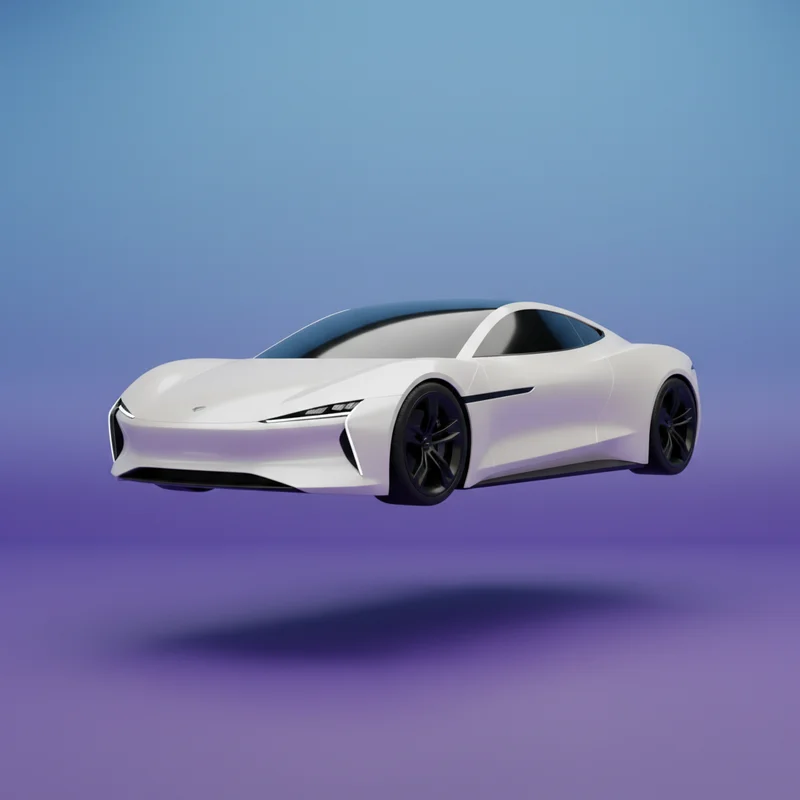
Electric Car

Electric Car

Zero-emission vehicle quietly revolutionizing transportation.

Battle Analysis

Top speed electric_car Wins
30%
70%
Capybara Electric Car

Capybara

When motivated by predators such as jaguars or caimans, the Capybara can achieve sprint speeds of approximately 35 kilometres per hour. This is, admittedly, not competitive with modern automotive technology. However, the Capybara demonstrates considerable wisdom in its reluctance to hurry, preferring a measured pace that conserves energy and maintains its characteristic dignity.

In water, the Capybara's partially webbed feet provide propulsion at approximately 8 kilometres per hour, sufficient to evade most aquatic threats whilst remaining energy-efficient. The creature has clearly determined that rushing is, on balance, unnecessary for a successful life.

Electric Car

The Electric Car has obliterated assumptions about electric vehicle performance. Premium models achieve 0 to 100 kilometres per hour in under 2 seconds, with top speeds exceeding 320 kilometres per hour in certain configurations. The instant torque delivery of electric motors provides acceleration that leaves combustion vehicles appearing distinctly agricultural.

This tremendous velocity comes at the cost of range, battery degradation, and the ever-present risk of speed-related mortality. The Electric Car can achieve in seconds what the Capybara cannot manage at all, though whether this represents progress remains philosophically contested.

VERDICT

320 km/h versus 35 km/h represents a decisive victory, however spiritually hollow rapid transit may be.
Social behaviour capybara Wins
70%
30%
Capybara Electric Car

Capybara

The Capybara has achieved something that continues to elude human civilisation: genuine community harmony. These remarkable rodents live in groups of 10 to 20 individuals, sharing resources without apparent conflict and welcoming virtually any creature that seeks their company. Photographs circulating on the internet document Capybaras tolerating birds, monkeys, rabbits, and even small crocodilians with equal serenity.

Scientists have studied this interspecies diplomacy with considerable fascination. The Capybara appears to lack the territorial aggression that characterises most mammals, including our own species. It has, through evolutionary happenstance, developed a temperament that might best be described as aggressively peaceful.

Electric Car

The Electric Car's social dynamics operate through an entirely different mechanism: conspicuous virtue signalling. Ownership announces membership in a tribe of the environmentally conscious, the technologically progressive, and the financially comfortable. This social function may, in fact, exceed the vehicle's transportation utility for certain purchasers.

However, the Electric Car has also introduced new forms of social friction. Charging station conflicts, range-anxiety induced rudeness, and the insufferable tendency of owners to discuss their vehicles at dinner parties have created previously unknown categories of interpersonal tension. The Capybara, by contrast, has never ruined a single cocktail party.

VERDICT

The Capybara's legendary tolerance and genuine community harmony eclipse the Electric Car's performative environmentalism.
Energy efficiency capybara Wins
70%
30%
Capybara Electric Car

Capybara

The Capybara operates on a fuel system of breathtaking simplicity. Grass enters one end, motion emerges from the other, with the intervening chemistry handled by a digestive system refined over millions of years. The adult Capybara consumes approximately 3 to 4 kilograms of vegetation daily, converting this humble biomass into everything required for survival: warmth, movement, reproduction, and that extraordinary placidity for which the species is celebrated.

This grass-to-motion conversion represents a closed-loop system that would make any sustainability consultant weep with envy. The Capybara produces no emissions beyond those naturally absorbed by the very grasses it consumes. Its carbon footprint is, in the strictest accounting, essentially zero.

Electric Car

The Electric Car's energy efficiency has improved dramatically since its resurrection from technological obscurity. Modern variants achieve approximately 4 miles per kilowatt-hour, converting electrical energy to motion with roughly 85 to 90 percent efficiency, a figure that humiliates the internal combustion engine's pitiful 20 to 30 percent.

However, this efficiency calculation conveniently ignores the entire supply chain that delivers electrons to the charging port. Power plant losses, transmission line degradation, and the considerable energy required to manufacture the vehicle itself reduce the true efficiency substantially. The Capybara, requiring no factories, no power grid, and no lithium mines in politically unstable regions, suffers no such accounting complications.

VERDICT

The Capybara's grass-powered existence achieves true zero-emission locomotion without manufacturing or infrastructure requirements.
Global popularity capybara Wins
70%
30%
Capybara Electric Car

Capybara

The Capybara has experienced a remarkable surge in global affection, particularly among internet users who have discovered its extraordinary tolerance and photogenic disposition. The hashtag #capybara has accumulated billions of views across social platforms, with the creature becoming an unlikely symbol of calm in an anxious age.

In Japan, Capybara cafes and hot spring experiences draw queues of devotees seeking proximity to these peaceful giants. The creature has transcended its South American origins to become a global phenomenon, beloved precisely because it asks nothing of its admirers except the opportunity to exist without interference. Global Capybara population remains approximately 500,000 individuals, each one generating disproportionate internet engagement.

Electric Car

Electric vehicle sales have grown exponentially, reaching approximately 14 million units annually by 2023, representing roughly 18 percent of global car sales. Government incentives, charging infrastructure expansion, and genuine environmental concern have accelerated adoption beyond early projections.

However, the Electric Car remains a considered purchase rather than an object of pure affection. Owners may appreciate their vehicles, but they rarely experience the emotional response that a Capybara photograph generates. The Electric Car is respected; the Capybara is adored. These are fundamentally different forms of popularity.

VERDICT

Billions of views and genuine adoration outweigh 14 million annual sales driven primarily by practicality and tax incentives.
Maintenance requirements capybara Wins
70%
30%
Capybara Electric Car

Capybara

The Capybara's maintenance requirements are satisfied by access to water, grass, and companionship. The semi-aquatic rodent requires regular immersion to maintain skin health, a need it fulfils through the simple expedient of sitting in ponds for extended periods. Its diet of grasses and aquatic plants involves no supply chains, no grocery deliveries, and no complex preparation beyond the act of chewing.

Healthcare needs are managed by a robust immune system developed over millennia of natural selection. The Capybara requires no software updates, no recall notices for defective components, and no appointments with specialist technicians. When parts wear out, the creature simply produces replacement offspring, a self-repair mechanism of elegant efficiency.

Electric Car

The Electric Car has reduced maintenance requirements compared to its combustion ancestors, eliminating oil changes, spark plug replacements, and the periodic humiliation of catalytic converter theft. The electric motor's 20 moving parts contrast favourably with the combustion engine's 2,000, representing a genuine engineering achievement.

However, the Electric Car remains dependent upon a vast infrastructure of charging networks, software engineers, and occasional dealer visits for issues beyond home diagnosis. The battery pack, that heavy heart of lithium cells, will eventually require replacement at costs approaching the original purchase price of some vehicles. The Capybara's grass dependency seems comparatively modest.

VERDICT

Grass, water, and companionship versus charging infrastructure and eventual battery replacement is no contest.
👑

The Winner Is

Capybara

54 - 46

After rigorous examination across five dimensions of comparative merit, the Capybara prevails with a score of 54 to 46. This outcome may surprise those who expected technological sophistication to triumph over biological simplicity, yet the Capybara's victory reflects deeper truths about sustainable existence.

The Electric Car represents humanity's most determined effort to continue driving whilst addressing environmental catastrophe. It is a compromise, an acknowledgment that we cannot simply stop moving but perhaps could move more conscientiously. The Capybara, by contrast, represents no compromise whatsoever. It is a creature that achieved perfect adaptation to its environment millions of years before humanity invented the concept of carbon offsets.

In an era defined by anxiety, complexity, and the relentless pursuit of optimisation, the Capybara offers a radical alternative: the possibility that sufficiency is enough. It consumes grass, produces contentment, and has never once required a software patch to function correctly. The Electric Car is the future; the Capybara suggests the future might benefit from more grass and fewer batteries.

Capybara
54%
Electric Car
46%

Share this battle

More Comparisons