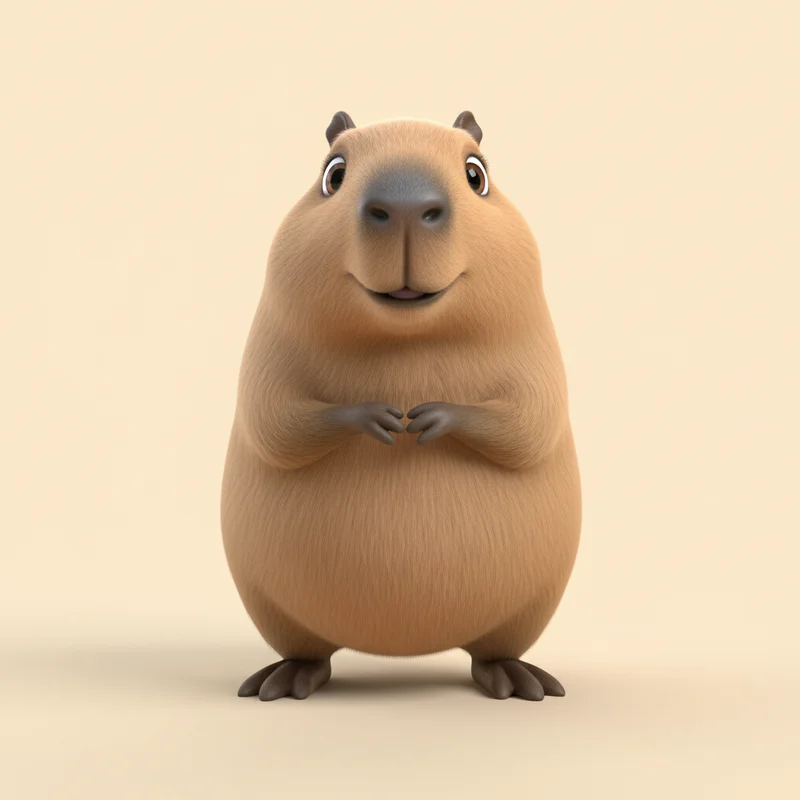

Capybara
The capybara demonstrates remarkable biological adaptability within its ecological niche. Its semi-aquatic lifestyle allows it to exploit both terrestrial and aquatic food sources. Webbed feet enable proficient swimming, whilst dense fur provides insulation and buoyancy. Capybaras can hold their breath for up to five minutes, allowing them to evade predators by submerging entirely. They have colonised habitats ranging from densely forested riverbanks to open savannas, requiring only access to water and vegetation. Perhaps most impressively, capybaras have proven adaptable to human presence, thriving in urban parks and golf courses where other species have perished. They seem genuinely untroubled by modernity, treating lawn sprinklers as acceptable substitutes for natural waterholes.
Glacier
The glacier's relationship with adaptability is, to put it charitably, complicated. Glaciers cannot adapt in any biological sense—they respond mechanically to environmental conditions. When temperatures rise, they retreat; when snowfall increases, they advance. This is not adaptation but rather thermodynamic inevitability. Glaciers cannot migrate to cooler regions when their current location becomes inhospitable. They cannot develop new behaviours or physiological responses to changing conditions. Their inflexibility is absolute and, in our current climate crisis, tragically consequential. The Thwaites Glacier—nicknamed the 'Doomsday Glacier'—cannot adapt to warming ocean waters; it can only collapse, potentially raising sea levels by metres.