Topic Battle

Where Everything Fights Everything

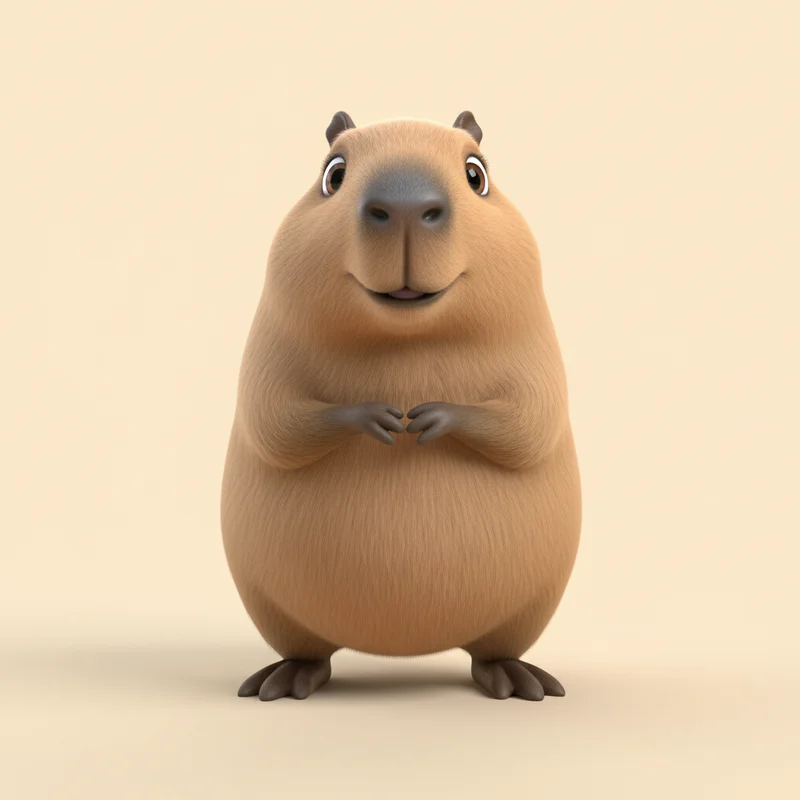
Capybara

Capybara

The world's largest rodent and unofficial mascot of unbothered living. A creature so chill that every other animal wants to sit on it. Has achieved a level of inner peace most humans will never know.

VS
Bear

Bear

Powerful omnivore ranging from polar ice to forest streams, equally skilled at fishing and frightening campers.

Battle Analysis

Physical prowess gorilla Wins
30%
70%
Capybara Bear

Capybara

The capybara, despite its rather rotund and unassuming appearance, possesses several remarkable physical attributes. Weighing between 35 to 66 kilograms, it is the undisputed heavyweight champion of the rodent world, a title held for approximately 10 million years. Its webbed feet provide exceptional aquatic mobility, allowing it to remain submerged for up to five minutes whilst evading predators. The capybara's teeth grow continuously throughout its life, reaching impressive lengths if not worn down by its fibrous diet. However, when compared to the raw athletic capability of larger mammals, the capybara's physical prowess remains, one might say, modestly unspectacular.

Bear

VERDICT

The gorilla's raw strength and physical capability dwarf the capybara's modest rodent musculature by an order of magnitude.
Ecological impact gorilla Wins
30%
70%
Capybara Bear

Capybara

Within the Pantanal and Amazon ecosystems, the capybara serves as a keystone species of considerable importance. As the primary prey item for jaguars, anacondas, and caimans, it forms the foundation of the large predator food web. Its grazing behaviour maintains grassland ecosystems, preventing the overgrowth of aquatic vegetation that might otherwise choke waterways. The capybara's prodigious defecation habits, producing up to 700 faecal pellets daily, distribute nutrients across vast areas and provide food for coprophagous insects. Additionally, birds such as the cattle tyrant benefit from insect disturbance caused by capybara movement, creating a mobile buffet of displaced invertebrates.

Bear

VERDICT

Gorillas' role in seed dispersal and forest regeneration creates measurable ecosystem-wide impacts on biodiversity.
Social intelligence gorilla Wins
30%
70%
Capybara Bear

Capybara

The capybara has achieved something rather extraordinary in the animal kingdom: universal likability. These gregarious rodents live in groups of 10 to 20 individuals, though gatherings of up to 100 have been observed during dry seasons. What makes the capybara truly remarkable is its role as the great diplomat of the wetlands. Birds perch upon its back, crocodilians share its pools, and even typically aggressive species seem to declare a truce in its presence. This phenomenon, dubbed by internet culture as being friends with every animal, speaks to an exceptional capacity for non-threatening social interaction that transcends species boundaries.

Bear

VERDICT

While capybaras excel at interspecies harmony, gorillas demonstrate higher cognitive social abilities including language acquisition.
Cultural significance capybara Wins
70%
30%
Capybara Bear

Capybara

The capybara has achieved an extraordinary modern renaissance in human cultural consciousness. Once known primarily to South American residents and zoologists, the capybara has become an internet phenomenon of remarkable proportions. The image of a capybara sitting placidly whilst various animals perch upon it has spawned countless memes celebrating its supposed wisdom and inner peace. In Japan, capybara hot spring photographs have become iconic symbols of relaxation, whilst the phrase capybara energy has entered the vernacular to describe a state of unbothered tranquillity. Indigenous South American cultures have long utilised capybara meat, and the Catholic Church famously classified it as fish for Lenten consumption.

Bear

VERDICT

The capybara's recent cultural explosion and universal likability have created unprecedented global affection for a rodent.
Survival adaptability capybara Wins
70%
30%
Capybara Bear

Capybara

The capybara has evolved into a supremely efficient survival machine within its ecological niche. Its amphibious lifestyle provides dual-environment protection; when jaguars approach from land, it retreats to water, and when caimans lurk below, it can outrun them on shore. The capybara's digestive system is a marvel of bacterial engineering, capable of extracting maximum nutrition from tough grasses through a process called caecotrophy, wherein it consumes its own specially produced faeces to re-digest nutrients. This unglamorous but effective strategy ensures survival even when food quality is poor. Furthermore, capybaras can sleep submerged in water with only their nostrils exposed, a remarkable adaptation that has ensured species longevity.

Bear

VERDICT

The capybara's generalist diet, dual-environment living, and stable population demonstrate superior evolutionary adaptability.
👑

The Winner Is

Bear

45 - 55

After rigorous examination across multiple dimensions, we must conclude that the gorilla emerges as the superior creature, though by a margin narrower than initial expectations might suggest. The gorilla's overwhelming advantages in physical prowess and cognitive social intelligence, combined with its critical role in forest ecosystem maintenance, establish it as one of Earth's most remarkable mammals. Its profound similarity to humans makes it a powerful ambassador for wildlife conservation, whilst its endangered status lends urgency to its cause. However, the capybara's achievements should not be dismissed: its superior adaptability, unique ecological niche, and extraordinary cultural ascendancy demonstrate that evolution finds many paths to success. In the final analysis, the gorilla takes the crown with 55 points to the capybara's 45, a testament to both creatures' exceptional place in the natural order.

Capybara
45%
Bear
55%

Share this battle

More Comparisons