
Topic Battle

Where Everything Fights Everything

Capybara

Capybara

The world's largest rodent and unofficial mascot of unbothered living. A creature so chill that every other animal wants to sit on it. Has achieved a level of inner peace most humans will never know.

VS
London

London

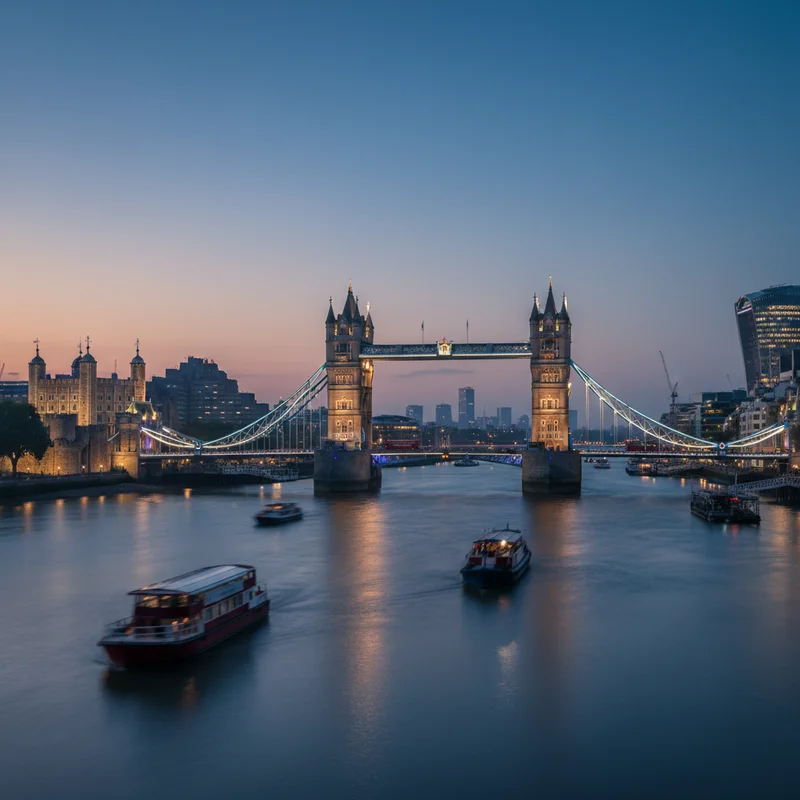
Historic city with questionable weather and great museums.

Battle Analysis

Global influence london Wins
30%
70%
Capybara London

Capybara

The capybara's global influence remains geographically constrained. Native populations exist only in South America, from Panama to northern Argentina, with small introduced populations in Florida and Japan. The creature's influence on global affairs approximates zero; no treaties have been signed in capybara interests, no economies restructured around capybara requirements, no military alliances formed for capybara protection.

The capybara does not seek influence, which may constitute its most attractive quality. It makes no demands of humanity, requires no resources extracted from distant continents, and concerns itself entirely with immediate comfort rather than geopolitical positioning. This modesty is admirable but does not constitute influence by any conventional metric.

London

London's global influence, whilst diminished from imperial peak, remains extraordinary. The city serves as home to the world's largest foreign exchange market, processing $2.7 trillion daily. Greenwich Mean Time established the global reference point from which all other time zones are calculated. English, standardised substantially through London's publishing industry, functions as the primary language of international commerce, aviation, and diplomacy.

The city hosts diplomatic missions from virtually every nation, serves as headquarters for numerous international organisations, and maintains cultural soft power that persists decades after political empire dissolved. London's legal frameworks, exported through colonial administration, continue governing commerce and governance across the Commonwealth. Whether this influence has proven beneficial varies by perspective, but its extent remains undeniable.

VERDICT

London's influence over global finance, language, law, and timekeeping exceeds the capybara's South American habitat range.
Stress management capybara Wins
70%
30%
Capybara London

Capybara

The capybara has achieved a state of perpetual relaxation that meditation instructors charge substantial fees to approximate. Photographic evidence consistently depicts these creatures in postures suggesting they have solved the fundamental riddles of contentment without recourse to self-help literature or expensive retreats. Their resting heart rate remains remarkably stable even when surrounded by creatures that might reasonably be considered predators. The capybara's approach to stress involves simply not experiencing it, a technique that psychologists have yet to successfully replicate in human subjects despite considerable research funding.

In their natural habitat, capybaras spend hours floating motionlessly in warm water, their nostrils barely breaking the surface, achieving states of relaxation that human beings typically require pharmaceutical assistance to attain. The capybara does not worry about mortgage payments, career advancement, or whether it replied to that important email. The capybara simply exists, contentedly, asking nothing of the universe but grass and companionship.

London

London approaches stress management through what social scientists might generously term exposure therapy. The city's residents experience daily encounters with overcrowded tube carriages, property prices requiring three generations of mortgage commitments, and weather systems that shift from precipitation to different forms of precipitation with monotonous regularity. Stress is not managed in London so much as accumulated, stored within the collective consciousness of the metropolitan population like interest in a particularly punitive savings account.

The city does provide stress relief mechanisms: 170 museums (many free), 3,000 parks, and approximately 7,500 pubs offering liquid remediation. However, accessing these amenities requires navigating the very infrastructure that induced the stress initially. Studies indicate London residents experience higher anxiety levels than their rural counterparts, suggesting the city functions less as a stress management system and more as a stress generation facility with occasional pleasant interludes.

VERDICT

The capybara's innate ability to achieve contentment without effort surpasses any stress management strategy London provides.
Environmental impact capybara Wins
70%
30%
Capybara London

Capybara

The capybara's environmental footprint approaches something resembling ecological neutrality. These creatures consume approximately 3.5 kilograms of grass daily, returning nutrients to their ecosystem through entirely natural processes. Their grazing patterns help maintain wetland vegetation balance, whilst their role as prey supports populations of jaguars, caimans, and anacondas in their native habitats. The capybara asks little of its environment and takes only what it requires, operating within ecological parameters established long before human consciousness emerged to complicate matters.

Carbon emissions associated with capybara existence are effectively zero, unless one counts the modest methane production inherent to all grass-consuming mammals. The capybara does not require power stations, motorways, or waste disposal infrastructure. It simply lives, reproduces, and eventually contributes its nutrients back to the ecosystem that sustained it—a perfectly circular biological economy.

London

London's environmental impact presents rather different characteristics. The city produces approximately 9.6 million tonnes of CO2 annually, generates 7 million tonnes of waste, and maintains a built environment that has replaced wetlands, forests, and meadows across 1,572 square kilometres with concrete, glass, and accumulated frustration. The Thames, once effectively dead from industrial pollution, has improved considerably but remains distinctly less pristine than any capybara-inhabited waterway.

However, London increasingly leads in urban sustainability initiatives: the Ultra Low Emission Zone, extensive cycling infrastructure, and renewable energy targets suggest the city recognises its environmental responsibilities. Population density, whilst uncomfortable for residents, proves more environmentally efficient than equivalent populations dispersed across rural landscapes. London produces less emissions per capita than most developed-world alternatives, though this remains cold comfort to glaciers worldwide.

VERDICT

The capybara's carbon-neutral existence and ecological integration surpass any metropolitan sustainability initiative.
Cultural contribution london Wins
30%
70%
Capybara London

Capybara

The capybara's cultural contribution has emerged primarily within the last decade, achieving what marketing professionals might describe as exponential brand growth. The phrase "OK I pull up" has achieved meme immortality, whilst capybara content generates millions of views across social media platforms. Capybara cafes have emerged in Japan. The creature has become an unofficial mascot for relaxation, contentment, and the rejection of contemporary anxiety culture.

However, the capybara has produced no literature, composed no symphonies, and constructed no architectural monuments. Its cultural contribution consists entirely of existing pleasantly whilst humanity projects meaning onto its serene countenance. The capybara neither creates nor interprets culture; it merely provides a canvas upon which humans paint their aspirations toward simplicity.

London

London's cultural contributions span virtually every field of human creative endeavour. The city has served as birthplace or home to Shakespeare, Dickens, Woolf, and countless others whose works define the English language literary canon. Musical movements from Handel through the Beatles to grime have emerged from London's streets. Architectural traditions spanning Gothic, Georgian, Victorian, and Brutalist periods create a physical record of eight centuries of aesthetic evolution.

The British Museum contains artefacts from civilisations spanning human history. The West End represents the world's oldest commercial theatre district. London's fashion, design, and advertising industries influence global aesthetic standards. The city produces culture at industrial scale, exporting creative output that shapes human consciousness worldwide. Whether this contribution improves human existence remains debatable; that it exists at extraordinary volume is beyond dispute.

VERDICT

London's millennia of literary, artistic, musical, and architectural contributions dwarf the capybara's recent meme celebrity.
Social infrastructure london Wins
30%
70%
Capybara London

Capybara

Capybara social structure operates on principles of unconditional acceptance that human societies have failed to replicate despite millennia of philosophical inquiry. These rodents form groups ranging from 10 to 100 individuals, maintaining harmonious relations through what appears to be genuine indifference to hierarchy, competition, or the accumulation of status. The capybara's legendary friendliness extends beyond species boundaries; photographs regularly depict them tolerating—indeed, seemingly welcoming—birds, monkeys, and even cats resting upon their considerable backs.

However, capybara social infrastructure requires specific environmental conditions to function: warm climates, abundant water, and sufficient grassland. Their society cannot scale beyond the wetlands of South America, nor has it produced institutions capable of educating youth, treating illness, or adjudicating disputes more complex than who occupies the warmest patch of mud.

London

London's social infrastructure represents two thousand years of accumulated institutional development. The city contains 43 universities, over 100 hospitals, legal institutions dating to medieval foundations, and a cultural establishment that has shaped global discourse on everything from parliamentary democracy to the proper preparation of tea. The National Health Service, despite its challenges, provides healthcare to nine million residents without enquiring into their ability to pay.

The city's social fabric incorporates communities from over 200 nations, speaking more than 300 languages, maintaining traditions from across human civilisation whilst simultaneously creating new cultural hybrids. London's theatres, galleries, and educational institutions have trained artists, scientists, and leaders whose influence extends far beyond the city's boundaries. This infrastructure is expensive, frequently frustrating, and occasionally maddening—but it represents human organisation at an unprecedented scale of complexity.

VERDICT

London's universities, hospitals, cultural institutions, and governance systems represent social infrastructure the capybara cannot replicate.
👑

The Winner Is

London

45 - 55

The comprehensive analysis yields a final score of London 55, Capybara 45, a margin closer than initial impressions might suggest. The capybara's victories in stress management and environmental impact represent genuine philosophical alternatives to metropolitan existence. The creature has solved problems that human civilisation continues to struggle with: how to exist contentedly without anxiety, how to live within ecological limits without sacrificing quality of life, how to maintain social harmony without complex institutional frameworks.

Yet London's advantages in social infrastructure, cultural contribution, and global influence reflect the accumulated achievements of human organisation at scale. The city has produced systems capable of educating millions, treating illness across populations, and creating cultural works that will outlast their creators by centuries. The capybara offers no equivalent to universities, hospitals, or libraries—nor does it require them.

This comparison ultimately illuminates competing visions of the good life: complex achievement versus simple contentment. London represents humanity's restless drive toward accumulation, creation, and influence. The capybara represents the possibility that perhaps none of this was strictly necessary. Both approaches have merit; the scores reflect which provides more measurable outcomes rather than which offers superior wisdom.

Capybara
45%
London
55%

Share this battle

More Comparisons