Topic Battle

Where Everything Fights Everything

Capybara

Capybara

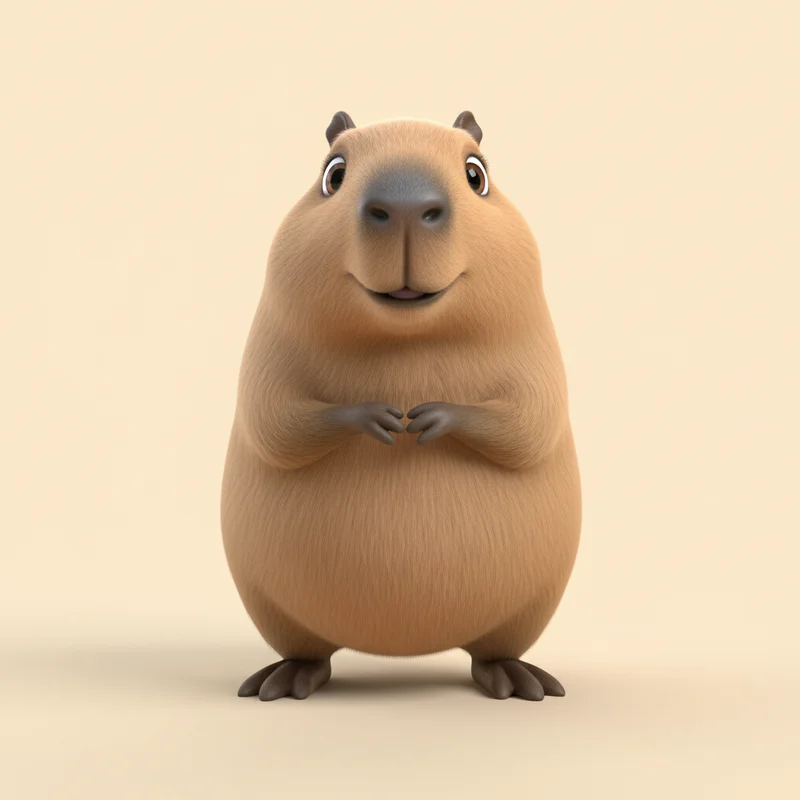
The world's largest rodent and unofficial mascot of unbothered living. A creature so chill that every other animal wants to sit on it. Has achieved a level of inner peace most humans will never know.

VS
Penguin

Penguin

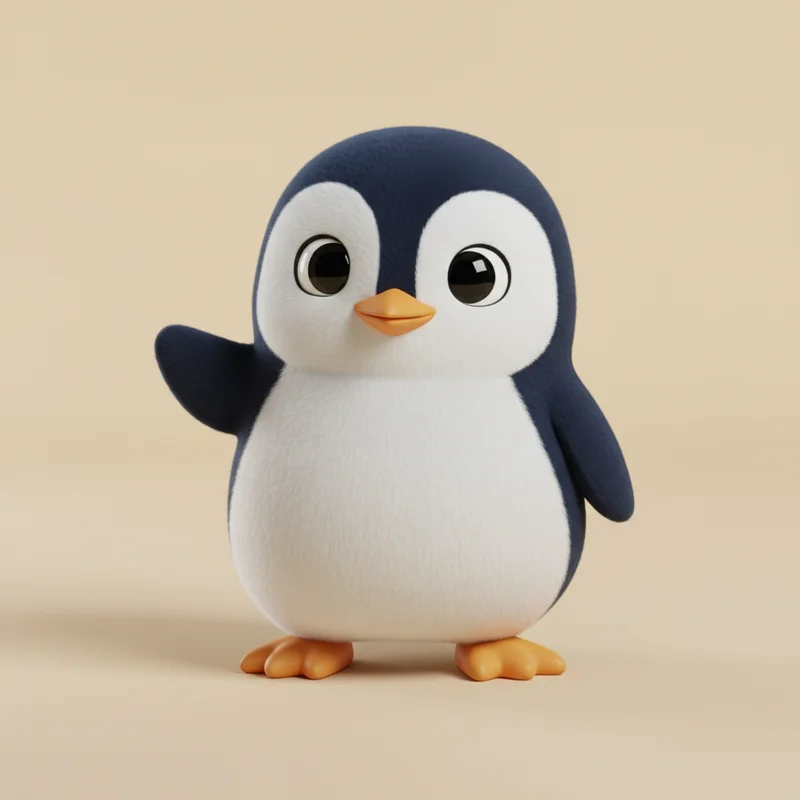
Flightless seabird thriving in Antarctic conditions, famous for adorable waddles and dedicated parenting.

Battle Analysis

Cultural impact capybara Wins
70%
30%
Capybara Penguin

Capybara

The capybara's cultural ascendancy in the digital age represents one of the more unexpected phenomena of 21st-century media. Once known primarily to South Americans and specialist zoologists, the capybara has become a global internet sensation, its placid expression and apparent immunity to stress resonating with anxious modern audiences. The phrase 'OK I pull up' has achieved memetic immortality, whilst capybara hot spring photographs from Japan have accumulated views numbering in the hundreds of millions. Japanese onsen operators now consider capybara exhibits major tourist attractions. The creature has been adopted as an unofficial mascot for mindfulness, its apparent ability to simply exist without drama offering a philosophical template for stressed humanity.

Penguin

Penguins have maintained cultural prominence for considerably longer, their distinctive silhouette achieving iconic status across multiple generations. From March of the Penguins to Happy Feet, from Penguin Books to the Linux operating system's Tux mascot, the penguin's image permeates global consciousness. Documentary filmmakers have invested millions chronicling penguin behaviour, whilst penguin exhibits reliably rank among the most popular attractions at zoological facilities worldwide. The creature's apparent formal attire has spawned countless anthropomorphic comparisons, making it perhaps the most 'dressed up' bird in human imagination. Yet one might argue this long familiarity has bred a certain cultural taken-for-grantedness that the capybara's fresh novelty has yet to encounter.

VERDICT

The capybara's meteoric rise to internet stardom and adoption as a symbol of millennial calm represents cultural impact of remarkable velocity.
Survival strategy capybara Wins
70%
30%
Capybara Penguin

Capybara

The capybara's survival strategy might be summarised as 'be large, be aquatic, be friends with everyone'. At up to 66 kilograms, they have outgrown many potential predators through sheer dimensional ambition. Their semi-aquatic lifestyle provides escape routes unavailable to purely terrestrial prey, whilst their exceptional swimming speed of up to 35 kilometres per hour leaves most pursuers splashing in frustrated bewilderment. The capybara's digestive system, featuring a caecum of extraordinary proportions, extracts maximum nutrition from grasses through coprophagy, the strategic consumption of their own specially-produced faeces. This apparent indelicacy represents metabolic genius, enabling survival in habitats where other herbivores would face nutritional deficiency.

Penguin

Penguin survival strategies vary dramatically across the 18 recognised species, but all share certain extraordinary adaptations. Their counter-shaded plumage provides camouflage from both above and below during marine foraging, whilst their solid bones, unique among birds, enable dives exceeding 500 metres in emperor penguins. The huddling behaviour of Antarctic species, rotating individuals between the warm centre and cold periphery, represents collective survival of remarkable sophistication. Penguins have survived for approximately 60 million years, weathering ice ages and climate fluctuations that extinguished countless other lineages. Their continued existence in some of Earth's most hostile environments speaks to evolutionary resilience of the highest order.

VERDICT

The capybara's strategy of universal amicability and aquatic escape routes proves surprisingly effective with minimal apparent effort.
Social intelligence capybara Wins
70%
30%
Capybara Penguin

Capybara

The capybara has elevated social harmony to an art form that would make diplomatic corps worldwide seethe with envy. These remarkable rodents live in groups of ten to twenty individuals, though congregations of up to one hundred have been documented during dry seasons. What truly distinguishes the capybara, however, is its extraordinary interspecies diplomacy. Birds perch upon its back. Monkeys groom its fur. Even caimans, those prehistoric killing machines, seem to regard the capybara with something approaching respect. Scientists have observed this phenomenon with increasing fascination, dubbing the capybara the 'friend-shaped' creature of the animal kingdom. Their social bonds are maintained through a complex vocabulary of clicks, whistles, and barks that would put many primate communication systems to shame.

Penguin

Penguins, by contrast, approach social organisation with all the chaotic intensity of a London tube station during rush hour. Emperor penguin colonies can exceed 5,000 breeding pairs, creating acoustic environments so cacophonous that individual recognition requires vocal signatures of remarkable precision. The Aptenodytes forsteri has evolved the ability to identify its mate and offspring amongst thousands of near-identical birds, a feat of auditory processing that humbles even sophisticated computer algorithms. Yet penguin society, for all its impressive scale, lacks the capybara's cross-species charm. Penguins are notoriously quarrelsome, engaging in flipper-slapping disputes over pebbles and territory with a frequency that suggests therapy might be in order.

VERDICT

The capybara's remarkable interspecies diplomacy and universal likeability outweighs the penguin's impressive but insular colony dynamics.
Parenting excellence penguin Wins
30%
70%
Capybara Penguin

Capybara

Capybara parenting operates on a communal philosophy that would gladden the hearts of progressive childcare advocates everywhere. Females within a group practise alloparental care, nursing and protecting any youngster regardless of biological relationship. Pups, typically born in litters of four to five, can suckle from any lactating female in the group, creating a safety net of distributed responsibility that maximises survival rates. Males, whilst less directly involved in nursing duties, contribute to group vigilance with admirable dedication. The system produces capybara youth that are remarkably well-adjusted, reaching independence within approximately 16 weeks whilst maintaining lifelong social bonds with their natal group.

Penguin

Emperor penguin parenting represents perhaps the most heroic sacrifice in the avian world. Males endure the Antarctic winter without food for approximately 115 days, balancing a single precious egg upon their feet whilst females journey up to 100 kilometres to open water for feeding. The male's brood pouch maintains egg temperature at 38 degrees Celsius whilst ambient temperatures plummet to life-threatening extremes. Upon hatching, chicks receive their first meal of 'crop milk', a protein-rich secretion produced by the male's oesophagus. This relay system of parental dedication, with both parents subsequently alternating feeding duties across vast distances, represents a commitment to offspring survival that verges on the miraculous.

VERDICT

The emperor penguin's four-month fast in Antarctic darkness represents parental sacrifice of almost incomprehensible magnitude.
Environmental adaptation penguin Wins
30%
70%
Capybara Penguin

Capybara

The capybara has claimed the semi-aquatic niche with characteristic understated excellence. These rotund engineers possess webbed feet that transform them into surprisingly graceful swimmers, capable of remaining submerged for up to five minutes whilst evading predators. Their eyes, ears, and nostrils are positioned high on their heads in a configuration that allows near-total submersion whilst maintaining sensory awareness, a design so elegant that hippopotamuses might take notes. The capybara's dense, barrel-shaped body provides exceptional buoyancy, whilst their coarse fur dries with remarkable efficiency. They have colonised habitats from Panamanian rainforests to Argentine grasslands, demonstrating a thermal tolerance that spans tropical humidity to temperate winters.

Penguin

The penguin's environmental adaptations border on the superheroic. Emperor penguins endure temperatures of minus 60 degrees Celsius and winds exceeding 200 kilometres per hour during Antarctic winters, conditions that would render most vertebrates into frozen sculptures within minutes. Their feathers, numbering approximately 100 per square centimetre, create an insulation system of extraordinary efficiency. Beneath this lies a layer of blubber that can constitute up to 30 percent of body mass before breeding. The countercurrent heat exchange system in their flippers and feet prevents thermal loss with engineering precision that would impress mechanical engineers. Penguins have conquered environments where no other bird dares breed, a testament to evolutionary determination of the highest order.

VERDICT

Surviving Antarctic winters represents an extreme of environmental adaptation that the capybara's tropical comfort cannot match.
👑

The Winner Is

Capybara

54 - 46

In this extraordinary confrontation between the world's largest rodent and the ocean's most committed non-flyer, we witness two fundamentally different approaches to evolutionary success. The penguin has chosen the path of heroic endurance, surviving conditions that would destroy most life forms through sheer physiological determination and collective sacrifice. The capybara has selected an alternative strategy entirely: radical equanimity. By becoming genuinely likeable to virtually every creature it encounters, including its own predators on occasion, the capybara has achieved a form of survival through charisma that evolution rarely permits. Both approaches have proven remarkably successful across millions of years. Yet in our modern age, where stress and anxiety plague human consciousness with unprecedented intensity, the capybara's philosophy of calm persistence offers something the penguin's heroic suffering cannot match: a template for living.

Capybara
54%
Penguin
46%

Share this battle

More Comparisons