
Topic Battle

Where Everything Fights Everything

Capybara

Capybara

The world's largest rodent and unofficial mascot of unbothered living. A creature so chill that every other animal wants to sit on it. Has achieved a level of inner peace most humans will never know.

VS
Tokyo

Tokyo

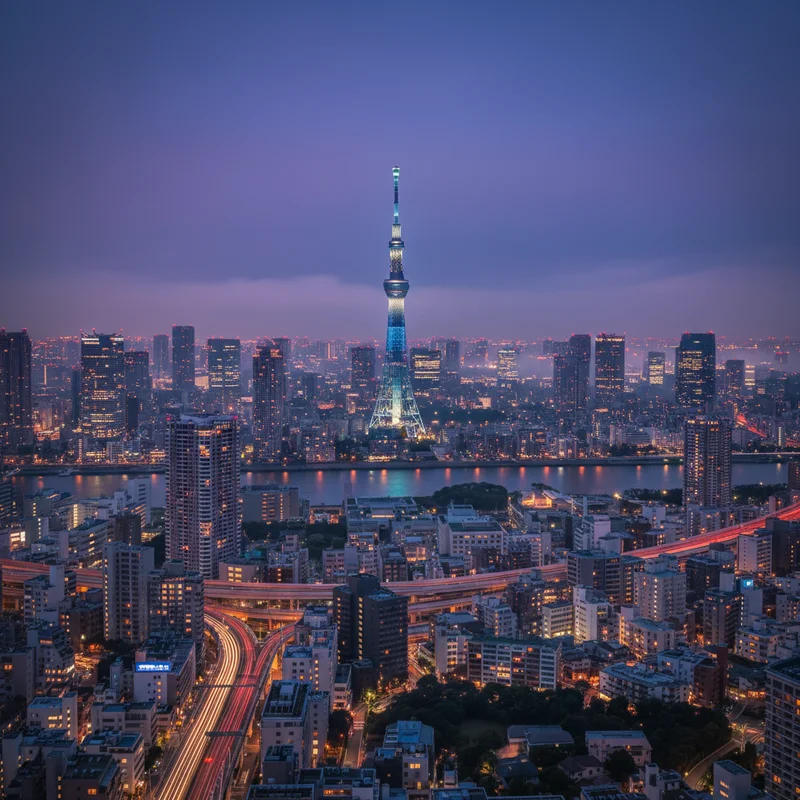
Neon-lit metropolis blending ancient and ultramodern.

Battle Analysis

Social harmony capybara Wins
70%
30%
Capybara Tokyo

Capybara

The capybara exists in a state of remarkable interspecies diplomacy. Photographs circulate endlessly online depicting capybaras cohabiting peacefully with ducks, rabbits, cats, dogs, and even the occasional caiman. This is not mere tolerance but something approaching universal acceptance. Scientists believe the capybara's lack of aggression stems from its position as neither apex predator nor desperate prey; it occupies a comfortable middle ground where conflict serves no evolutionary purpose. Their vocalisations, a series of clicks, whistles, and barks, facilitate group cohesion without hierarchy. In the capybara world, there are no arguments about whose turn it is to hunt because nobody hunts. There are no territorial disputes because everywhere is acceptable. They have achieved what human philosophers have sought for millennia: peace through complete absence of ambition.

Tokyo

Tokyo maintains social harmony through an intricate web of unwritten rules and cultural expectations so complex they require years of study to master. The concept of wa (harmony) governs interactions from boardroom negotiations to supermarket queue behaviour. Mobile phones are silenced on trains not by law but by collective agreement. Taxi doors open and close automatically to prevent any awkward fumbling. The city's famously low crime rate reflects not police presence but internalised social contracts. Yet this harmony comes at psychological cost: the phenomenon of hikikomori (social withdrawal) affects an estimated one million citizens, and the pressures of conformity contribute to concerning mental health statistics. Tokyo's harmony is real but requires constant, exhausting maintenance.

VERDICT

The capybara achieves effortless harmony through biology while Tokyo's requires exhausting social performance.
Global cultural influence tokyo Wins
30%
70%
Capybara Tokyo

Capybara

The capybara has achieved meme supremacy. The phrase 'OK I pull up' accompanied by capybara imagery has become a universal symbol of casual confidence. Japanese culture in particular has embraced the creature, featuring it in anime, plush toys, and the aforementioned hot spring tourism. Capybara cafes have proliferated across Asia, where patrons pay premium prices to sit beside these phlegmatic rodents. Yet this influence remains primarily internet-based and novelty-driven. The capybara represents a mood, an aesthetic, a vibe rather than substantive cultural contribution. No philosophical movements, architectural styles, or technological innovations trace their origins to capybara contemplation. Its influence, while broad, remains shallow: a pleasant ripple across the surface of global consciousness.

Tokyo

Tokyo's cultural radiation extends into virtually every aspect of global modernity. The city has exported anime, manga, video games, fashion movements, culinary techniques, and architectural philosophies that have reshaped international culture. Japanese convenience store culture, originating in Tokyo's konbini, has influenced retail worldwide. The city's street fashion districts of Harajuku and Shibuya have spawned movements replicated in every major city. Toyota, Sony, Nintendo, and countless other Tokyo-based enterprises have fundamentally altered how humanity transports, entertains, and communicates. Where the capybara offers a feeling, Tokyo offers infrastructure, art forms, and technologies that have permanently modified human civilisation. This is influence measured not in social media engagement but in the fundamental reshaping of daily life across continents.

VERDICT

Tokyo's cultural exports have reshaped global civilisation; the capybara has reshaped global group chats.
Thermoregulation strategy capybara Wins
70%
30%
Capybara Tokyo

Capybara

The capybara has elevated thermoregulation to an art form. As semi-aquatic mammals, they spend significant portions of their day submerged in water, their nostrils, eyes, and ears positioned atop their heads like a furry submarine's periscope array. When water is unavailable, they wallow in mud with such obvious contentment that Japanese hot spring resorts now offer capybara onsen experiences, where tourists observe the rodents lounging in steaming baths, often with yuzu oranges floating around them. The capybara does not merely regulate its temperature; it transforms the act into performance art. Their barrel-shaped bodies are perfectly adapted to retaining warmth while submerged, and their webbed feet propel them through water with surprising grace. For a rodent, this represents evolutionary sophistication of the highest order.

Tokyo

Tokyo's approach to climate control involves approximately 3.2 million air conditioning units and a summer heat island effect that raises temperatures 2-3 degrees Celsius above surrounding areas. The city has responded with technology including reflective road surfaces, misting systems at transit stations, and the world's most elaborate underground retail network, where citizens escape surface temperatures by shopping beneath the earth. Winter brings the cultural phenomenon of kotatsu, heated tables with blankets that trap warmth, and the ubiquitous hokkairo disposable heat packs. Tokyo's thermoregulation is expensive, energy-intensive, and requires the coordination of millions of individual decisions. It works, but it lacks the capybara's elegant simplicity.

VERDICT

The capybara's biological thermoregulation achieves comfort through evolutionary elegance rather than electricity bills.
Sustainability and longevity capybara Wins
70%
30%
Capybara Tokyo

Capybara

The capybara represents eight million years of evolutionary refinement. The family Caviidae has existed since the Miocene epoch, perfecting a lifestyle so sustainable it requires minimal adaptation. Capybaras are herbivores consuming grasses and aquatic plants, leaving virtually no environmental footprint beyond fertilising the riverbanks they inhabit. Their population remains stable not through conservation efforts but through sheer ecological equilibrium. They face no existential threats beyond habitat destruction caused by the very civilisations they coexist with so peacefully. A capybara consumes what it needs, reproduces at replacement rates, and exists in perfect balance with its environment. This is sustainability achieved through biological wisdom rather than policy intervention.

Tokyo

Tokyo presents a sustainability paradox. The city consumes prodigious resources: its carbon footprint exceeds that of many nations, its food supply relies on global shipping networks, and its infrastructure requires constant energy input merely to function. Yet Tokyo also leads in efficiency innovations, from hybrid vehicles to energy-conscious building design to the world's most effective recycling systems. The city is actively pursuing carbon neutrality by 2050, implementing green hydrogen infrastructure and expanding urban forestry. However, its fundamental model of concentrated human habitation remains resource-intensive by definition. Tokyo's longevity depends not on equilibrium but on continuous technological innovation to offset its own demands. The city is sustainable only insofar as human ingenuity can stay ahead of human consumption.

VERDICT

The capybara has sustained itself for 8 million years through equilibrium; Tokyo sustains itself through constant invention.
Population density management tokyo Wins
30%
70%
Capybara Tokyo

Capybara

The capybara approaches population density with the casualness of a creature that simply does not care who sits upon it. In their natural habitat along South American riverbanks, capybaras form groups of 10 to 40 individuals, tolerating this proximity with an equanimity that borders on the philosophical. Smaller animals routinely perch atop them: monkeys, birds, and even the occasional tortoise, all treated with the same benevolent indifference. The capybara has solved the density problem by simply refusing to acknowledge it as a problem. Their personal space is, quite literally, everyone's space. This Zen-like approach to crowding has made them the animal kingdom's most effective public relations specimen, spawning countless memes celebrating their unflappable nature.

Tokyo

Tokyo manages a staggering 6,363 persons per square kilometre with an efficiency that would make any urban planner weep with admiration. The city has transformed potential chaos into a symphony of choreographed movement. Rush hour at Shinjuku Station sees 3.6 million passengers daily navigate platforms with balletic precision, guided by oshiya (professional pushers) who compress humanity into train carriages with remarkable courtesy. The city achieves this through an infrastructure of underground passages, elevated walkways, and social protocols so refined that queue-jumping is treated as a minor form of moral collapse. Where the capybara tolerates density passively, Tokyo actively engineers solutions that transform crush into function.

VERDICT

Tokyo's engineered approach to density management exceeds the capybara's passive tolerance by several orders of magnitude.
👑

The Winner Is

Tokyo

45 - 55

In this extraordinary confrontation between rodent and metropolis, Tokyo emerges victorious by the slimmest of margins, a testament to how closely these seemingly incomparable entities align in their pursuit of harmonious existence. Tokyo's triumph rests upon its undeniable scale of achievement: the city has engineered solutions to human cohabitation that the capybara's passive acceptance, however admirable, cannot match. Where the capybara tolerates density, Tokyo choreographs it. Where the capybara influences internet culture, Tokyo reshapes global civilisation.

Yet this verdict comes with profound caveats. The capybara has achieved through biology what Tokyo requires trillions of yen and constant vigilance to maintain. The rodent's thermoregulation costs nothing; Tokyo's air conditioning grid could power small nations. The capybara's social harmony emerges from contentment; Tokyo's from social pressure that occasionally breaks its citizens. In sustainability, the capybara demonstrates that true longevity comes not from innovation but from equilibrium. Tokyo wins this battle, but one suspects the capybara, lounging in its warm bath with characteristic indifference, never cared about winning in the first place.

Capybara
45%
Tokyo
55%

Share this battle

More Comparisons