Topic Battle

Where Everything Fights Everything

Capybara

Capybara

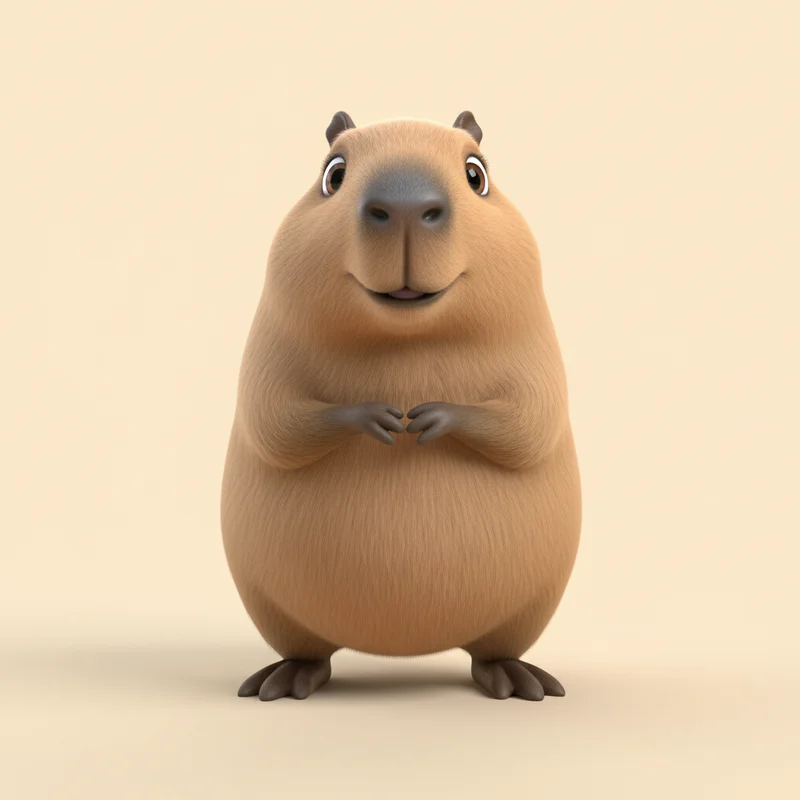
The world's largest rodent and unofficial mascot of unbothered living. A creature so chill that every other animal wants to sit on it. Has achieved a level of inner peace most humans will never know.

VS
Wolverine

Wolverine

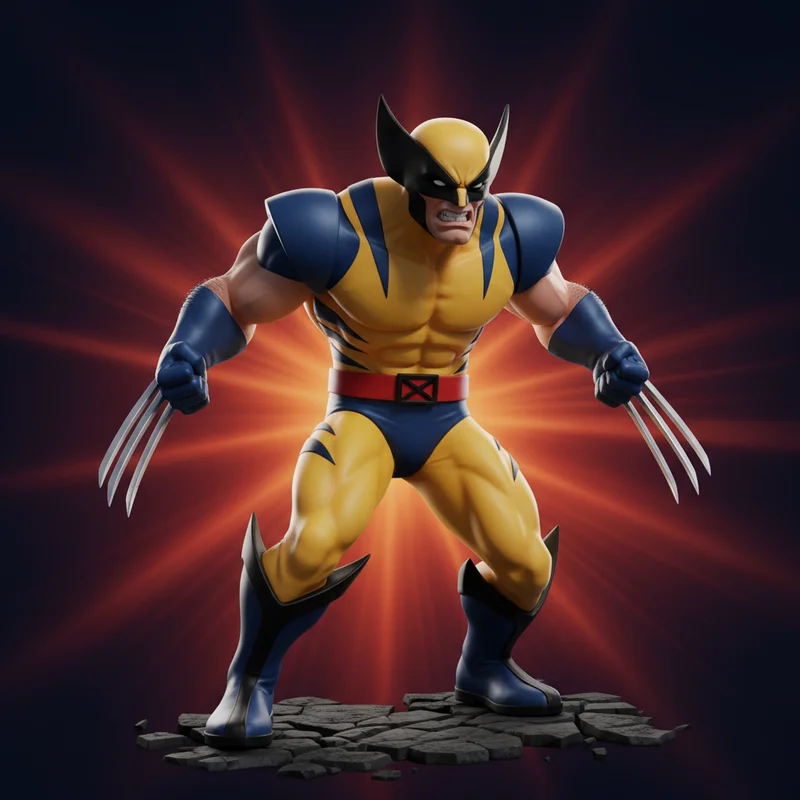
Clawed mutant with regeneration and anger issues.

Battle Analysis

Cultural impact capybara Wins
70%
30%
Capybara Wolverine

Capybara

The capybara has achieved unprecedented cultural status as the animal kingdom's chill ambassador. Social media accounts dedicated to capybara content accumulate millions of followers, whilst the phrase 'OK I pull up' (referencing a viral capybara video) has entered internet lexicon. Japanese hot spring facilities have installed capybara exhibits, recognising the species' remarkable appeal to stressed humans. The 'animals chilling with capybaras' meme genre has produced thousands of iterations celebrating their universal acceptability. Fashion brands have released capybara merchandise, animated films have featured capybara characters, and the species has become shorthand for a lifestyle philosophy emphasising acceptance and calm. For a rodent that primarily eats grass and swims, this cultural penetration represents a remarkable achievement.

Wolverine

Wolverine stands as one of Marvel Comics' most enduring and profitable characters since his 1974 debut. Hugh Jackman's portrayal across nine films spanning 17 years has cemented the character in popular consciousness, whilst comic appearances number in the thousands. The character has influenced action hero archetypes, popularised the 'tortured immortal' narrative, and generated billions in merchandise revenue. Wolverine appears in video games, animated series, and countless crossover events, his cultural footprint extending across every medium available. However, this impact exists primarily within entertainment contexts rather than generating the broader lifestyle movement the capybara has inspired. People want to be like Wolverine; they want to feel like a capybara.

VERDICT

Inspiring a global movement toward calm acceptance exceeds entertainment franchise success in cultural depth.
Stress management capybara Wins
70%
30%
Capybara Wolverine

Capybara

The capybara has become the internet's unofficial mascot for healthy stress management. Their baseline emotional state appears to be a deep, unshakeable contentment regardless of circumstances. Whether surrounded by predators, photographed by tourists, or used as seating by other animals, the capybara maintains an expression of serene indifference that has launched thousands of motivational memes. Physiological studies indicate their heart rate remains remarkably stable across situations that would elevate stress hormones in comparable mammals. This capacity for calm has made them popular in Japanese animal cafes, where stressed urban professionals pay to experience their tranquil presence. The capybara does not manage stress so much as appear unaware that stress exists as a concept available for experience.

Wolverine

Wolverine's stress management consists primarily of not managing stress. His documented coping mechanisms include drinking, smoking cigars, isolating himself in the Canadian wilderness, and periodic episodes of berserker rage during which he loses conscious control of his actions. The character's psychological profile includes PTSD from multiple wars, grief from outliving everyone he loves, and the ongoing trauma of having his skeleton experimentally bonded with metal. Whilst his healing factor repairs physical damage, it provides no equivalent benefit for psychological wounds. His stress levels remain perpetually elevated, occasionally modulated by brief moments of human connection immediately followed by tragedy. The contrast with capybara serenity could scarcely be more pronounced.

VERDICT

Achieving inner peace through existence vastly outperforms berserker rage as a stress response.
Social intelligence capybara Wins
70%
30%
Capybara Wolverine

Capybara

The capybara has achieved what behavioural scientists describe as 'universal friend' status across the animal kingdom. Documented interactions show capybaras peacefully coexisting with monkeys, birds, rabbits, cats, dogs, ducks, and even crocodilians who, by all accounts, should view them as lunch. This remarkable social success stems not from any aggressive diplomacy but from what researchers term profound indifference to potential threats. The capybara simply does not appear concerned about being eaten, bitten, or harassed, a disposition so disarming that would-be predators frequently abandon their intentions entirely. Videos of capybaras permitting pelicans to sit upon their heads whilst they bathe have accumulated billions of views, suggesting this social strategy resonates with human observers seeking similar tranquillity.

Wolverine

Wolverine's social interactions follow a predictable pattern: initial hostility, reluctant cooperation, eventual tragedy. His interpersonal skills, whilst improved since his early 'stab first, ask questions never' period, remain fundamentally confrontational. Team dynamics typically involve Wolverine disagreeing with leadership, threatening colleagues, and eventually saving everyone whilst complaining about it. His romantic relationships demonstrate a consistent capacity for deep emotional connection followed by the death of whoever he loved, a pattern so reliable it has become a recognised narrative trope. Whilst he has formed genuine friendships with characters including Nightcrawler and Jubilee, these relationships succeed despite rather than because of his social approach. The concept of allowing a pelican to sit upon his head remains, by all assessments, inconceivable.

VERDICT

Universal cross-species acceptance surpasses reluctant team membership achieved through centuries of practice.
Combat effectiveness wolverine Wins
30%
70%
Capybara Wolverine

Capybara

The capybara's combat capabilities are, by objective measurement, minimal. Equipped with large incisors capable of gnawing through vegetation, the species possesses no documented offensive applications beyond the theoretical capacity to bite aggressors. Their primary defensive strategy involves entering water, where their superior swimming abilities provide escape from land-based predators. When confrontation proves unavoidable, capybaras have been observed standing their ground with an expression suggesting they simply cannot muster the emotional investment required for combat. This strategy, whilst ineffective against dedicated predators, often confuses aggressors expecting the standard prey response of panic and flight. However, against any opponent with genuine violent intent, the capybara's combat record remains distinctly negative.

Wolverine

Wolverine possesses six retractable adamantium claws, an indestructible skeleton, enhanced senses, and approximately 150 years of combat experience across multiple wars, dimensions, and timelines. His fighting style incorporates samurai techniques learned in Japan, military training from various conflicts, and what can only be described as chemically-enhanced fury. The adamantium bonding process rendered his claws capable of cutting through virtually any material, whilst his healing factor ensures injuries that would incapacitate ordinary combatants merely irritate him. Conservative documentation suggests he has defeated thousands of opponents including ninjas, robots, aliens, and fellow mutants, losing only to opponents wielding narrative immunity or particularly powerful magnets. His combat effectiveness represents perhaps the most one-sided category in this entire analysis.

VERDICT

Adamantium claws and a century of warfare experience decisively outperform gnawing and swimming away.
Evolutionary success capybara Wins
70%
30%
Capybara Wolverine

Capybara

The capybara represents 65 million years of rodent evolution optimised for South American wetland survival. Their semi-aquatic adaptations include webbed feet, eyes and ears positioned high on the head for swimming, and a digestive system capable of extracting nutrients from tough aquatic vegetation. The species has thrived across changing climates, avoiding extinction events that eliminated countless competitors. Their social structure, involving groups of 10-20 individuals with complex hierarchies, demonstrates sophisticated evolutionary programming for cooperative survival. Current population estimates suggest the species faces no immediate extinction risk, their adaptive strategies proving robust against contemporary challenges. From an evolutionary perspective, the capybara represents a decisively successful biological experiment.

Wolverine

Wolverine exists as a fictional construct rather than an evolutionary product, complicating direct comparison. His abilities result from mutation (the healing factor) and human intervention (adamantium bonding) rather than natural selection. Within his fictional context, his survival across 150+ years demonstrates remarkable fitness, though this longevity depends upon regenerative powers that bypass normal evolutionary constraints. The character cannot reproduce his abilities through offspring, representing an evolutionary dead end regardless of individual survival. From a biological perspective, Wolverine is not a species but a singular anomaly, impressive in individual terms but contributing nothing to any lineage's long-term evolutionary success.

VERDICT

Sixty-five million years of successful natural selection outweighs fictional mutation conferring individual immortality.
👑

The Winner Is

Capybara

52 - 48

This investigation has revealed a profound philosophical divide between two approaches to survival: the capybara's strategy of radical acceptance versus Wolverine's commitment to aggressive resistance. The capybara emerges victorious with a score of 52 to 48, a margin that reflects qualitative rather than merely quantitative superiority in the categories most relevant to modern existence.

Wolverine's advantages in combat effectiveness are undeniable and, in his fictional context, decisive. No capybara could survive a single encounter with those adamantium claws. Yet this analysis concerns not which entity would win a fight (an absurd question given one is a real animal and one a fictional character) but rather which represents a superior model for navigating existence. Here, the capybara's approach proves remarkably compelling.

The rodent has achieved universal social acceptance without violence, stress-free existence without regenerative mutations, and cultural impact that extends beyond entertainment into genuine lifestyle philosophy. Wolverine, despite immortality and indestructible weaponry, remains perpetually traumatised, unable to maintain relationships, and reliant upon rage as a coping mechanism. The capybara is happy; Wolverine is merely alive.

In an era characterised by anxiety, conflict, and the desperate pursuit of inner peace, the capybara's demonstration that calm acceptance proves evolutionarily viable carries weight that transcends individual combat potential. Sometimes the superior survival strategy involves not fighting at all.

Capybara
52%
Wolverine
48%

Share this battle

More Comparisons