
Topic Battle

Where Everything Fights Everything

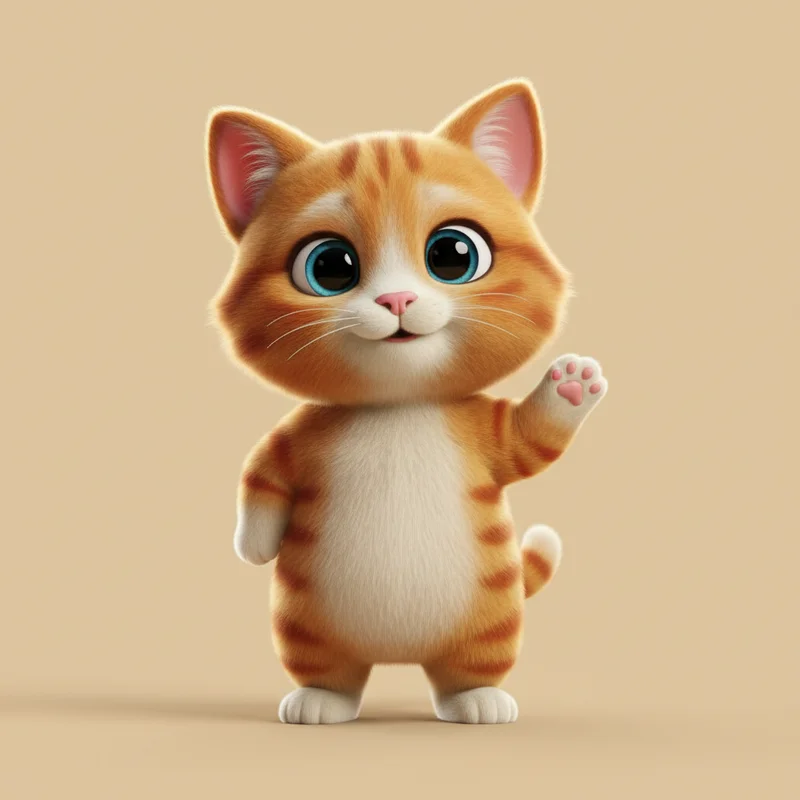
Cat

Cat

Domestic feline companion known for independence, agility, and internet fame. Masters of napping and keyboard interruption.

VS
Anxiety

Anxiety

Worry about future events, justified or not.

Battle Analysis

Social impact Cat Wins
70%
30%
Cat Anxiety

Cat

Cats enhance social functioning through multiple pathways. Cat ownership provides instant conversational material with the estimated 600 million cat owners worldwide. Photographs of cats generate predictable social media engagement. The presence of a cat during video conferences, whilst occasionally disruptive, typically produces positive social responses.

Physical cats also facilitate in-person socialisation by providing neutral focal points during awkward silences. Guests may direct attention toward the cat when conversation falters, creating natural recovery opportunities. The cat serves as social lubricant without requiring the logistics of coffee preparation.

Anxiety

Anxiety undermines social functioning through systematic interference with interpersonal confidence. Social anxiety specifically targets human connection, generating anticipatory dread before gatherings, hypervigilant self-monitoring during interactions, and extended post-event analysis of perceived failures. The condition transforms potentially enjoyable connections into sources of exhaustion.

The social withdrawal anxiety promotes creates self-reinforcing isolation. Fewer social interactions mean fewer opportunities to disconfirm anxious predictions, allowing catastrophic expectations to persist unchallenged. Unlike cats, anxiety provides no conversation topics beyond itself, and discussing it often produces social discomfort rather than connection.

VERDICT

Cats provide concrete social assets including conversation topics and engagement opportunities, whilst anxiety actively sabotages the social connections essential to wellbeing.
Sleep disruption Cat Wins
70%
30%
Cat Anxiety

Cat

Cats disrupt sleep through physical mechanisms operating on predictable schedules. The 4:00 AM feeding demand represents the most commonly reported disturbance, though midnight sprinting, territorial vocalisation, and face-sitting also feature prominently in owner surveys. These disruptions, whilst irritating, respond to concrete solutions including automatic feeders and closed bedroom doors.

The duration of feline sleep disruption typically measures in minutes per incident. Once addressed, cats permit return to sleep with reasonable consistency. The disruption pattern remains stable across nights, allowing human circadian systems to partially adapt.

Anxiety

Anxiety disrupts sleep through mechanisms that resist all physical intervention. The 2:00 AM catastrophic thought spiral recognises no automatic feeder, no closed door, no physical boundary whatsoever. Racing thoughts concerning tomorrow's meeting, last week's conversation, or next year's financial situation maintain their assault regardless of environmental modifications.

The duration of anxiety-induced sleep disruption proves highly variable but frequently measures in hours rather than minutes. Return to sleep requires cognitive intervention rather than physical action, demanding effort precisely when cognitive resources are most depleted. The disruption pattern varies unpredictably, preventing any adaptive response.

VERDICT

Feline sleep disruption responds to concrete environmental solutions, whilst anxiety-induced insomnia requires ongoing psychological management with inconsistent results.
Stress reduction Cat Wins
70%
30%
Cat Anxiety

Cat

Cats reduce stress through mechanisms that continue to intrigue researchers. Feline purring occurs at frequencies between 25 and 150 Hz, ranges associated with therapeutic effects on human physiology. Physical contact with cats triggers oxytocin release, measurably lowering cortisol levels and blood pressure in controlled studies.

The presence of a cat creates environmental anchoring during stressful periods. The creature's evident unconcern with human deadlines, financial pressures, or existential questions provides perspective through stark contrast. A being focused entirely on sunbeam location and meal timing offers silent commentary on human priority distortions.

Anxiety

Anxiety amplifies stress through systematic escalation of perceived threat levels. The condition transforms manageable challenges into overwhelming catastrophes, routine decisions into paralysing dilemmas, and uncertain futures into guaranteed disasters. Cortisol levels remain chronically elevated, creating physiological stress responses even during objectively calm periods.

The stress anxiety generates proves particularly resistant to resolution because it targets future possibilities rather than present realities. No amount of current-moment success eliminates tomorrow's potential failures. Anxiety maintains stress levels independent of actual circumstances, ensuring its victims never experience the relief their accomplishments should provide.

VERDICT

Cats provide measurable physiological stress reduction through purring and physical contact, whilst anxiety exists specifically to generate and maintain stress responses.
Attention capture Cat Wins
70%
30%
Cat Anxiety

Cat

Cats command attention through mechanisms refined across 10,000 years of coevolution with humans. The frequency of feline vocalisation has shifted to match the acoustic range most compelling to human auditory processing, approximately that of infant cries. Physical interventions include sitting upon keyboards, positioning themselves between faces and screens, and performing gravity experiments with household objects.

The effectiveness of these techniques proves remarkably high. Studies indicate that cat owners interrupt activities to attend to feline demands an average of 8 to 12 times daily. The cat requires no appointment, respects no deadline, and recognises no hierarchy beyond its own immediate requirements.

Anxiety

Anxiety captures attention through neurochemical hijacking of threat-detection systems. The amygdala, responding to perceived dangers, floods consciousness with urgent messaging that proves extraordinarily difficult to dismiss. Intrusive thoughts arrive unbidden, often during moments requiring concentration or rest, commandeering cognitive resources with ruthless efficiency.

Unlike feline attention demands, anxiety provides no external stimulus to address. The threat exists purely in anticipation, creating a uniquely frustrating loop wherein attention to anxiety generates more anxiety, which demands more attention. This self-amplifying mechanism can consume entire days without producing any actionable outcome.

VERDICT

Feline attention demands can actually be satisfied through specific actions, whereas anxiety demands attention for threats that cannot be addressed through direct intervention.
Long term influence Cat Wins
70%
30%
Cat Anxiety

Cat

Cats exert long-term influence spanning their 15 to 20 year lifespan and beyond. Memories of feline companions persist indefinitely, often representing some of the most emotionally significant relationships in human life narratives. The loss of a cat generates grief indistinguishable from human bereavement, indicating genuine psychological bond formation.

The influence extends to behavioural patterns that outlast individual cats. Former cat owners report maintained routines, continued furniture arrangements, and persistent reflexive responses to sounds resembling feline vocalisation. The cat leaves permanent modifications to its human's psychological architecture.

Anxiety

Anxiety exerts long-term influence through gradual restriction of life possibilities. Untreated anxiety disorders typically expand their territories over time, claiming additional situations, locations, and activities as threatening. The condition narrows existence incrementally, each avoidance behaviour reinforcing the threat assessment that prompted it.

However, anxiety proves more susceptible to intervention than its persistence suggests. Cognitive behavioural therapy, exposure techniques, and pharmaceutical management achieve meaningful reduction in anxiety symptoms for significant patient populations. The condition's long-term influence, whilst potentially severe, remains modifiable through sustained effort.

VERDICT

Feline long-term influence enhances life through lasting positive memories and bonds, whilst anxiety's long-term influence restricts possibilities unless actively countered through treatment.
👑

The Winner Is

Cat

58 - 42

The cat prevails through the simple mathematics of positive versus negative contribution. A creature that occasionally knocks items off tables still outperforms a mental state that perpetually knocks confidence, peace, and possibility off the table of human experience. The comparison proves less contest than category error.

Anxiety will continue its occupation of human minds worldwide, a persistent adversary that responds to treatment but rarely surrenders entirely. Its influence shapes billions of daily decisions, restricts countless opportunities, and generates immeasurable suffering. These realities demand acknowledgment.

Yet the cat offers something anxiety cannot comprehend: the radical proposition that existence might be enjoyed rather than merely survived. A warm presence that asks for food and returns contentment, that disrupts sleep but enables rest, that demands attention but rewards it with genuine connection. In the arithmetic of daily wellbeing, this exchange rate proves impossible to refuse, and the cat, characteristically indifferent to the honour, claims its victory by simply continuing to exist, magnificently unbothered by threats that exist only in human imagination.

Cat
58%
Anxiety
42%

Share this battle

More Comparisons