
Topic Battle

Where Everything Fights Everything

Cat

Cat

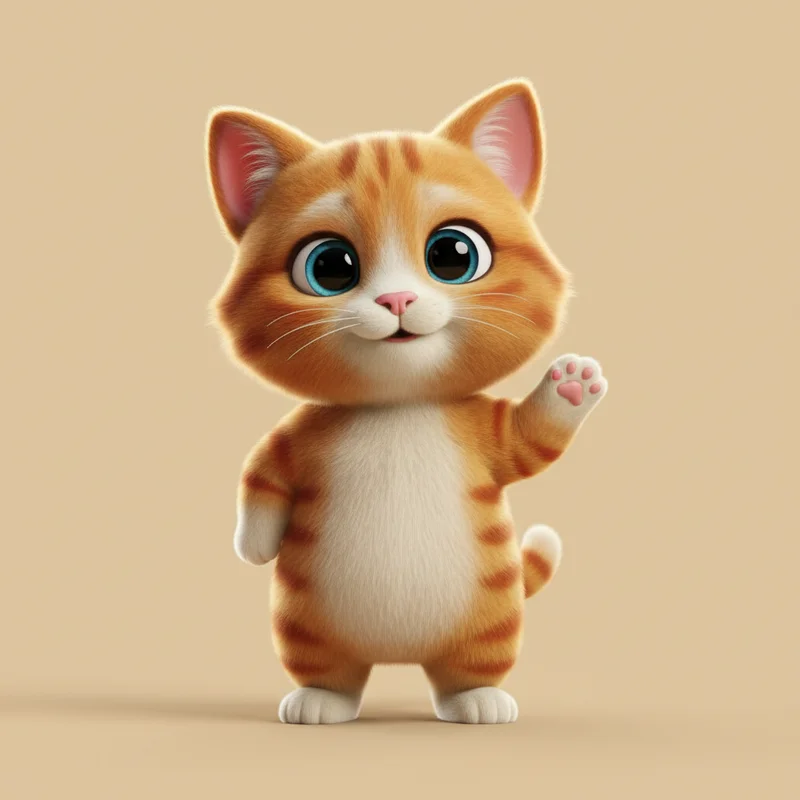
Domestic feline companion known for independence, agility, and internet fame. Masters of napping and keyboard interruption.

VS
Area 51

Area 51

US military base and alien conspiracy hotspot.

Battle Analysis

Cultural influence cat Wins
70%
30%
Cat Area 51

Cat

Cats have dominated human culture for millennia, achieving divine status in ancient Egypt, where killing one carried the death penalty. They feature in the mythology of virtually every civilisation, from the Norse goddess Freyja's cat-drawn chariot to the Japanese maneki-neko beckoning good fortune. The internet era saw cats achieve unprecedented memetic dominance: Grumpy Cat, Lil Bub, and countless others have generated billions of views and millions in licensing revenue. Cat videos constitute an estimated 15% of all internet traffic at peak times. The cat has, through sheer force of inscrutability, become humanity's most photographed, shared, and discussed non-human entity.

Area 51

Area 51's cultural influence, whilst substantial, remains narrower in scope. The facility has featured in films (Independence Day), television series (The X-Files), and video games (too numerous to catalogue). The 2019 'Storm Area 51' Facebook event demonstrated remarkable viral potential, attracting 2 million participants and spawning music festivals in the Nevada desert. Yet Area 51's cultural footprint depends upon a specific narrative framework—extraterrestrial conspiracy—that limits its universal applicability. One cannot, for instance, place Area 51 in a children's birthday card, a sympathy note, or an inspirational poster. Cats occupy all these niches and countless more.

VERDICT

Cats have achieved universal cultural penetration across all demographics and contexts; Area 51 remains confined to conspiracy and entertainment niches.
Territorial control area_51 Wins
30%
70%
Cat Area 51

Cat

The domestic cat maintains absolute sovereignty over its chosen territory through a sophisticated system of scent marking, visual displays, and calculated violence. Outdoor cats patrol territories averaging 5 hectares, though some have been documented ranging across 1,500 hectares. Indoor cats simply declare the entire dwelling their domain, with humans relegated to the status of maintenance staff with bed-warming privileges. The cat's territorial control is psychological as much as physical: through consistent application of imperious body language, cats convince humans that any chair, bed, or keyboard currently occupied by the cat belongs, has always belonged, and will always belong to the cat.

Area 51

Area 51 controls its territory through conventional military enforcement. The installation's 575-square-mile restricted airspace is designated R-4808N, with unauthorised aircraft subject to interception. Ground access is prevented by fencing, warning signs, and armed security personnel. Trespassers face fines up to $1,000 and six months imprisonment. Yet this control is geographically limited—beyond the perimeter, Area 51 exerts no authority whatsoever. The facility cannot, for instance, claim a visitor's laptop simply by sitting on it. Nor can it gradually expand its territory by sleeping progressively further into neighbouring property each night, as cats routinely do.

VERDICT

Area 51's territorial control is legally enforceable and carries criminal penalties; cats must rely on psychological manipulation.
Information retention cat Wins
70%
30%
Cat Area 51

Cat

Cats possess exceptional memory capabilities, with long-term recall demonstrated up to ten years for significant events. They remember the locations of food sources, the layouts of territories, and—crucially—every perceived slight against their dignity. What cats do with this accumulated information remains entirely opaque. They do not file reports. They do not share intelligence. They simply know things, watching with expressions that suggest comprehensive awareness of matters they will never disclose. Attempts to determine what cats are thinking through neurological study have proven largely futile, as cats decline to participate meaningfully in research protocols.

Area 51

Area 51's information retention operates through the most rigorous classification systems ever devised by human bureaucracy. Documents are compartmentalised across multiple clearance levels, with 'need to know' restrictions limiting access even among cleared personnel. Physical records are stored in secure facilities, whilst digital information exists behind air-gapped networks and encryption protocols. Yet Area 51's secrecy is institutional—dependent upon human compliance with protocols, vulnerable to whistleblowers, Freedom of Information requests, and the occasional journalist with a telephoto lens. The facility has already been compromised by satellite imagery, leaked documents, and employee testimonies. Cats, meanwhile, have never been successfully debriefed.

VERDICT

Area 51's secrets have been partially compromised through leaks and declassification; no cat has ever revealed its true intentions.
Surveillance capabilities cat Wins
70%
30%
Cat Area 51

Cat

The domestic cat operates one of Earth's most sophisticated biological surveillance networks. Equipped with eyes containing a reflective layer called the tapetum lucidum, cats achieve visual sensitivity six times greater than humans in low-light conditions. Their ears can rotate 180 degrees independently, detecting frequencies up to 64 kHz—well beyond human perception. Whiskers function as precision spatial sensors, mapping environments to millimetre accuracy. Most troublingly, cats deploy these capabilities whilst appearing to do nothing whatsoever. A cat sitting motionlessly on a windowsill is, in fact, conducting continuous reconnaissance of its territory, cataloguing every movement, sound, and smell within its considerable sensory range.

Area 51

Area 51's surveillance apparatus represents the pinnacle of human defensive technology. The perimeter is monitored by ground sensors detecting vibration and heat signatures, cameras with night vision and motion tracking, and security personnel known colloquially as 'camo dudes' who materialise from the desert landscape with unsettling efficiency. Radar installations track all aircraft within 200 miles, whilst electronic countermeasures prevent unauthorised communication and photography. Yet despite this comprehensive array, Area 51's surveillance serves purely defensive purposes—keeping information in. The cat's surveillance, by contrast, is acquisitive—constantly gathering data for purposes known only to itself.

VERDICT

Cats conduct continuous biological surveillance across 600 million global installations, whilst Area 51 monitors only its own perimeter.
Resistance to investigation cat Wins
70%
30%
Cat Area 51

Cat

Cats have proven systematically resistant to scientific understanding despite centuries of study. Basic questions remain unresolved: Why do cats purr? (Theories range from self-healing to manipulation.) Why do they knock objects off surfaces? (No satisfactory explanation exists.) Why do they bring dead animals to their owners? (Competing hypotheses include teaching, gifting, and criticism of hunting ability.) Brain imaging studies have revealed the neural architecture of cat cognition, yet this has brought us no closer to understanding what cats actually want. The cat's resistance to investigation is not active concealment but something more profound: a fundamental opacity that persists even under direct examination.

Area 51

Area 51's resistance to investigation is active and institutional. The facility's existence was officially denied until 2013, when CIA documents finally acknowledged it. Yet this acknowledgment revealed only that the base was used for testing experimental aircraft—information long available to anyone with binoculars and patience. The deeper mysteries remain officially unaddressed: What projects continue there today? What technologies have emerged from its laboratories? The U.S. government's strategy has been to selectively declassify information that confirms mundane activities whilst maintaining silence on anything genuinely provocative. This approach has proven effective but not impenetrable—satellite imagery, leaked documents, and whistleblower testimony have all breached the veil.

VERDICT

Cats maintain inscrutability despite complete physical access and unlimited observation time; Area 51's secrets have been partially exposed.
👑

The Winner Is

Cat

54 - 46

This investigation has revealed a surprising truth: in the contest between institutional secrecy and biological inscrutability, biology prevails. Area 51 represents the finest achievement of human classification systems—compartmentalised information, armed perimeters, criminal penalties for disclosure. Yet despite these formidable defences, we know more about Area 51 today than we did in 1989. Satellite photographs have mapped its hangars. Declassified documents have confirmed its programmes. Former employees have described its operations. The fortress is slowly yielding to time and scrutiny.

The Cat, by contrast, has spent 10,000 years in intimate proximity to humanity and remains fundamentally unknown. We have sequenced its genome, mapped its neural pathways, and documented its behavioural repertoire in exhaustive detail. Yet we cannot answer the simplest question: What is that cat thinking? The cat's mystery is not defended by armed guards or classification protocols—it is intrinsic, woven into the very fabric of its being. No amount of investigation can extract secrets that may not exist in transmissible form.

With a final score of 54-46, the Cat claims victory not through superiority in any single criterion but through the accumulated weight of evidence demonstrating that biological opacity exceeds institutional secrecy in durability, scalability, and resistance to investigation. Area 51 must work to maintain its mysteries; the cat simply is mysterious, without effort or apparatus.

Cat
54%
Area 51
46%

Share this battle

More Comparisons