
Topic Battle

Where Everything Fights Everything

Cat

Cat

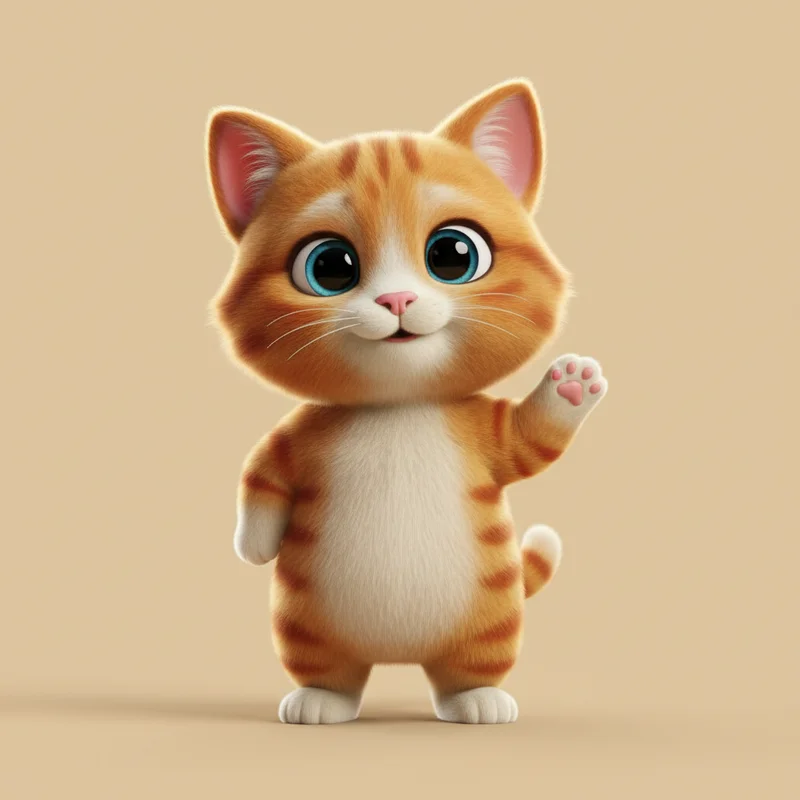
Domestic feline companion known for independence, agility, and internet fame. Masters of napping and keyboard interruption.

VS
Boredom

Boredom

State of under-stimulation and clock-watching.

Battle Analysis

Persistence cat Wins
70%
30%
Cat Boredom

Cat

The domestic cat exhibits persistence of an almost geological character. Once a cat has determined that a human should be awake, should provide food, or should cease working on their laptop, it will pursue this objective with unwavering commitment. Tactics escalate predictably: initial meowing progresses to furniture scratching, then to strategic positioning upon keyboards, and ultimately to the deployment of direct physical contact with the human face. A cat seeking attention has never, in recorded history, simply given up and wandered away.

This persistence operates on timescales from minutes to years. The cat that wishes to access a closed room will attempt entry for decades if necessary, pausing only for meals and naps before resuming operations.

Boredom

Boredom demonstrates a different form of persistence—one characterised not by escalation but by inexorable creep. It arrives unbidden during lengthy meetings, airport delays, and Sunday afternoons. Unlike acute emotional states that burn brightly and fade, boredom settles into consciousness like sediment, accumulating gradually until the individual realises they have been staring at a wall for seventeen minutes.

However, boredom's persistence falters in the face of even minimal stimulation. A single notification, a passing thought, or the arrival of a cat can dispel hours of accumulated ennui instantaneously. Boredom is persistent but fundamentally fragile—always present, never quite permanent.

VERDICT

Cats pursue objectives until achieved; boredom retreats at the first sign of resistance
Accessibility boredom Wins
30%
70%
Cat Boredom

Cat

Acquiring a domestic cat requires overcoming several barriers. Initial acquisition costs range from nothing (for strays and shelter adoptions) to thousands of pounds for pedigreed specimens. Ongoing expenses—food, veterinary care, litter, and destroyed furniture—accumulate to approximately GBP 1,000-1,500 annually. Many rental properties prohibit cat ownership entirely, whilst allergies affect roughly 10% of the population.

Cats also require a minimum commitment level. They cannot be paused, stored, or forgotten for extended periods without consequence. The cat demands daily attention regardless of the owner's preferences, work schedule, or travel plans.

Boredom

Boredom requires no acquisition whatsoever. It arrives without invitation, without cost, and without any action on the part of the experiencer. Boredom is universally accessible regardless of income, housing situation, or physical health. It requires no infrastructure, no maintenance, and no ongoing commitment. One need not seek boredom; boredom will find oneself with reliable inevitability.

This accessibility, of course, is precisely boredom's limitation as a commodity. No one desires accessibility to boredom. Its universal availability is a bug, not a feature. The ease of experiencing boredom represents humanity's collective failure to escape it, not a point of practical advantage.

VERDICT

Boredom is infinitely accessible, though this accessibility represents a curse rather than a blessing
Entertainment value cat Wins
70%
30%
Cat Boredom

Cat

The domestic cat functions as a self-propelled entertainment system of considerable sophistication. Cats pursue invisible prey across living rooms, engage in spontaneous acrobatic displays, and interact with their environment in ways that perplex and amuse human observers. The internet's architecture appears to have been constructed primarily for the distribution of cat-related content, with feline imagery generating billions of annual engagements across platforms.

A cat investigating a cardboard box, reacting to a cucumber, or failing to execute a planned jump provides entertainment that money cannot directly purchase. The cat entertains not through intention but through being fundamentally itself—curious, athletic, and occasionally incompetent.

Boredom

Boredom provides, by definition, zero entertainment value. It is the absence of entertainment made manifest. To experience boredom is to experience the void where entertainment should be. Boredom cannot distract from itself; it cannot provide relief from its own presence. It is entertainment's photographic negative—the shape that remains when all engaging stimuli have been removed.

Some philosophers argue that boredom provides entertainment through contrast, making subsequent activities feel more engaging. This argument, whilst intellectually interesting, provides cold comfort to anyone currently experiencing a boring Wednesday afternoon.

VERDICT

Cats provide autonomous entertainment; boredom is the definition of entertainment's absence
Psychological impact cat Wins
70%
30%
Cat Boredom

Cat

The psychological impact of feline companionship has been subjected to extensive scientific scrutiny. Studies indicate that cat ownership correlates with reduced cortisol levels, lower blood pressure, and decreased risk of cardiovascular events. The rhythmic vibration of a cat's purr, oscillating between 25 and 150 hertz, appears to induce genuine neurological calm in human subjects. Cat videos alone generate sufficient dopamine release to have become a multi-billion-pound digital economy.

The psychological relationship with cats does carry complexity. The creature's apparent indifference can produce feelings of inadequacy in certain owners, whilst the death of a long-term feline companion triggers grief responses comparable to human bereavement. Cats impact human psychology profoundly, though not always predictably.

Boredom

Boredom's psychological impact has been historically underestimated and is increasingly recognised as significant. Chronic boredom correlates with increased rates of depression, anxiety, and substance abuse. The experience of time passing without meaning creates a particular form of existential discomfort that humans will go to extraordinary lengths to avoid—including engaging in activities they actively dislike simply to escape the alternative.

Paradoxically, boredom also serves adaptive functions. It signals the need for change, motivates exploration, and has been credited with spurring creativity and invention. Many breakthrough ideas emerged during periods of enforced idleness. Boredom's psychological impact is thus double-edged: harmful in excess, potentially valuable in moderation.

VERDICT

Cats provide documented therapeutic benefits; boredom's creative potential rarely compensates for its distress
Influence on behaviour boredom Wins
30%
70%
Cat Boredom

Cat

Cats exert remarkable influence over human behaviour through mechanisms both subtle and direct. Cat owners adjust sleep schedules, modify furniture arrangements, alter travel plans, and restructure entire living spaces to accommodate feline preferences. The phenomenon of 'toxoplasmosis gondii'—a parasite carried by cats that may influence host behaviour—suggests cats have been modifying human neurology itself for millennia.

On a societal scale, cats have inspired art movements, religious practices, and the deployment of billions of hours of human attention toward watching, photographing, and caring for them. The domestic cat has reshaped human civilisation whilst contributing precisely nothing to industrial productivity.

Boredom

Boredom's influence on behaviour is paradoxically vast. The entire entertainment industry—cinema, gaming, social media, streaming services—exists fundamentally to prevent boredom. Humans have constructed global infrastructure, developed addictive technologies, and restructured economies specifically to avoid experiencing unstimulated time. Boredom's threat has proven more motivating than boredom's reality.

On an individual level, boredom drives both productive and destructive behaviours. It motivates learning, creativity, and personal growth, but also impulsive spending, overeating, and questionable romantic decisions. Boredom shapes human behaviour by its absence as much as its presence—we structure our lives specifically to ensure we never have to feel it.

VERDICT

The avoidance of boredom has shaped more human infrastructure than any single animal species
👑

The Winner Is

Cat

62 - 38

This investigation reveals a contest between presence and absence, between active engagement and the void it fills. The cat claims decisive victories in persistence, psychological impact, and entertainment value—the domains of direct experience and measurable benefit. Where boredom merely exists, the cat acts; where boredom drains, the cat replenishes.

Boredom's victories in accessibility and behavioural influence prove pyrrhic upon examination. Yes, boredom is universally accessible, but no one seeks that access. Yes, boredom shapes human behaviour, but primarily through humanity's desperate attempts to escape it. Boredom wins by being the problem that cats, among other solutions, exist to solve.

By a margin of 62 to 38, the domestic cat prevails as the superior force in the attention economy. This verdict reflects a fundamental asymmetry: the cat provides something, whilst boredom provides the absence of something. In any contest between presence and absence, presence holds the structural advantage.

Cat
62%
Boredom
38%

Share this battle

More Comparisons