Topic Battle

Where Everything Fights Everything

Cat

Cat

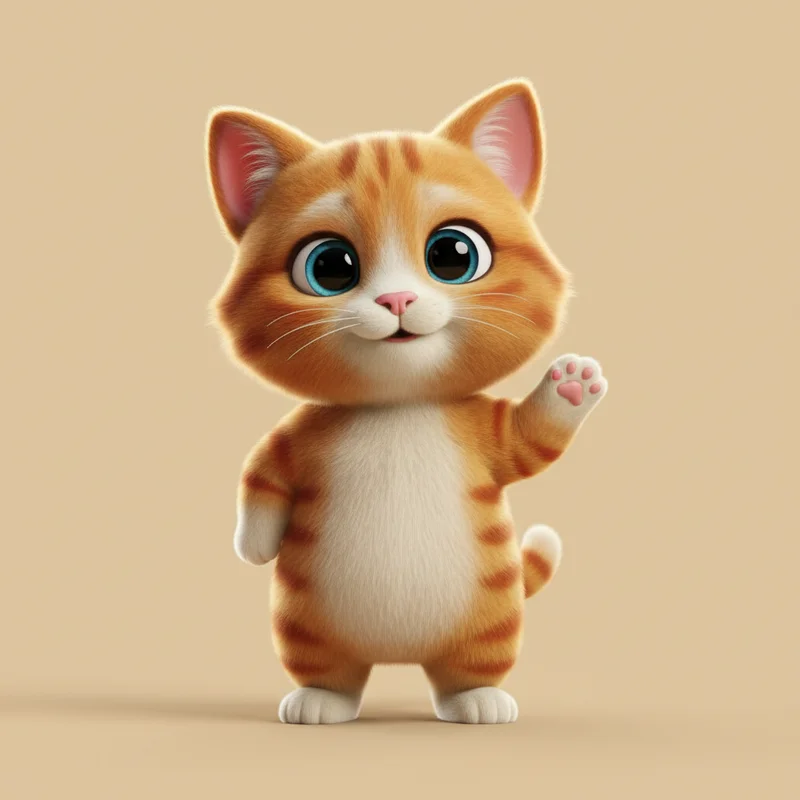
Domestic feline companion known for independence, agility, and internet fame. Masters of napping and keyboard interruption.

VS
Chess

Chess

Strategic board game of kings and pawns.

Battle Analysis

Strategic depth Cat Wins
70%
30%
Cat Chess

Cat

The domestic cat operates on a strategic plane that defies conventional analysis. Its decision-making process incorporates variables unknown to human observers, including but not limited to: invisible entities, sounds inaudible to the human ear, and the precise angle at which sunlight strikes the carpet. Military strategists have attempted to study feline tactics for centuries, consistently concluding that the cat is playing an entirely different game.

Chess

Chess offers a mere 10^120 possible game variations, a number that mathematicians call the Shannon number. Every move follows logical principles established over fifteen centuries of human intellectual development. Grandmasters spend decades memorising opening theory, endgame tableaux, and positional concepts. The game's strategic depth, whilst considerable, remains fundamentally comprehensible to dedicated study.

VERDICT

Chess strategy can be learned, practised, and ultimately mastered. Cat strategy cannot be learned because it does not technically exist in any form recognisable to human cognition. The cat wins by virtue of operating beyond the boundaries of strategic theory itself.

Psychological warfare Cat Wins
70%
30%
Cat Chess

Cat

The cat has perfected psychological manipulation over 10,000 years of domestication. Its arsenal includes: the slow blink of trust, the sudden bite of betrayal, the 3 AM zoomies of psychological destabilisation, and the deliberate eye contact whilst pushing objects off surfaces. Studies confirm that cats understand human emotional states and choose to ignore them.

Chess

Chess psychological warfare operates through time pressure, piece sacrifices, and what players call 'creating problems on the board.' The Soviet school of chess elevated intimidation to an art form, with grandmasters perfecting the practice of staring at opponents whilst they contemplated their inevitable defeat. However, these techniques require an opponent capable of feeling intimidated.

VERDICT

Chess intimidation works only on sentient beings who understand the game. Cats intimidate all living creatures regardless of species or comprehension level. The cat's psychological toolkit includes purring, which operates at frequencies proven to lower human blood pressure, effectively weaponising affection itself.

Longevity and endurance Chess Wins
30%
70%
Cat Chess

Cat

The individual domestic cat lives approximately 12-18 years, during which time it dedicates roughly 70% of its existence to sleep. The species itself has remained essentially unchanged for millennia, having achieved optimal design for its ecological niche of 'creature that receives free food whilst providing uncertain companionship.'

Chess

Chess has endured for approximately 1,500 years in its current form, evolving from the Indian game of chaturanga. The rules crystallised in Europe during the 15th century and have remained stable since. The game has survived the fall of empires, the rise of nations, and the invention of the internet, which merely accelerated its global spread.

VERDICT

Individual cats are mortal; chess is functionally eternal. The game will likely outlast human civilisation itself, preserved in the silicon minds of whatever artificial intelligences inherit the Earth. Though one suspects those AIs will also, somehow, end up serving cats.

Global cultural influence Chess Wins
30%
70%
Cat Chess

Cat

Cats have achieved deity status in Ancient Egypt, internet supremacy in the modern era, and household dominance across every inhabited continent. The cat video industry generates billions in advertising revenue annually. Approximately 600 million domestic cats currently occupy human dwellings worldwide, each one a small emperor of its domain.

Chess

Chess has shaped international relations, inspired countless works of art, and serves as the universal metaphor for intellectual combat. The game appears in literature from Shakespeare to Nabokov, in films from Bergman to Marvel, and in political discourse as shorthand for strategic thinking. The 1972 Fischer-Spassky match became a Cold War battleground.

VERDICT

Whilst cats dominate the digital sphere with unprecedented ferocity, chess has literally influenced the course of human civilisation. Kingdoms have used chess as diplomatic training; cats have used kingdoms as large heated surfaces upon which to nap.

Unpredictability coefficient Cat Wins
70%
30%
Cat Chess

Cat

The cat's behaviour follows patterns that actively resist scientific categorisation. Research published in Applied Animal Behaviour Science confirms that individual cats display consistent personality traits whilst simultaneously behaving in ways that contradict all previous observations. The phenomenon known as 'the cat deciding it now hates its favourite food' remains unexplained by modern science.

Chess

Chess, despite its astronomical number of possible positions, remains deterministic at its core. Given sufficient computational power, any position can be solved perfectly. Modern chess engines have achieved playing strength that renders the game's complexity almost trivial from a computational perspective. The element of human error provides the only genuine unpredictability.

VERDICT

Chess unpredictability stems from human limitation; cat unpredictability appears to be a fundamental property of the universe. Physicists have noted disturbing similarities between quantum uncertainty and feline behaviour, though no peer-reviewed journal has yet accepted papers on the subject.

👑

The Winner Is

Cat

54 - 46

This analysis reveals a fundamental truth about the nature of competition itself. Chess represents humanity's finest attempt to impose order upon chaos through rules, logic, and systematic thought. The cat represents chaos's cheerful refusal to acknowledge that attempt.

With a final score of Cat 54% to Chess 46%, the feline emerges victorious not through superior strategy but through the simple expedient of being unable to lose at a game it does not recognise as being played. Chess grandmasters dedicate their lives to mastering sixty-four squares. The cat sits on the board, scattering pieces, and achieves the same result in seconds.

In the eternal struggle between order and entropy, between calculation and instinct, between the rational mind and the creature that has just decided to attack your foot at three o'clock in the morning, there can be only one winner: the one that does not care whether it wins.

Cat
54%
Chess
46%

Share this battle

More Comparisons