Topic Battle

Where Everything Fights Everything

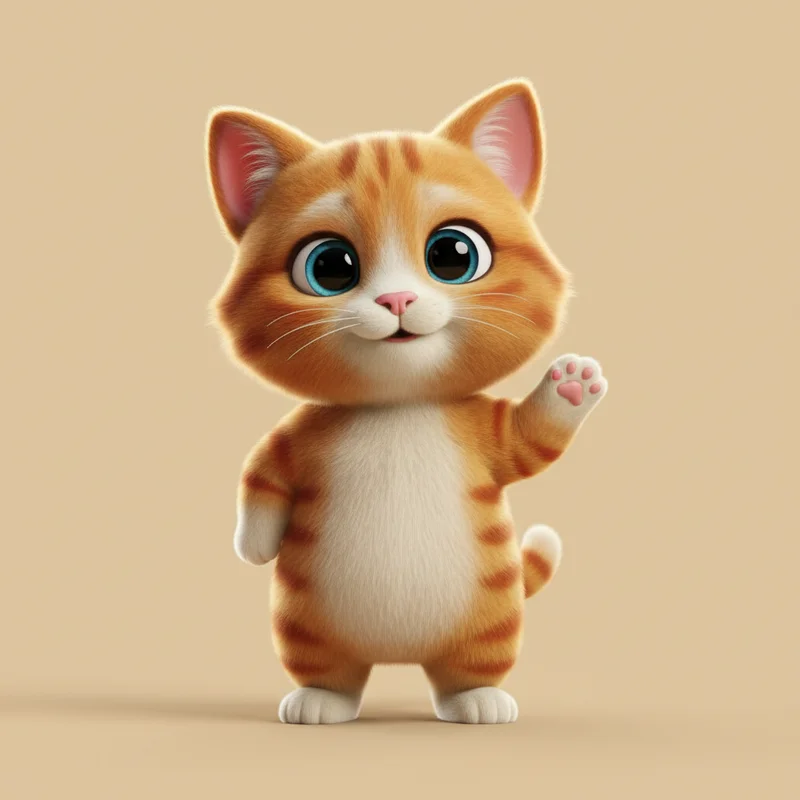
Cat

Cat

Domestic feline companion known for independence, agility, and internet fame. Masters of napping and keyboard interruption.

VS
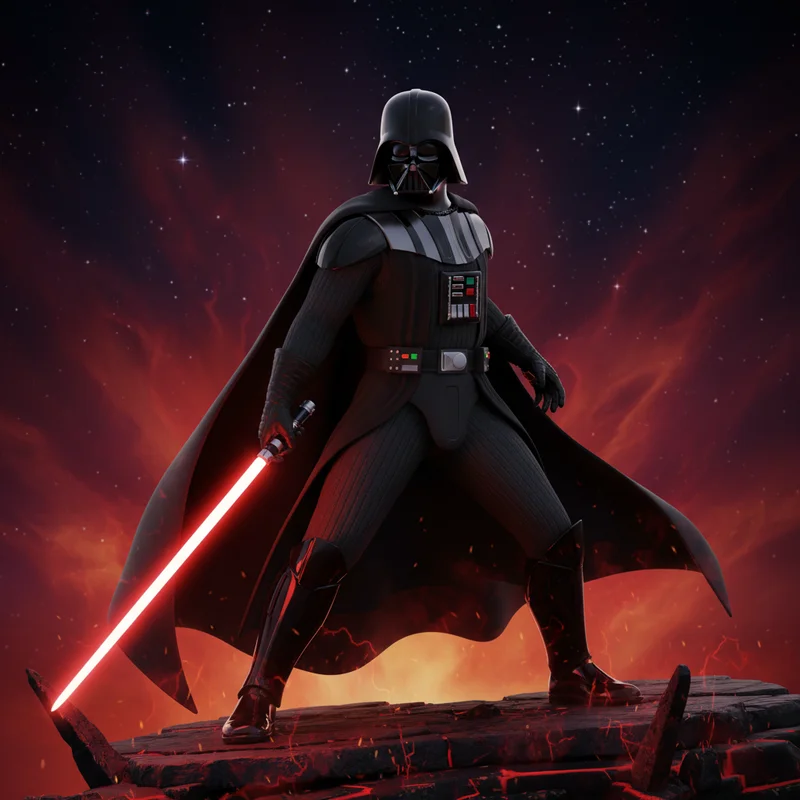
Darth Vader

Darth Vader

Sith Lord and cinema's greatest villain reveal.

Battle Analysis

Cultural legacy Cat Wins
70%
30%
Cat Darth Vader

Cat

The cat's cultural legacy spans ten millennia of human civilisation. Ancient Egyptians worshipped cats as divine manifestations; medieval Europeans blamed them for plagues; modern humans have constructed an entire internet economy around their images. Cats appear in the folklore of virtually every culture that has encountered them. They have inspired poetry, painting, sculpture, and approximately forty-seven percent of all social media content. No other domestic animal has achieved such comprehensive cultural penetration whilst contributing so little practical value to human society.

Darth Vader

Vader's cultural impact, whilst remarkable, operates within a compressed timeframe of merely forty-seven years. The character has become genuinely iconic, his silhouette recognisable globally, his breathing pattern instantly identifiable. The revelation 'I am your father' has entered common parlance, typically misquoted. Yet Vader remains a fictional construct, his influence mediated through screens rather than direct presence. He inspires costumes, merchandise, and philosophical discussions about redemption, but he has never actually knocked a treasured ornament from a mantelpiece at four in the morning.

Loyalty command Cat Wins
70%
30%
Cat Darth Vader

Cat

The cat's approach to loyalty is perhaps humanity's finest example of coercive codependency. Cats offer precisely enough affection to maintain human attachment whilst providing no guarantee of its continuation. This intermittent reinforcement schedule, recognised by behavioural psychologists as maximally addictive, ensures devoted service from humans who perpetually hope today will be the day their cat acknowledges their existence. Remarkably, cats achieve this loyalty whilst contributing nothing material to the household beyond occasional pest control and continuous furniture destruction.

Darth Vader

Vader commands loyalty through a simpler mechanism: the credible threat of immediate death. Imperial officers serve not from affection but from the entirely reasonable desire to continue breathing. This approach, whilst effective in the short term, produces compliance rather than genuine loyalty. The moment Vader's power wanes, as demonstrated during the second Death Star incident, his command structure evaporates entirely. Fear-based loyalty, it transpires, lacks the durability of the cat's more sophisticated manipulation.

Combat effectiveness Darth Vader Wins
30%
70%
Cat Darth Vader

Cat

Pound for pound, the domestic cat represents one of nature's most efficient killing machines. Retractable claws deploy in milliseconds; reflexes operate faster than human perception; the hunting success rate of domestic cats ranges from 30 to 70 percent, vastly exceeding most large predators. Cats have driven numerous species to extinction through sheer predatory efficiency. However, their combat effectiveness faces obvious scaling limitations. Against opponents larger than a medium-sized rodent, cats typically adopt the sensible strategy of strategic withdrawal, also known as sprinting away at remarkable velocity.

Darth Vader

Vader's combat capabilities benefit from both Force enhancement and extensive cybernetic augmentation. His lightsabre skills, honed over decades, render him effectively unbeatable in individual combat against non-Force-sensitive opponents. The Force choke operates at range, the Force push clears entire corridors, and his mere presence demoralises opposition forces. In direct confrontation, Vader would unquestionably defeat any cat, though one suspects he might find the creature's indifference to his reputation somewhat disconcerting. Cats, after all, have never been impressed by anyone.

Environmental mastery Cat Wins
70%
30%
Cat Darth Vader

Cat

The domestic cat has achieved something no Sith Lord has managed: complete environmental adaptation without technological assistance. Cats thrive in Norwegian winters and Saharan summers, in Tokyo apartments and Cornish farmhouses. They require no life support systems, no climate-controlled suits, no legions of maintenance technicians. A cat dropped into virtually any terrestrial environment will, within hours, identify the optimal sleeping location, establish territorial boundaries, and begin training local humans in proper servitude protocols. This adaptability represents evolutionary mastery of the highest order.

Darth Vader

Vader's environmental capabilities, by contrast, depend entirely upon a life support suit of considerable complexity. Remove the suit, and Vader survives approximately the same duration as a cat submerged in water—which is to say, not long, though with considerably more dramatic gasping. His dependence on technology represents a fundamental vulnerability. The suit requires maintenance, power, and the continued goodwill of Imperial technicians. One disgruntled engineer with access to his respiratory systems could end the Sith Lord's reign entirely.

Intimidation technique Cat Wins
70%
30%
Cat Darth Vader

Cat

The domestic cat has elevated intimidation to an art form requiring neither physical strength nor technological enhancement. The cat's arsenal includes the unblinking stare, a psychological weapon of remarkable potency when deployed from across a darkened room at three in the morning. The slow blink conveys contempt; the rapid tail movement signals impending violence; the flattened ears precede devastation. Most remarkably, cats achieve intimidation through sheer unpredictability—one moment seeking affection, the next drawing blood. This keeps subjects in a constant state of alertness that military strategists might term 'conditioned vigilance.'

Darth Vader

Vader's intimidation methodology favours the direct approach. The Force choke, his signature technique, requires neither explanation nor repetition to establish hierarchical clarity. The mechanical breathing provides constant auditory reminder of his presence. The helmet eliminates any possibility of reading facial expressions, forcing subordinates into perpetual uncertainty. Yet Vader's intimidation carries a significant limitation: it operates only in his physical presence. Officers stationed on distant systems experienced notably higher survival rates, suggesting his intimidation lacks the domestic cat's capacity for omnipresent psychological influence.

👑

The Winner Is

Cat

54 - 46

The domestic cat emerges victorious in this clash of intimidating entities, and the margin, whilst not overwhelming, speaks to a deeper truth about the nature of sustainable power.

Darth Vader ruled through fear for approximately two decades before his empire collapsed around him. The domestic cat has ruled through psychological manipulation for ten thousand years, and its empire continues to expand daily. Vader required a Death Star to project power across the galaxy; cats require only the strategic deployment of a purr and the occasional ankle rub.

Consider the fundamental metrics: Vader's subjects served him reluctantly, constantly plotting escape or rebellion. Cat owners speak of their servitude with genuine affection, uploading photographs of their overlords to social media platforms with disturbing enthusiasm. Vader's legacy required billions in production budgets to establish; cats achieved theirs through the simple expedient of being slightly less hostile than their wild counterparts.

In the end, this comparison illuminates a truth the Sith never grasped: the dark side is not a path to ultimate power. The path to ultimate power is being small, furry, and willing to sit on a warm lap occasionally. The cat has mastered this path; Vader, for all his menace, never even found the entrance.

Cat
54%
Darth Vader
46%

Share this battle

More Comparisons