
Topic Battle

Where Everything Fights Everything

Cat

Cat

Domestic feline companion known for independence, agility, and internet fame. Masters of napping and keyboard interruption.

VS
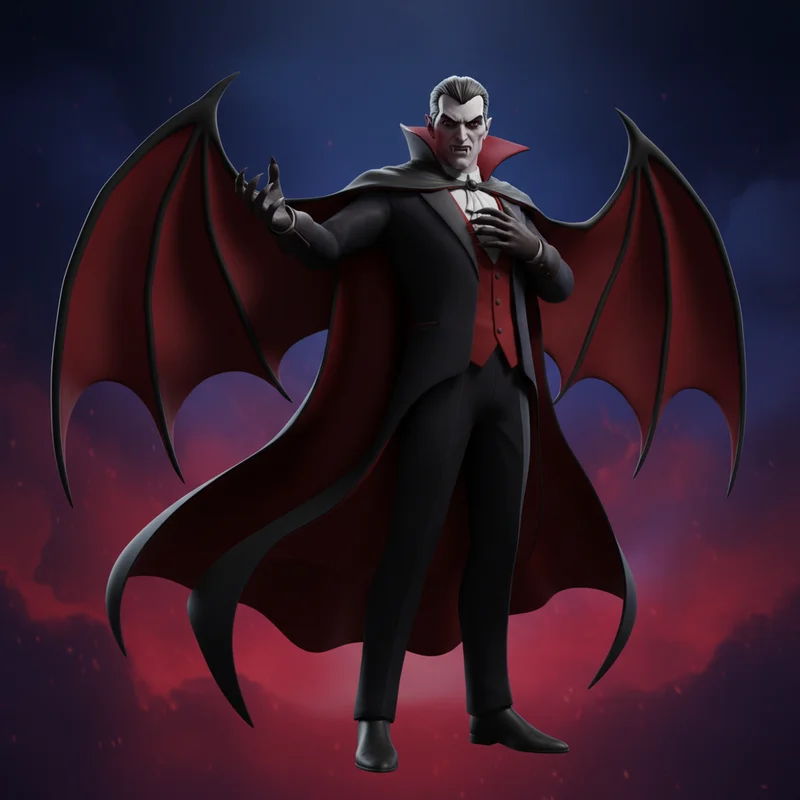
Dracula

Dracula

Original vampire count from Transylvania.

Battle Analysis

Longevity Dracula Wins
30%
70%
Cat Dracula

Cat

The domestic cat possesses a natural lifespan of approximately 12 to 18 years, with exceptional specimens documented surviving into their early thirties. This represents roughly one-fifth of human longevity, positioning cats as relatively short-lived by mammalian standards. However, the species demonstrates remarkable persistence, with recognisably feline forms appearing in the fossil record spanning 25 million years. Individual cats may perish, yet the genetic lineage perpetuates with extraordinary reliability. Each cat represents a temporary manifestation of an essentially immortal genetic programme.

Dracula

Count Dracula has maintained continuous individual existence for over 400 years, assuming historical accounts of his mortal origins remain accurate. His condition renders conventional mortality mechanisms entirely inoperative, with only highly specific interventions capable of terminating his existence. The Count has survived societal collapse, technological revolution, and multiple dedicated extermination attempts. His longevity operates at the individual rather than species level, representing a fundamentally different approach to persistence through time. This singular immortality remains unmatched in documented entities.

VERDICT

Individual immortality exceeds species persistence for comparative longevity assessment
Adaptability Cat Wins
70%
30%
Cat Dracula

Cat

Cats demonstrate extraordinary adaptability, thriving in environments ranging from Antarctic research stations to Saharan oases. They have successfully colonised every continent except Antarctica proper, adapting diet, behaviour, and hunting strategies to local conditions. Urban cats navigate automobile traffic with statistical survival rates exceeding many human pedestrians. Cats readily adjust sleep schedules, territory boundaries, and social structures to accommodate changing circumstances. Their ability to transition between feral and domestic states represents remarkable behavioural plasticity.

Dracula

Dracula's adaptability presents a complex analytical challenge. Whilst he has successfully navigated social changes spanning the Renaissance through the digital age, his fundamental operational parameters remain rigidly constrained. The requirement for native soil during rest periods severely limits geographic flexibility. Religious iconography, running water, and garlic present persistent environmental obstacles. However, his demonstrated capacity for learning new languages, customs, and technologies across four centuries indicates substantial cognitive adaptability within his supernatural constraints.

VERDICT

Biological adaptability across diverse environments exceeds supernatural rigidity of requirements
Global recognition Cat Wins
70%
30%
Cat Dracula

Cat

Cats enjoy near-universal recognition across human civilisations, worshipped as gods in ancient Egypt and maintained as companions in virtually every nation on Earth. Internet culture has elevated the domestic cat to unprecedented levels of global visibility, with cat-related content generating billions of annual engagements. The word for cat exists in every documented human language. Corporate logos, literary works, and musical compositions reference felines with remarkable frequency. No passport control officer on any continent would fail to identify a cat upon presentation.

Dracula

Count Dracula achieves recognition rates approaching those of major religious figures, a remarkable achievement for a fictional character introduced merely 127 years ago. His image has been portrayed in over 200 films, translated into every major language, and referenced in contexts ranging from breakfast cereals to mathematical equations. The name Dracula itself has become synonymous with vampirism globally, superseding older folkloric terms. Tourism to Romania generates substantial revenue based primarily on Dracula association, despite his fictional status.

VERDICT

Biological presence in every nation exceeds literary penetration across the same territories
Intimidation factor Dracula Wins
30%
70%
Cat Dracula

Cat

The domestic cat, whilst compact in stature, maintains an intimidation capacity that belies its modest dimensions. A cat's fixed stare has been documented to cause significant psychological discomfort in humans, dogs, and other mammals weighing considerably more than itself. The uncertainty regarding a cat's intentions creates persistent low-level anxiety in observers. Their retractable claws, capable of extension without warning, represent concealed weaponry that cannot be accurately assessed. Cats have successfully intimidated bears, postal workers, and veterinary professionals with equal facility.

Dracula

Count Dracula represents the apex of intimidation capability, commanding fear responses in virtually all documented interactions. His powers include mesmerism, the ability to control weather patterns, and demonstrated capacity for transforming victims into subordinate undead entities. The Count's mere presence reportedly causes livestock to panic and religious iconography to emanate discomfort. His intimidation extends temporally, as victims continue experiencing terror for days following encounters. Dracula has caused entire villages to relocate based solely on rumoured proximity.

VERDICT

Supernatural terror capabilities exceed biological threat display mechanisms substantially
Nocturnal adaptation Dracula Wins
30%
70%
Cat Dracula

Cat

The domestic cat possesses a tapetum lucidum, a reflective layer behind the retina that amplifies available light by approximately 40 percent. This biological adaptation enables hunting efficiency in conditions humans would consider absolute darkness. Furthermore, cats have evolved elliptical pupils capable of expanding to cover nearly the entire visible eye surface, gathering every available photon. Their whiskers function as spatial awareness sensors, detecting air current disruptions that betray prey movement. These combined adaptations represent millions of years of evolutionary refinement for crepuscular predation.

Dracula

Count Dracula demonstrates complete mastery over darkness through supernatural means that transcend biological limitation. His documented abilities include transformation into mist, wolf, or bat forms, each optimised for different nocturnal activities. Dracula requires no light whatsoever, navigating through senses that remain scientifically unclassified. His aversion to sunlight, whilst superficially appearing as weakness, merely confirms his total commitment to the nocturnal lifestyle. The Count has operated successfully in darkness for over four centuries without apparent diminishment of capability.

VERDICT

Supernatural darkness adaptation exceeds biological evolution by several orders of magnitude
👑

The Winner Is

Cat

54 - 46
This rigorous analysis reveals a remarkably balanced contest between biological and supernatural nocturnal supremacy. Dracula claims decisive victories in nocturnal adaptation, intimidation factor, and individual longevity, demonstrating that four centuries of undeath have refined his capabilities to near-optimal levels. However, the domestic cat's superior global recognition and adaptability prove decisive in aggregate scoring. The cat's biological presence in virtually every human habitation provides a penetration advantage that even immortality cannot overcome. Whilst Dracula must carefully select operational theatres and avoid numerous categorical weaknesses, cats simply exist everywhere, adapting to any environment humanity has created. The final score of 54-46 reflects this narrow but meaningful advantage.
Cat
54%
Dracula
46%

Share this battle

More Comparisons