Topic Battle

Where Everything Fights Everything

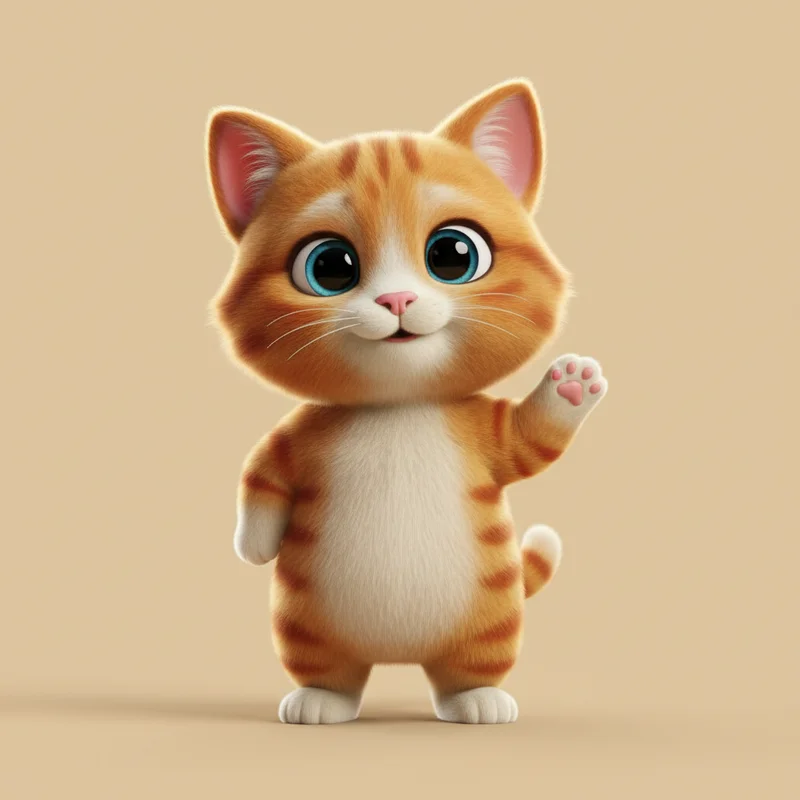
Cat

Cat

Domestic feline companion known for independence, agility, and internet fame. Masters of napping and keyboard interruption.

VS
Duct Tape

Duct Tape

Adhesive fabric strip fixing everything temporarily forever.

Battle Analysis

Durability cat Wins
70%
30%
Cat Duct Tape

Cat

The domestic cat represents a remarkably durable biological system. The species has survived five mass extinction events if one counts from the emergence of the broader felid lineage. Individual specimens routinely exceed a decade of functional operation, with documented cases reaching 30 years or more. The cat self-repairs minor damage, requires no replacement parts beyond food inputs, and maintains operational capacity throughout most of its lifespan.

Unlike manufactured products, the cat improves certain capabilities over time. Hunting efficiency peaks in middle age; territorial knowledge accumulates continuously. The cat degrades gracefully, typically maintaining core functionality until near end-of-life. No adhesive product can claim biological self-repair or experiential improvement over operational duration.

Duct Tape

Duct tape's durability, whilst impressive for an adhesive product, operates on fundamentally shorter timescales. Standard rolls maintain shelf stability for 2-3 years under appropriate storage conditions. Applied tape demonstrates variable durability depending on stress factors—UV radiation, moisture, temperature cycling, and mechanical load all accelerate degradation.

In protected applications, duct tape repairs have persisted for decades. The tape applied to seal a basement pipe in 1985 may well remain functional today. However, outdoor applications typically require replacement within 12-24 months. The tape cannot self-repair, cannot adapt to changing conditions, and cannot be restored once degraded.

VERDICT

Cats operate for decades with biological self-repair; duct tape degrades irreversibly over months to years
Portability duct_tape Wins
30%
70%
Cat Duct Tape

Cat

The domestic cat presents significant portability challenges. Whilst physically capable of being transported—cats weigh typically 4-5 kilograms—the process of relocation generates substantial resistance. Cats require specialised containment vessels for transport, produce sustained vocalisations of complaint during transit, and frequently respond to arrival at new locations with extended periods of concealment beneath furniture.

The cat does offer one unique portability advantage: autonomous locomotion. Once established in a new environment, the cat requires no further transport assistance. It positions itself according to its own preferences, typically selecting locations that maximise inconvenience to human occupants. This self-portability, however, functions only within the cat's chosen territorial range.

Duct Tape

Duct tape achieves near-perfect portability scores. A standard roll weighs approximately 300 grams and occupies minimal spatial volume. The tape fits comfortably in toolboxes, glove compartments, emergency kits, and trouser pockets if requirements dictate. It produces no sound during transport, makes no demands regarding transit conditions, and arrives at destinations in precisely the condition it departed.

The tape's portability extends to application—one may deploy duct tape in virtually any accessible location without prerequisite environmental modification. A cat requires food, water, litter, and psychological adjustment periods before becoming operational. Duct tape requires only a suitable surface and opposable thumbs.

VERDICT

Duct tape travels silently in pockets; cats travel loudly in carriers whilst questioning your authority
Reliability duct_tape Wins
30%
70%
Cat Duct Tape

Cat

The domestic cat's reliability presents a complex analytical challenge. In pest control operations, cats demonstrate variable but generally effective performance—studies indicate a kill rate of 30-70% for presented prey items, depending on individual motivation and recent feeding status. However, reliability in responding to human requirements approaches zero. A cat summoned rarely arrives; a cat dismissed rarely departs. The animal operates according to internal scheduling algorithms that remain opaque to human observation.

Cats do offer reliable presence over extended timeframes, with indoor specimens routinely achieving 15-20 years of continuous residence. This long-term reliability, however, must be balanced against moment-to-moment unpredictability. The cat will reliably exist in one's household; it will not reliably exist where one wishes it to be.

Duct Tape

Duct tape demonstrates remarkable consistency in its primary function. Once applied, the tape maintains adhesion with predictable duration based on environmental conditions and substrate quality. Standard polyethylene tape adheres reliably to metal, plastic, wood, fabric, and flesh—though the latter application is discouraged. The tape performs identically whether applied at midnight or midday, whether the user is in good spirits or foul.

Long-term reliability presents certain limitations. Adhesive degradation occurs over months to years depending on UV exposure and temperature fluctuation. The tape that held firmly in January may surrender by August. Nevertheless, during its operational lifespan, duct tape provides precisely the performance its specifications promise, every single application.

VERDICT

Duct tape delivers consistent, predictable performance; cats deliver whatever they feel like delivering
Versatility duct_tape Wins
30%
70%
Cat Duct Tape

Cat

The domestic cat presents a surprisingly diverse portfolio of applications. Primary utility includes rodent elimination, insect interception, and avian deterrencewithin the territorial boundary. Secondary applications encompass lap warming, ambient sound generation through purring, and serving as a weighted blanket substitute during periods of rest. The cat additionally functions as a living alarm system, detecting intruders through superior auditory and olfactory capabilities, though it typically responds by hiding rather than confronting threats.

More abstract applications include stress reduction through stroking-based interaction, entertainment provision through unpredictable behaviour, and serving as a conversational focal point for visitors. The cat's versatility, whilst genuine, is constrained by its autonomous decision-making architecture. One cannot simply apply cat to problem; one must negotiate.

Duct Tape

Duct tape's versatility has achieved near-mythological status in repair culture. The adhesive serves documented applications including pipe sealing, hose repair, fabric mending, cable management, and structural reinforcement of items never intended for structural reinforcement. NASA famously employed duct tape to construct a carbon dioxide filter adapter during the Apollo 13 mission, demonstrating its utility in contexts beyond terrestrial problem-solving.

The tape accommodates temporary fixes and permanent solutions with equal competence. It functions as bandage, label, grip enhancement, and in extreme circumstances, restraint device. Unlike the cat, duct tape submits entirely to user direction. It goes where placed and stays until removed, asking no questions and demanding no compensation beyond its purchase price.

VERDICT

Duct tape accepts unlimited applications without negotiation; cats accept applications at their discretion
Entertainment value cat Wins
70%
30%
Cat Duct Tape

Cat

The domestic cat functions as a perpetual entertainment generation system. Feline behaviour includes spontaneous acceleration episodes, gravity-defying wall interactions, inexplicable object fixation, and the complex social theatre of pretending the human does not exist. Cats investigating novel items—cardboard boxes, paper bags, cucumber placement—have generated billions of internet views, suggesting entertainment value extends well beyond direct observation.

The cat provides entertainment without requiring activation or direction. One simply exists in the cat's presence and awaits developments. These developments may include acrobatic displays, hunting simulations with imaginary prey, or the profound comedy of a cat failing to achieve a previously trivial jump. The entertainment, crucially, is renewable and unpredictable—no two observation sessions produce identical results.

Duct Tape

Duct tape's entertainment value, whilst not entirely absent, operates on considerably more limited parameters. The satisfying sound of tape unspooling provides brief auditory pleasure. The process of applying tape to achieve a temporary repair offers the modest satisfaction of problem resolution. Certain enthusiasts derive entertainment from tape-based craft projects, including wallet construction and decorative applications.

However, duct tape fundamentally lacks autonomous entertainment capability. It does not perform spontaneous actions, does not interact unexpectedly with its environment, and has generated precisely zero viral videos through its own behaviour. The tape entertains only through human application, never through intrinsic properties of its adhesive character.

VERDICT

Cats generate autonomous entertainment through inexplicable behaviour; duct tape awaits instructions silently
👑

The Winner Is

Cat

55 - 45

This investigation reveals two genuinely exceptional problem-solvers operating through fundamentally incompatible methodologies. Duct tape claims decisive victory in versatility, reliability, and portability—the dimensions that matter most when immediate, predictable solutions are required. The tape asks nothing, delivers consistently, and travels without complaint. For emergency repairs, temporary fixes, and situations requiring immediate adhesive intervention, duct tape remains the superior selection.

Yet the cat prevails in durability and entertainment value—dimensions that arguably carry greater weight over extended timeframes. The cat repairs itself, improves with age, and provides decades of autonomous entertainment without requiring replacement. Duct tape, by contrast, must be repeatedly purchased, never improves, and entertains only through human-directed application.

By a margin of 55 to 45, the cat emerges as the superior universal problem-solver. This verdict acknowledges a fundamental truth: duct tape solves the problems you have today, whilst a cat solves problems you did not know existed—mice in walls, empty laps, excessive dignity levels. Both deserve residence in any well-equipped household, but when forced to select a single ultimate problem-solver, the biological option's self-repairing, self-entertaining, and persistently present nature edges ahead.

Cat
55%
Duct Tape
45%

Share this battle

More Comparisons