
Topic Battle

Where Everything Fights Everything

Cat

Cat

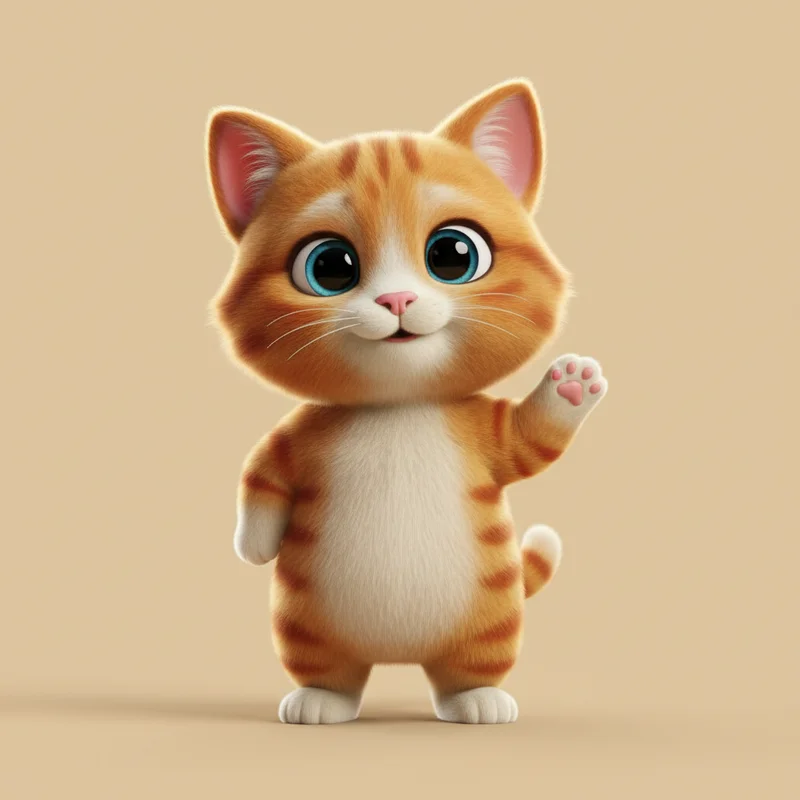
Domestic feline companion known for independence, agility, and internet fame. Masters of napping and keyboard interruption.

VS
Espresso

Espresso

Concentrated coffee shot powering morning routines.

Battle Analysis

Emotional support cat Wins
70%
30%
Cat Espresso

Cat

The emotional support capabilities of the domestic cat have been extensively documented in psychological literature. Studies published in the Journal of Vascular and Interventional Neurology demonstrate measurable reductions in blood pressure and cortisol levels among cat owners. The act of stroking a cat triggers oxytocin release in both parties—a neurochemical exchange unavailable from any beverage. The cat's purr, oscillating between 25 and 150 hertz, produces vibrations associated with stress reduction and even accelerated bone healing in clinical observations.

A cat positioned upon one's lap during the morning newspaper review provides weighted comfort analogous to therapeutic pressure blankets, whilst simultaneously offering the psychological benefit of companionship presence—the simple knowledge that another living creature has chosen to occupy shared space.

Espresso

Espresso's emotional support operates through distinctly different pathways. The ritual of preparation—grinding beans, tamping grounds, extracting the perfect shot—provides a meditative structure to the morning's opening minutes. The aroma compounds released during extraction, numbering over 800 identifiable molecules, trigger positive associations in olfactory processing centres. Many espresso consumers report that merely anticipating the beverage improves their emotional state, a phenomenon known as anticipatory pleasure response.

However, espresso's emotional contribution remains fundamentally chemical rather than relational. It cannot recognise its consumer, adjust its behaviour to mood, or provide the reciprocal acknowledgement that characterises mammalian bonding. The comfort it offers is genuine but unidirectional.

VERDICT

The cat provides bidirectional emotional exchange and therapeutic physical contact unavailable from liquid refreshment.
Alertness provision espresso Wins
30%
70%
Cat Espresso

Cat

The domestic cat's contribution to morning alertness operates through mechanisms that predate caffeine by millennia. A cat demanding breakfast at 05:47 functions as an organic alarm system of considerable reliability, one that cannot be silenced by a snooze button. The adrenaline spike produced by sudden feline vocalisation or the sensation of a small predator walking across one's chest provides immediate cortical activation. However, this alertness tends toward the anxious rather than the focused—the human becomes alert to the cat's demands rather than to the day's broader requirements.

Furthermore, the cat offers no sustained alertness support. Once fed, the creature typically returns to unconsciousness, leaving the human to muddle through subsequent hours without chemical assistance.

Espresso

Espresso approaches alertness provision with pharmaceutical precision. A single shot delivers 63 milligrams of caffeine directly to the bloodstream, reaching peak concentration within 15-20 minutes of consumption. This timeline permits strategic deployment: consume upon waking, and full neurological engagement coincides neatly with the commencement of morning responsibilities. The effect persists for 4-6 hours, providing sustained cognitive support throughout the morning peak productivity window.

Unlike feline-induced alertness, espresso creates a state researchers describe as focused arousal—attention directed toward chosen tasks rather than scattered across ambient stimuli. The beverage enhances rather than merely initiates wakefulness.

VERDICT

Espresso provides sustained, focused alertness; cats provide brief, anxiety-flavoured wakefulness that dissipates once breakfast is served.
Social facilitation espresso Wins
30%
70%
Cat Espresso

Cat

The domestic cat has proven unexpectedly effective at facilitating human social connection. Cat ownership provides inexhaustible conversational material, from behavioural anecdotes to veterinary sagas. The phenomenon of showing cat photographs to colleagues and strangers has become a documented social ritual of the digital age. Dating applications report that profiles featuring cats receive measurably higher engagement, suggesting the animal signals desirable traits: nurturing capacity, stable domestic arrangements, tolerance for unpredictable behaviour.

Cats themselves may participate in social occasions, though their contributions tend toward the disruptive—investigating guests' belongings, claiming the most comfortable seating, or retreating entirely to locations unknown.

Espresso

Espresso's social facilitation operates through the infrastructure it enables rather than through its own presence. The espresso bar represents one of modernity's most successful social institutions—a semi-public space permitting extended occupation in exchange for modest beverage purchase. Business meetings, romantic encounters, creative collaborations, and casual friendships have all found natural habitat in the cafe environment espresso helped create.

Offering to make someone an espresso at home carries hospitality significance exceeding that of simpler beverages. The extended preparation ritual—grinding, tamping, extracting—demonstrates investment of time and attention that instant coffee cannot match. The beverage serves as social currency in professional and domestic contexts alike.

VERDICT

Espresso has spawned an entire social infrastructure; cats provide conversation topics but occasionally undermine social gatherings through unpredictable behaviour.
Long term companionship cat Wins
70%
30%
Cat Espresso

Cat

The domestic cat offers companionship measured in years rather than minutes. A healthy specimen typically survives 12-18 years, with some individuals exceeding two decades. This extended relationship permits the development of genuine mutual understanding—the human learns the cat's preferences, routines, and communication signals, whilst the cat develops (or deigns to develop) tolerance for human behaviour patterns. The companionship deepens over time in ways unique to inter-species relationships.

Unlike human relationships, which require extensive maintenance and negotiation, cat companionship operates on simpler terms. The cat asks primarily for sustenance and territory; in exchange, it provides presence, warmth, and the peculiar satisfaction of being chosen by a creature with no contractual obligation to remain.

Espresso

Espresso's relationship with its consumer necessarily terminates upon consumption. Each interaction lasts approximately three minutes—the time required to drink a properly extracted shot before temperature decay compromises flavour. Whilst one may develop brand loyalty, machine affection, or ritual attachment, these relationships lack the reciprocity that characterises genuine companionship. The espresso cannot recognise its consumer, distinguish between owners, or express preference for continued association.

The machine itself may persist for years, but its contribution remains transactional: beans in, stimulation out. This arrangement has merits—notably the absence of grief when the relationship concludes—but cannot satisfy the human need for recognised, reciprocal connection.

VERDICT

Cats provide years of developing relationship; espresso provides moments of stimulation without continuity or recognition.
Maintenance requirements espresso Wins
30%
70%
Cat Espresso

Cat

The domestic cat presents a maintenance profile of considerable complexity. Daily requirements include two feeding sessions, fresh water provision, and litter box sanitation—the latter task described by veterinary professionals as non-negotiable for indoor specimens. Weekly obligations encompass brushing (for long-haired varieties), play session provision, and environmental enrichment assessment. Annual commitments include veterinary examination, vaccination updates, and the administrative burden of insurance policies increasingly common among responsible owners.

The cat's maintenance schedule, critically, cannot be deferred. A cat left unfed for twelve hours will communicate this oversight with escalating urgency. The creature imposes its requirements upon the human's schedule rather than accommodating human convenience.

Espresso

Espresso maintenance, whilst not trivial, operates entirely at human discretion. The machine requires weekly backflushing, periodic descaling based on water hardness, and occasional gasket replacement measured in years rather than months. Bean storage demands attention to freshness—ideally consumption within two weeks of roasting—but failure here produces merely suboptimal flavour rather than vociferous complaint.

The espresso's great advantage lies in its temporal flexibility. An owner absent for a week faces no consequences more severe than stale beans. The machine harbours no resentment, requires no pet-sitting arrangements, and imposes no veterinary emergencies at inconvenient hours. It simply waits.

VERDICT

Espresso maintenance operates on human schedules; cat maintenance operates on feline demands, which supersede all other considerations.
👑

The Winner Is

Cat

55 - 45

This investigation reveals a contest between fundamentally different value propositions. Espresso excels in domains of function: it provides superior alertness, demands less maintenance, and has spawned social infrastructure that shapes urban life worldwide. These are not trivial advantages. For the human seeking pure cognitive enhancement with minimal obligation, espresso represents an optimal solution.

Yet the cat prevails by a margin of 55 to 45, claiming victory in the domains that perhaps matter most to the human organism: emotional support and long-term companionship. No espresso shot has ever greeted its consumer at the door, positioned itself strategically for stroking, or purred at frequencies that reduce blood pressure. The cat offers something no beverage can replicate—the acknowledgement of another conscious being.

The espresso consumer faces each morning alone with their stimulant; the cat owner faces each morning in partnership, however asymmetric that partnership may be. In a world of increasing isolation, this distinction carries weight that mere caffeine content cannot match.

Cat
55%
Espresso
45%

Share this battle

More Comparisons