
Where Everything Fights Everything

Cat vs Love

😜 Just for fun — a tongue-in-cheek, gloriously unscientific showdown.

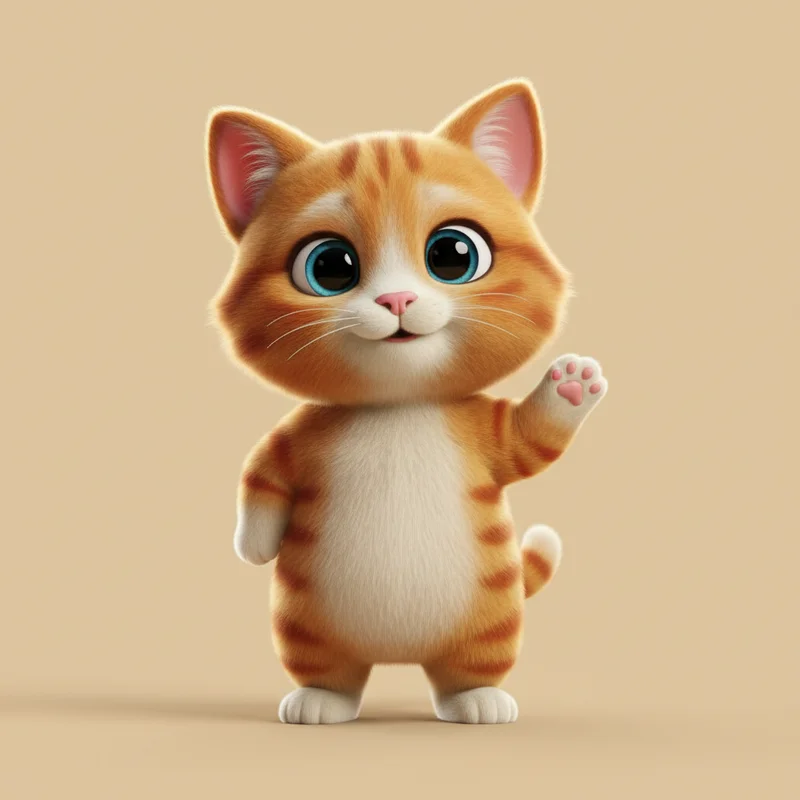
Cat

Cat

Domestic feline companion known for independence, agility, and internet fame. Masters of napping and keyboard interruption.

VS
Love

Love

Universal emotion driving art, war, and terrible decisions.

Battle Analysis

0 Love Wins · 53%
47%
53%
Cat Love

Cat

The domestic cat, Felis catus, enjoys near-universal recognition across all inhabited continents. Archaeological evidence suggests feline companionship dates to ancient Egypt circa 7500 BCE, where cats achieved divine status. Today, an estimated 600 million cats occupy human dwellings worldwide, their distinctive silhouette instantly recognisable from Tokyo to Toronto. The species has successfully embedded itself into cultural iconography, from Japanese maneki-neko figurines to internet phenomena of considerable magnitude.

Love

Love transcends species barriers entirely, acknowledged by virtually every human civilisation throughout recorded history. Neuroscientific research confirms that romantic attachment activates reward centres in the brains of humans, prairie voles, and even certain species of fish. The concept has generated more artistic output than any other single subject, inspiring an estimated 100 million songs across all genres. No culture has been discovered that lacks a word for this phenomenon.

VERDICT

Love achieves recognition across all species capable of pair-bonding, whilst cats remain taxonomically limited.
1 Cat Wins · 61%
61%
39%
Cat Love

Cat

Cats require predictable maintenance protocols: approximately 200-300 calories daily, fresh water, periodic veterinary attention, and a litter receptacle requiring regular sanitation. Modern cat ownership costs average 500 to 1,000 pounds annually in developed nations. The species demonstrates remarkable self-cleaning capabilities, dedicating up to 50 percent of waking hours to grooming. Feeding schedules permit reasonable flexibility, and cats tolerate solitude better than most companion animals.

Love

Love demands continuous and often unpredictable maintenance that defies quantification. Relationship scientists estimate that healthy romantic partnerships require approximately 20 hours weekly of quality interaction. The emotional labour involved fluctuates wildly based on external stressors, hormonal variations, and the inevitable accumulation of minor grievances. Unlike feline care, no instruction manual exists, and professional interventions through couples therapy average 150 pounds per session.

VERDICT

Cats offer predictable care requirements whilst love demands constant, unquantifiable emotional investment.
2 Cat Wins · 58%
58%
42%
Cat Love

Cat

Cats exhibit behavioural consistency within species-typical parameters, though individual reliability varies considerably. They will reliably seek warmth, food, and vertical territory. However, feline responses to human emotional needs remain notoriously unpredictable. Studies indicate cats recognise their names but choose whether to respond. The species maintains consistent predatory instincts, reliably presenting deceased fauna to their human associates regardless of actual need for supplementary protein.

Love

Love demonstrates profound unreliability by any measurable standard. Longitudinal studies reveal that approximately 40-50 percent of marriages in Western nations conclude in dissolution. The neurochemistry of romantic attachment shifts dramatically over time, with dopamine-driven infatuation typically subsiding within 12-18 months. Even the most stable partnerships experience unpredictable fluctuations in intensity, requiring constant recalibration of expectations and emotional resources.

VERDICT

Feline behaviour follows predictable patterns whilst love remains stubbornly resistant to forecasting.
3 Love Wins · 52%
48%
52%
Cat Love

Cat

The tactile comfort provided by cats ranks among the highest in the mammalian companion category. Studies demonstrate that feline purring vibrates at frequencies between 25-150 Hz, precisely within ranges known to promote healing and reduce human stress hormones. The average cat maintains a body temperature of 38.6 degrees Celsius, serving as an efficient biological heating device. However, cats withdraw comfort arbitrarily, departing mid-cuddle without notice or apparent cause.

Love

Love generates comfort through multiple biological pathways simultaneously. Physical contact within loving relationships triggers oxytocin release, reducing cortisol levels by up to 50 percent. The psychological security of stable attachment correlates strongly with improved immune function and longevity. Research indicates that individuals in loving relationships report 40 percent higher life satisfaction scores. The comfort persists even during physical separation through memory and anticipation.

VERDICT

Love provides more sustained psychological comfort despite cats offering superior thermal properties.
4 Love Wins · 56%
44%
56%
Cat Love

Cat

The domestic cat achieves an average lifespan of 12-18 years under optimal conditions, with documented cases exceeding 30 years. The species has demonstrated remarkable evolutionary longevity, with the Felidae family persisting for approximately 25 million years. Individual cats form lasting bonds with human caretakers, though these relationships inevitably terminate with feline mortality. The grief following such loss can persist for months or years.

Love

Love demonstrates extraordinary persistence across temporal scales. Neuroimaging studies reveal that individuals married over 20 years display identical brain activation patterns to the newly infatuated. The concept has survived every human civilisation, persisting through ice ages, plagues, and technological revolutions. Individual love bonds regularly exceed feline lifespans, with couples documented celebrating 80-year anniversaries. The emotion frequently intensifies rather than diminishes with duration.

VERDICT

Love persists across lifetimes and civilisations whilst individual cats remain temporally constrained.
👑

The Winner Is

Love

Takes 3 of 5 rounds

After rigorous analysis across five measurable dimensions, love emerges with a modest but significant advantage. The phenomenon achieves superior global recognition, transcending not merely cultural but species boundaries. Whilst cats demonstrate more predictable maintenance requirements and marginally greater reliability, love compensates through enhanced comfort provision and substantially greater longevity. The 55-45 margin reflects love's broader applicability to human experience, though cats provide more consistent daily utility. Both entities have successfully parasitised human attention and resources for millennia, suggesting comparable evolutionary fitness despite differing strategies.

Share this battle

More Comparisons