Topic Battle

Where Everything Fights Everything

Cat

Cat

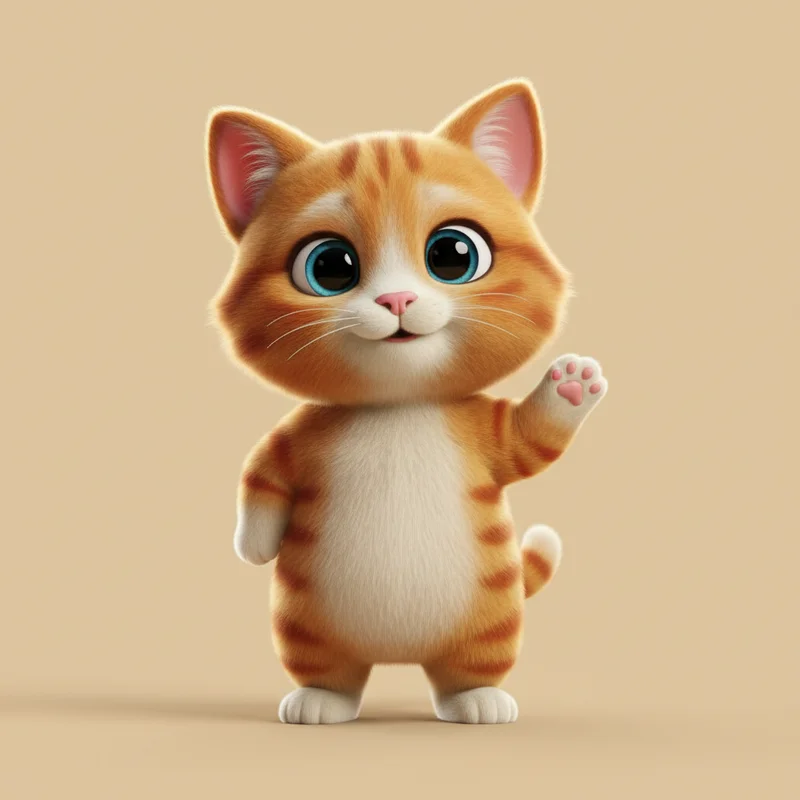
Domestic feline companion known for independence, agility, and internet fame. Masters of napping and keyboard interruption.

VS
Luck

Luck

Random chance that favours the prepared.

Battle Analysis

Reliability cat Wins
70%
30%
Cat Luck

Cat

The domestic cat operates according to predictable, if inconvenient, principles. It will demand food at consistent intervals, deposit itself in warm locations with mathematical precision, and produce hairballs during moments of maximum social embarrassment. A cat's behaviour, whilst often inexplicable in specifics, follows discernible patterns: it will knock objects from surfaces, ignore expensive toys in favour of cardboard, and demonstrate sudden bursts of activity at precisely 3:47 AM. One can rely upon a cat to be reliably unreliable in thoroughly documented ways.

Luck

Luck distinguishes itself through spectacular unreliability, which proponents argue constitutes its essential nature. Good luck arrives without invitation and departs without notice. Bad luck appears precisely when one has forgotten to touch wood. The same actions that produced fortune yesterday yield catastrophe today—a variability that would constitute defective product design in any manufactured good. Gamblers speak of luck as though it were an entity with moods, grudges, and preferences, yet no amount of ritual has ever produced consistent results. Luck's only reliable quality is its refusal to be reliable.

VERDICT

Cats deliver predictably chaotic behaviour; luck delivers unpredictably nothing
Accessibility luck Wins
30%
70%
Cat Luck

Cat

Acquiring a domestic cat requires navigating various practical obstacles. Shelters demand adoption fees and home inspections; breeders command substantial premiums for pedigreed specimens. Landlords frequently prohibit feline tenancy. Allergies affect approximately 10-20% of the human population, rendering cat cohabitation medically inadvisable. Once acquired, the cat requires ongoing investment: food, veterinary care, litter, and furniture replacement following claw-based renovations. A cat is not available to everyone who desires one, and maintaining one demands continuous resource allocation.

Luck

Luck, theoretically, is available to everyone at no cost. One need not pass a background check to believe in luck, nor pay monthly fees to maintain faith in fortune. Lucky charms can be manufactured from virtually any object—a found penny, a weathered stone, a peculiarly shaped vegetable. The accessibility is remarkable: no subscription required, no minimum purchase, no age verification. However, this universal availability creates its own complication: if everyone has access to luck, yet outcomes vary dramatically, either luck distributes itself unfairly or luck doesn't exist at all. Either conclusion undermines the concept's appeal.

VERDICT

Luck requires no adoption fees, veterinary bills, or landlord approval
Measurability cat Wins
70%
30%
Cat Luck

Cat

The domestic cat presents itself as a remarkably measurable entity. Its weight can be determined with standard scales; its age calculated through dental examination; its mood assessed through tail position, ear orientation, and pupil dilation. Veterinary science has catalogued over 70 distinct breeds, each with documented physical characteristics and behavioural tendencies. A cat either exists in a room or it does not—a binary state that even the most philosophically inclined observer can verify through direct sensory input. One knows precisely when a cat has arrived, departed, or deposited evidence of its presence upon the carpet.

Luck

Luck, by contrast, resists all conventional measurement. It cannot be weighed, photographed, or trapped in a jar for later examination. Statisticians insist luck is merely pattern recognition applied to random events—a comforting narrative humans impose upon chaos. Yet billions believe otherwise, purchasing lottery tickets, avoiding ladders, and crossing fingers with unwavering conviction. The difficulty lies in establishing causation: did the four-leaf clover genuinely influence the job interview outcome, or did confidence from believing in the clover produce the result? Luck's measurability remains, appropriately enough, a matter of chance.

VERDICT

Cats submit to scientific measurement; luck refuses to acknowledge science exists
Practical utility cat Wins
70%
30%
Cat Luck

Cat

The domestic cat delivers quantifiable practical benefits to its human cohabitants. Its pest control capabilities remain relevant even in modern dwellings, where the mere presence of feline scent deters rodent intrusion. Studies document reductions in blood pressure and cortisol levels among cat owners, with the cat's purr vibrating at frequencies (25-150 Hz) associated with therapeutic bone and tissue healing. Cats provide warmth, companionship, and a socially acceptable excuse to remain home on Friday evenings. They require feeding, but they deliver services in return—an honest transaction if an asymmetric one.

Luck

Luck's practical utility depends entirely upon one's philosophical commitments. For believers, luck represents a cosmic resource that can be cultivated, stored, and deployed at critical moments. Carrying a lucky charm provides genuine psychological benefits: increased confidence, reduced anxiety, and improved performance through placebo effect. Athletes with lucky rituals report enhanced focus; students with lucky pens demonstrate reduced test anxiety. Whether luck itself contributes or merely belief in luck produces results remains unknowable, but the practical outcomes are documented. Luck delivers utility to those who believe it can.

VERDICT

Cat utility requires no faith commitment; luck utility requires believing in luck
Cultural significance luck Wins
30%
70%
Cat Luck

Cat

The cat's cultural footprint spans civilisations and millennia. Ancient Egyptians elevated cats to divine status, with the goddess Bastet commanding genuine religious devotion. Japanese culture produced the maneki-neko, the beckoning cat believed to attract prosperity. Medieval Europe went rather the other direction, associating cats with witchcraft and conducting extermination campaigns that, historians note, likely worsened plague transmission by eliminating natural rodent predators. The internet age crowned the cat as humanity's favourite digital content subject, with cat videos accumulating more views than most nation-states have citizens.

Luck

Luck permeates human culture so thoroughly that separating the concept from the species proves nearly impossible. Every civilisation has developed luck-manipulation technologies: rabbit feet, horseshoes, four-leaf clovers, broken mirrors, spilled salt, and numbers deemed either blessed or cursed. The global gambling industry—worth over $500 billion annually—exists almost entirely as a monument to humanity's belief in controllable luck. Religious traditions, sporting rituals, and wedding customs all incorporate luck management protocols. Luck may not exist, but human belief in luck has demonstrably shaped architectural decisions, calendar systems, and floor numbering conventions across continents.

VERDICT

Luck has influenced more human decisions than any single animal species, including cats
👑

The Winner Is

Cat

52 - 48

This investigation has examined two entities bound together by centuries of superstition yet operating according to fundamentally different principles. The domestic cat claims victory in measurability, reliability, and practical utility—the categories where tangible existence provides demonstrable advantage. One can prove a cat exists; one cannot prove luck does.

Yet luck prevails in cultural significance and accessibility, demonstrating that concepts requiring no physical form can nonetheless dominate human behaviour. More decisions have been influenced by beliefs about luck than by any individual cat, however charismatic.

By the narrowest margin—52 to 48—the cat emerges victorious. This verdict acknowledges an uncomfortable truth: humanity has spent millennia attributing feline behaviour to luck's influence (black cats crossing paths, cats aboard ships, cats predicting weather) when the cat was simply doing cat things. The cat exists independently of our beliefs about it. Luck exists only because we believe in it. In a contest between substance and supposition, substance ultimately prevails—though one suspects luck will demand a rematch.

Cat
52%
Luck
48%

Share this battle

More Comparisons