Topic Battle

Where Everything Fights Everything

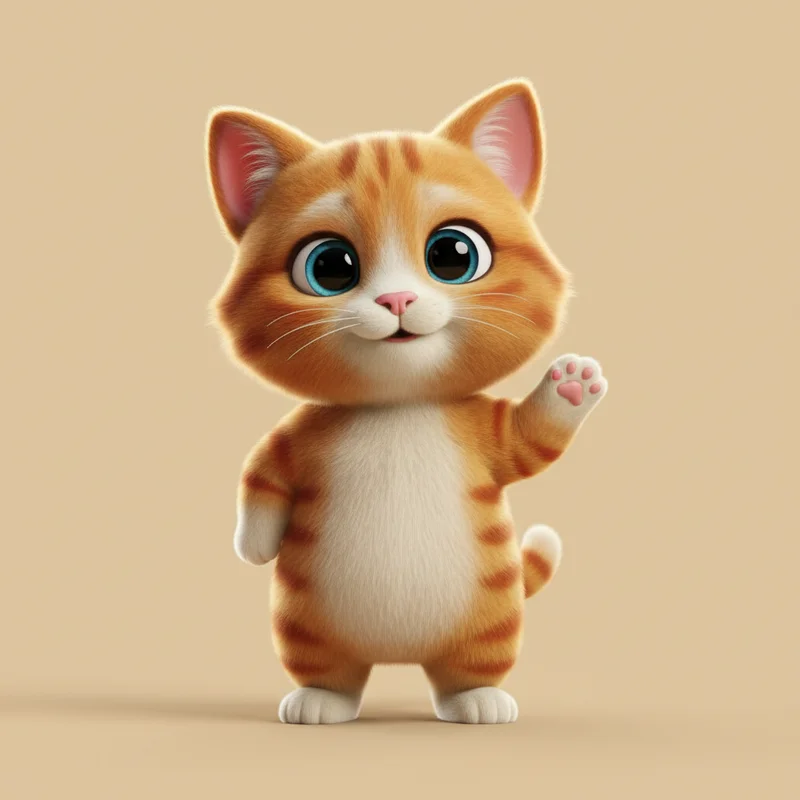
Cat

Cat

Domestic feline companion known for independence, agility, and internet fame. Masters of napping and keyboard interruption.

VS
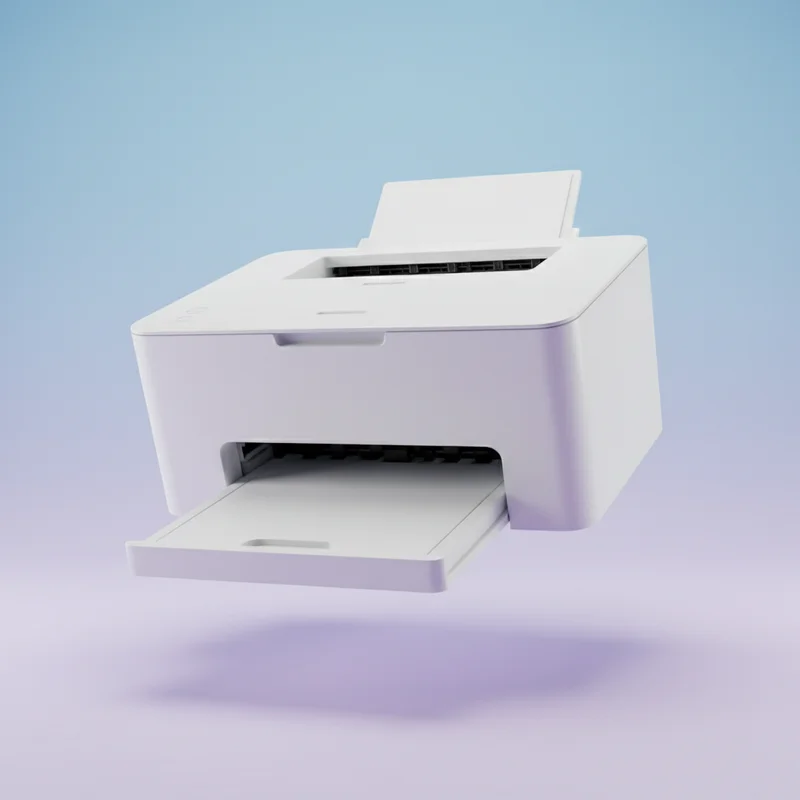
Printer

Printer

Device that knows exactly when you need it most to malfunction.

Battle Analysis

Longevity Cat Wins
70%
30%
Cat Printer

Cat

Modern domestic cats achieve average lifespans of 15 to 20 years with indoor specimens, with documented cases exceeding thirty years. Throughout this period, core functionality remains largely intact, with age-related decline occurring gradually and predictably.

Importantly, cats do not become obsolete. A cat born in 2005 remains fully compatible with current household standards. No firmware updates render older cats non-functional. The interface between cat and human has remained stable for approximately ten thousand years, representing remarkable intergenerational compatibility.

Printer

Printer functional lifespan averages three to five years before mechanical failure or planned obsolescence renders devices unusable. Manufacturers discontinue driver support for older models, creating artificial death sentences for hardware that physically functions.

The concept of maintaining a printer for fifteen years provokes laughter in technical support departments. Replacement parts become unavailable within thirty-six months. Software compatibility erodes annually. A printer purchased today will likely serve as landfill by the decade's end, regardless of physical condition.

VERDICT

Cats provide fifteen to twenty years of consistent service whilst printers become functionally obsolete within half a decade.
Reliability Cat Wins
70%
30%
Cat Printer

Cat

Feline reliability operates on a probability distribution that statisticians find genuinely fascinating. A cat asked to perform a specific behaviour will comply approximately 4 to 7 percent of the time, with compliance rates inversely correlated to request urgency. When not required, cats demonstrate flawless execution of complex behaviours including door operation, food theft, and ornament destruction.

However, in their primary functions of companionship and pest control, cats maintain remarkable consistency. A healthy cat will purr when content, hunt when motivated, and demand food at precisely 5:47 AM regardless of weekend status. This predictability, whilst not always convenient, represents genuine reliability within feline operational parameters.

Printer

Printer reliability follows a pattern known in engineering circles as 'deadline-sensitive failure mode'. Studies indicate that printer malfunction probability increases by 340 percent when documents are required within the next thirty minutes. The device operates flawlessly during test prints but develops critical errors upon receiving genuinely important material.

Common failure modes include phantom paper jams in empty trays, ink cartridge rejection despite verified compatibility, and the dreaded 'PC Load Letter' notification that has traumatised office workers since 1981. The printer's reliability curve resembles less a technical specification and more a malevolent consciousness timing its interventions for maximum inconvenience.

VERDICT

Cats maintain consistent behaviour patterns, however inconvenient, whilst printers demonstrate active hostility to human scheduling requirements.
Operational costs Cat Wins
70%
30%
Cat Printer

Cat

Annual cat maintenance costs range from 500 to 1,200 pounds covering food, litter, veterinary care, and the replacement of household items destroyed through enthusiasm or malice. These costs prove predictable and scale linearly with cat quantity, allowing reasonable budget forecasting.

Notably, cats require no proprietary consumables. Generic food functions identically to branded alternatives. Litter brands prove interchangeable. No planned obsolescence forces upgrade cycles. A well-maintained cat operates effectively for fifteen to twenty years without requiring replacement parts unavailable at competitive prices.

Printer

Printer economics follow the razor-blade model perfected by manufacturers who understood addiction before pharmaceutical companies. Initial purchase prices of 50 to 200 pounds disguise ongoing consumable costs averaging 150 to 400 pounds annually for moderate use households.

The mathematics prove genuinely shocking upon examination. Printer ink ranks among the most expensive liquids on Earth at approximately 2,700 pounds per litre, exceeding vintage champagne by considerable margins. Replacement cartridges frequently cost more than replacement printers, creating an economic absurdity that manufacturers defend with straight faces during shareholder presentations.

VERDICT

Despite significant expenses, cats avoid the predatory consumable pricing that renders printer ownership a form of ongoing financial extraction.
Communication clarity Cat Wins
70%
30%
Cat Printer

Cat

Cats communicate through an elaborate system of over 100 distinct vocalisations, supplemented by ear positioning, tail movement, and pupil dilation. Whilst this system requires interpretation effort, dedicated observers can decode feline intent with reasonable accuracy within months of cohabitation.

The directness of cat communication proves particularly valuable. A cat that wishes to exit will position itself at the door. A cat desiring food will position itself at the bowl. A cat experiencing displeasure will position its claws in human flesh. The feedback loop, whilst occasionally painful, leaves minimal ambiguity regarding feline preferences.

Printer

Printer communication operates through error codes designed by engineers who apparently resented clarity. Error 0x00000709 provides no actionable information to users lacking computer science degrees. The phrase 'Printer Offline' frequently appears whilst the printer sits powered on, connected, and visibly operational.

Diagnostic protocols require navigation through seventeen nested menus to reach information stating that the printer 'cannot print' without specifying why. Status lights blink in patterns suggesting morse code but correlating to no documented communication standard. The cumulative effect renders printer-human communication functionally impossible without third-party intervention.

VERDICT

Feline communication, despite requiring learned interpretation, proves infinitely more transparent than printer error messaging.
Environmental adaptability Cat Wins
70%
30%
Cat Printer

Cat

Cats demonstrate extraordinary environmental flexibility inherited from desert ancestors who colonised every continent except Antarctica through sheer adaptability. A domestic cat functions effectively in temperature ranges from 10 to 35 degrees Celsius, humidity variations from arid to tropical, and altitude differentials from sea level to mountain retreats.

This adaptability extends to social environments. Cats integrate into households containing children, other pets, shift workers, and the chronically anxious with minimal adjustment periods. Their operational requirements remain constant regardless of whether they occupy studio flats or country estates.

Printer

Printers demand environmental conditions approaching laboratory specifications. Optimal functionality requires temperatures between 18 and 24 degrees Celsius, humidity between 40 and 60 percent, and paper stored in controlled conditions to prevent moisture absorption. Deviation from these parameters triggers immediate performance degradation.

Paper jams increase exponentially with humidity variance. Ink viscosity changes with temperature fluctuation. Static electricity from low humidity causes feed errors. The printer exists as a technological orchid, demanding perfect conditions whilst providing inconsistent results even when all specifications are met.

VERDICT

Feline adaptability to diverse conditions vastly exceeds printer sensitivity to environmental variation.
👑

The Winner Is

Cat

62 - 38

The cat prevails decisively, demonstrating that ten thousand years of coevolution with humans produces results no fifty-year-old technology can match. Where the printer offers broken promises and expensive failure, the cat offers reliable companionship and fur on business attire.

The comparison illuminates a broader truth about domestic technology. Devices promising to simplify life frequently complicate it, demanding attention, resources, and troubleshooting expertise that their designers never acknowledged. The cat makes no such promises. It offers precisely what it delivers: intermittent affection, consistent feeding requirements, and occasional gifts of deceased wildlife.

In the contest between ancient biology and modern engineering, the living creature proves more reliable than the machine. This outcome should concern technology manufacturers and comfort cat enthusiasts, validating what every frantic deadline-night printer battle has suggested: some problems have no technical solution, only feline ones.

Cat
62%
Printer
38%

Share this battle

More Comparisons