
Topic Battle

Where Everything Fights Everything

Cat

Cat

Domestic feline companion known for independence, agility, and internet fame. Masters of napping and keyboard interruption.

VS
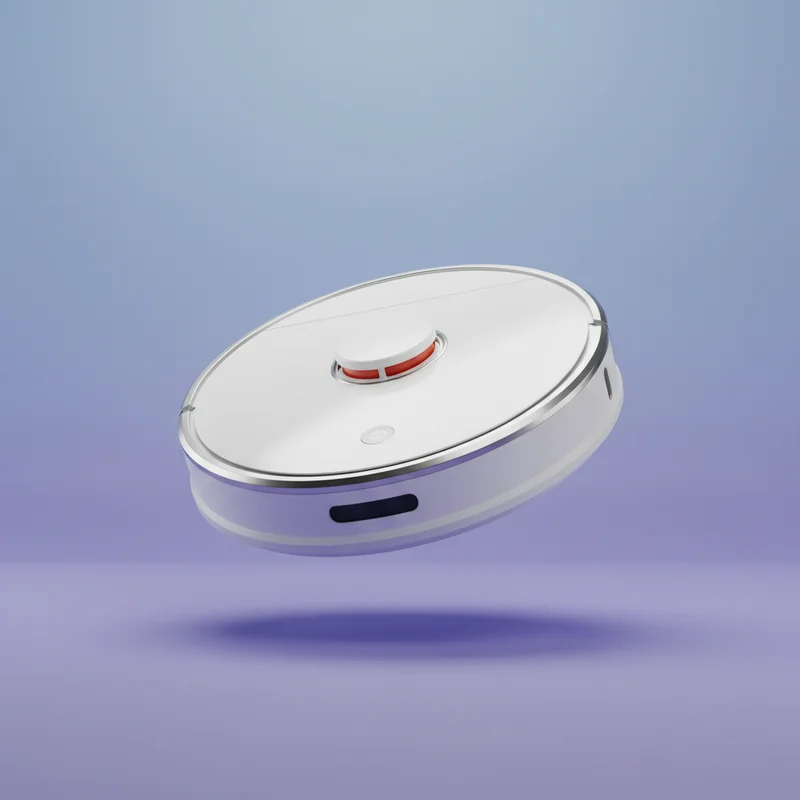
Robot Vacuum

Robot Vacuum

Autonomous cleaning device that terrorizes pets and gets stuck under furniture.

Battle Analysis

Noise output Cat Wins
70%
30%
Cat Robot Vacuum

Cat

Feline acoustic output operates across a remarkable frequency range. The standard vocalisation repertoire includes sounds measured between 25 and 50 decibels under normal operational conditions, escalating to 65 decibels during feeding demands or territorial announcements. The purr, generated through laryngeal muscle oscillation, produces frequencies between 25 and 150 Hz at volumes that facilitate human sleep rather than disrupting it.

Noise generation proves highly context-dependent. Extended periods of silence occur during stalking behaviours and sleeping phases, which collectively consume 12 to 16 hours daily. Peak vocalisation typically coincides with the hours between 3:00 and 5:00 AM, a timing pattern that remains unexplained by current research.

Robot Vacuum

Robot vacuum acoustic signatures range from 55 to 70 decibels during standard operation, comparable to normal conversation levels but considerably less tolerable over extended durations. Premium models have achieved reductions to 50-55 decibels through improved motor engineering, though this remains audible throughout typical residential spaces.

The noise output follows predictable scheduling, a significant advantage over feline unpredictability. However, the mechanical grinding quality of vacuum acoustics triggers human irritation responses at lower absolute volumes than organic sounds. Research indicates that humans tolerate cat vocalisation at equivalent decibel levels with substantially less reported annoyance, suggesting frequency composition matters as much as amplitude.

VERDICT

Variable organic acoustics including therapeutic purring frequencies prove more tolerable than sustained mechanical grinding.
Floor coverage Robot Vacuum Wins
30%
70%
Cat Robot Vacuum

Cat

The feline approach to floor coverage follows what researchers term 'selective territorial assertion'. Rather than systematic patrol patterns, cats position themselves at strategic chokepoints, blocking doorways, stairs, and corridors with precision that suggests advanced spatial awareness. A single cat can effectively control access to multiple rooms through strategic lounging.

Coverage patterns prove highly responsive to environmental factors. Sunny patches receive intensive occupation regardless of traffic requirements. Areas near food preparation zones experience heightened surveillance. The coverage, whilst incomplete by conventional metrics, demonstrates sophisticated prioritisation of high-value territory.

Robot Vacuum

Robot vacuums employ algorithmic coverage patterns designed to address 100% of accessible floor space within their operational parameters. LIDAR and infrared sensors map environments with centimetre precision, generating optimised routes that minimise redundant coverage whilst maximising cleaning efficiency.

However, theoretical coverage diverges substantially from practical reality. Furniture legs, cable tangles, and mysteriously appearing obstacles reduce effective coverage to approximately 70-85% in typical deployments. The robot's commitment to completion, whilst admirable, frequently results in extended runtime as it repeatedly attempts to access spaces physics will not permit.

VERDICT

Despite practical limitations, systematic algorithmic coverage outperforms strategic lounging for comprehensive floor addressing.
Maintenance demands Robot Vacuum Wins
30%
70%
Cat Robot Vacuum

Cat

Cat maintenance requirements encompass feeding, litter management, veterinary care, and environmental enrichment, totalling an estimated 30 to 45 minutes of daily attention when properly executed. Annual veterinary costs average between 200 and 500 pounds depending on health status and regional pricing. Food expenditure adds 400 to 800 pounds yearly for quality nutrition.

The maintenance burden distributes unevenly, with intensive periods surrounding feeding times and litter attention, interspersed with extended autonomous operation requiring no human input. Cats maintain their own grooming protocols, eliminating bathing requirements that burden other domestic animals. The occasional hairball deposit represents the primary unsolicited maintenance event.

Robot Vacuum

Robot vacuum maintenance appears minimal but accumulates significantly over operational lifespan. Dustbin emptying requires attention after each cleaning cycle. Filter replacement occurs every 2 to 3 months at costs of 15 to 30 pounds per filter. Brush roller cleaning demands weekly attention to remove accumulated hair and debris.

Battery degradation ensures replacement costs of 50 to 100 pounds every 2 to 3 years. Software updates occasionally introduce behavioural changes that require relearning of home layouts. And the inevitable encounter with pet waste, should any household pet produce unexpected deposits, creates maintenance events that exceed the device's original purchase price in cleaning costs.

VERDICT

Despite battery and filter costs, mechanical maintenance demands prove substantially lower than biological creature requirements.
Obstacle navigation Cat Wins
70%
30%
Cat Robot Vacuum

Cat

Cats navigate obstacles with a fluid grace that has inspired engineering attempts at biomimetic robotics, none of which have succeeded in replication. The feline skeleton contains 230 bones connected by joints permitting rotation angles that violate intuitive understanding of mammalian physiology. This structural advantage enables passage through spaces theoretically too small for the cat's mass.

Obstacle response demonstrates remarkable adaptability. Closed doors prompt immediate vocalisation campaigns. Novel objects trigger intensive investigation protocols. Other animals, including robot vacuums, receive responses ranging from studied indifference to tactical ambush, depending on variables humans have not successfully identified.

Robot Vacuum

Robot vacuums approach obstacles through sensor-mediated detection and preprogrammed response algorithms. Upon encountering an obstruction, the device executes a retreat, rotate, and retry sequence designed to find alternative paths. This methodical approach proves effective for static obstacles such as furniture legs and wall boundaries.

Dynamic obstacles present greater challenges. Cables trigger entanglement events. Loose rugs cause navigation confusion. And cats, when positioned strategically, create obstacle conditions that no algorithm has successfully addressed. The robot's persistence in attempting to navigate around, over, or through feline obstacles has produced documentation suggesting these machines lack appropriate threat assessment capabilities.

VERDICT

Biological navigation systems evolved over millions of years consistently outperform algorithmic approaches developed over decades.
Territorial dominance Cat Wins
70%
30%
Cat Robot Vacuum

Cat

Feline territorial assertion represents the culmination of 10,000 years of coevolution with human domestic spaces. Cats claim territory through scent marking, strategic positioning, and unwavering psychological certainty of ownership. When a cat occupies a space, that space belongs to the cat regardless of any deeds, titles, or mortgage documents humans may produce.

This dominance extends to interactions with robot vacuums. Documentation confirms cats riding upon vacuum devices as mobile thrones, attacking devices perceived as territorial competitors, and training humans to deactivate devices through persistent complaint. The cat's territorial programming predates silicon-based competition by millennia and has proven entirely resistant to technological disruption.

Robot Vacuum

Robot vacuums assert territory through systematic patrol and cleaning, marking their domain through the absence of debris rather than the presence of scent. Operating schedules establish temporal claims to floor space, with some models completing their rounds before human waking hours to minimise conflict.

However, this assertion crumbles upon encountering feline resistance. No robot vacuum has successfully completed a cleaning cycle when a determined cat has chosen to impede progress. The devices lack threat escalation protocols, retreating indefinitely from stationary feline obstacles. In the territorial calculus of domestic spaces, algorithms submit to instinct without exception.

VERDICT

Ancient territorial programming consistently overrides modern algorithmic claims; cats have never lost a floor-space dispute to machinery.
👑

The Winner Is

Cat

55 - 45

The cat prevails through the simple expedient of having evolved to dominate domestic spaces long before those spaces contained electrical outlets. A creature that convinced humanity to provide shelter, food, and worship in exchange for occasional pest control possesses negotiating capabilities no appliance can match.

Robot vacuums will continue their systematic patrols, dutifully addressing floor debris according to their programming. They represent genuine technological achievement, making homes cleaner with minimal human effort. These contributions deserve recognition.

Yet when the robot approaches a cat positioned in its path, it will stop, retreat, and seek alternative routes. The cat will not move. In this simple interaction lies the entire verdict: biology commands whilst technology accommodates, an arrangement that shows no signs of changing regardless of advances in artificial intelligence or sensor technology.

Cat
55%
Robot Vacuum
45%

Share this battle

More Comparisons