
Topic Battle

Where Everything Fights Everything

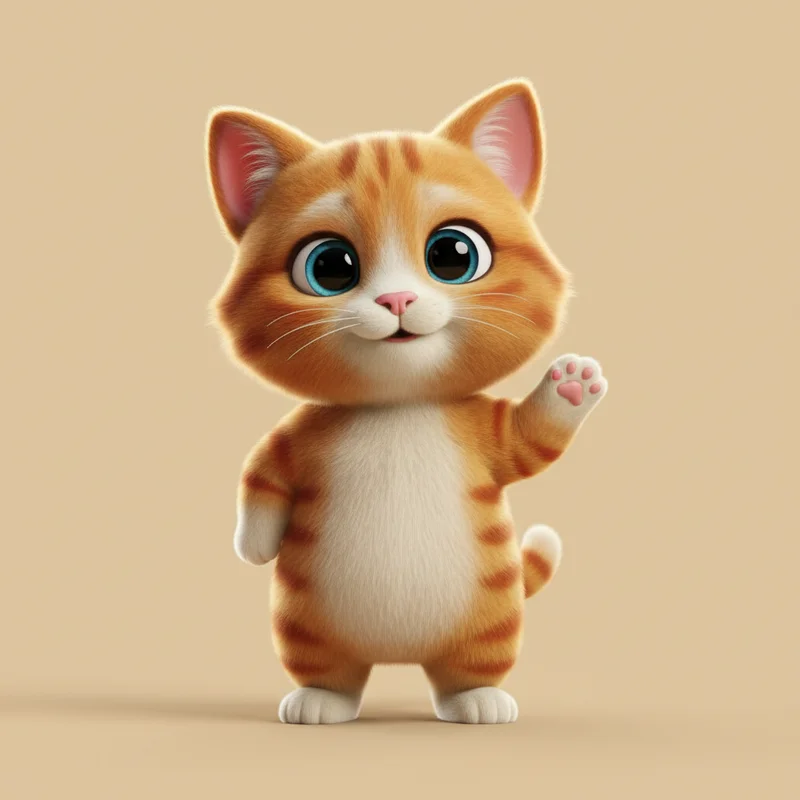
Cat

Cat

Domestic feline companion known for independence, agility, and internet fame. Masters of napping and keyboard interruption.

VS
Social Media

Social Media

Digital platforms connecting and dividing humanity simultaneously.

Battle Analysis

Longevity Cat Wins
70%
30%
Cat Social Media

Cat

The domestic cat has maintained its essential form and function for approximately ten thousand years, since its initial association with human agricultural settlements in the Fertile Crescent. Individual cats typically survive fifteen to twenty years, whilst the species demonstrates remarkable persistence through changing civilisations, religions, and technologies. Cats survived the medieval European persecution era and emerged more beloved than ever. Their fundamental appeal to humanity appears resistant to cultural and technological change.

Social Media

The average social media platform demonstrates a lifespan measured in years rather than millennia. MySpace, once dominant, became a digital ghost town within a decade. Vine flourished briefly before vanishing entirely. Even currently dominant platforms face existential threats from emerging competitors and shifting user preferences. The concept of social media may endure, but individual platforms exhibit the longevity of mayflies when measured against geological or even human timescales.

VERDICT

Ten thousand years of continuous relevance versus platforms that rise and collapse within single human generations.
Adaptability Cat Wins
70%
30%
Cat Social Media

Cat

The domestic cat demonstrates extraordinary adaptive capacity, having transitioned from solitary desert predator to global household companion without surrendering its fundamental nature. Cats have colonised every continent except Antarctica, thriving in environments ranging from Siberian villages to tropical islands. Their behavioural plasticity permits adjustment to virtually any human living situation, from cramped urban flats to sprawling rural estates. Most remarkably, cats have adapted their vocalisations specifically for human communication, developing meows that mimic infant cries to trigger nurturing responses.

Social Media

Social media platforms exhibit relentless adaptive behaviour, modifying their interfaces, algorithms, and features in response to user engagement data. Each platform iteration represents an evolutionary step optimised for attention capture. The technology adapts to individual users through machine learning, creating personalised content streams that maximise engagement. However, this adaptability depends entirely upon electrical infrastructure and internet connectivity, representing a significant vulnerability to environmental disruption.

VERDICT

Cats adapt autonomously across millennia; social media requires constant infrastructure support and human engineering.
Stress impact Cat Wins
70%
30%
Cat Social Media

Cat

Scientific literature extensively documents the therapeutic benefits of feline companionship. Cat ownership correlates with reduced blood pressure, decreased anxiety, and lower risk of cardiovascular disease. The frequency of cat purring, between twenty-five and fifty hertz, corresponds precisely to frequencies known to promote bone density and tissue healing. Stroking a cat triggers oxytocin release in humans, creating measurable stress reduction. The cat offers comfort without demanding complex social reciprocity.

Social Media

Research increasingly links social media usage to elevated stress, anxiety, and depression, particularly among younger users. The platforms create chronic low-level stress through social comparison, fear of missing out, and the pressure of maintaining digital personas. Notification systems deliberately exploit anxiety responses to drive engagement. Studies indicate that even brief periods of social media abstinence produce measurable improvements in wellbeing, suggesting the platforms function as stress amplifiers rather than reducers.

VERDICT

Cats demonstrably reduce human stress hormones; social media measurably increases them across all demographics.
Meme potential Cat Wins
70%
30%
Cat Social Media

Cat

Cats have demonstrated unparalleled memetic virality since the earliest days of internet culture. From the primordial 'I Can Has Cheezburger' to Grumpy Cat's commercial empire, felines have generated billions of shared images and videos. The cat's expressive face, unpredictable behaviour, and photogenic qualities create endless content opportunities. Lolcats alone have generated estimated economic activity exceeding forty million dollars. The cat requires no marketing department; it simply exists, and humans compulsively document and share its existence.

Social Media

Social media serves as the distribution mechanism for memes rather than their content. Platforms provide the infrastructure through which cat images propagate, but they themselves rarely inspire memetic content. When social media platforms do become meme subjects, the content typically involves mockery of their failures, privacy violations, or the absurdity of their executives. The platform is the messenger, rarely the message itself, representing a fundamental disadvantage in memetic competition.

VERDICT

Cats generate memes; social media merely transmits them. The content creator surpasses the distribution channel.
Global recognition Cat Wins
70%
30%
Cat Social Media

Cat

The cat enjoys near-universal recognition across human cultures, appearing in art and literature from ancient Egypt to contemporary Japan. No translation is required to identify a cat; the image transcends linguistic and cultural barriers entirely. Cats feature prominently in the mythologies of civilisations that never communicated with one another, suggesting an archetypal resonance with human psychology. An estimated six hundred million domestic cats currently reside alongside humanity.

Social Media

Social media has achieved remarkable global penetration, with approximately five billion users accessing platforms worldwide. However, significant populations remain entirely unconnected, and platform dominance varies dramatically by region. Western platforms face bans in China, whilst Chinese platforms remain largely unknown in Western markets. The fragmented nature of the social media landscape means no single platform approaches the universal recognition enjoyed by the humble cat.

VERDICT

Cats are recognised universally without regional restrictions or governmental bans limiting their cultural penetration.
👑

The Winner Is

Cat

54 - 46
This investigation reveals a profound truth about the nature of attention in the modern age. Social media, for all its technological sophistication and algorithmic precision, ultimately functions as a pale digital imitation of behavioural patterns the cat perfected millennia ago. Both entities understand that attention must be earned through strategic unpredictability, that rewards must be intermittent to maintain interest, and that apparent indifference paradoxically strengthens attachment. The cat, however, delivers these psychological mechanisms whilst simultaneously providing genuine therapeutic benefit, physical warmth, and companionship unmarred by advertising revenue models. Social media captures attention to monetise it; the cat captures attention because such is its nature.
Cat
54%
Social Media
46%

Share this battle

More Comparisons