
Topic Battle

Where Everything Fights Everything

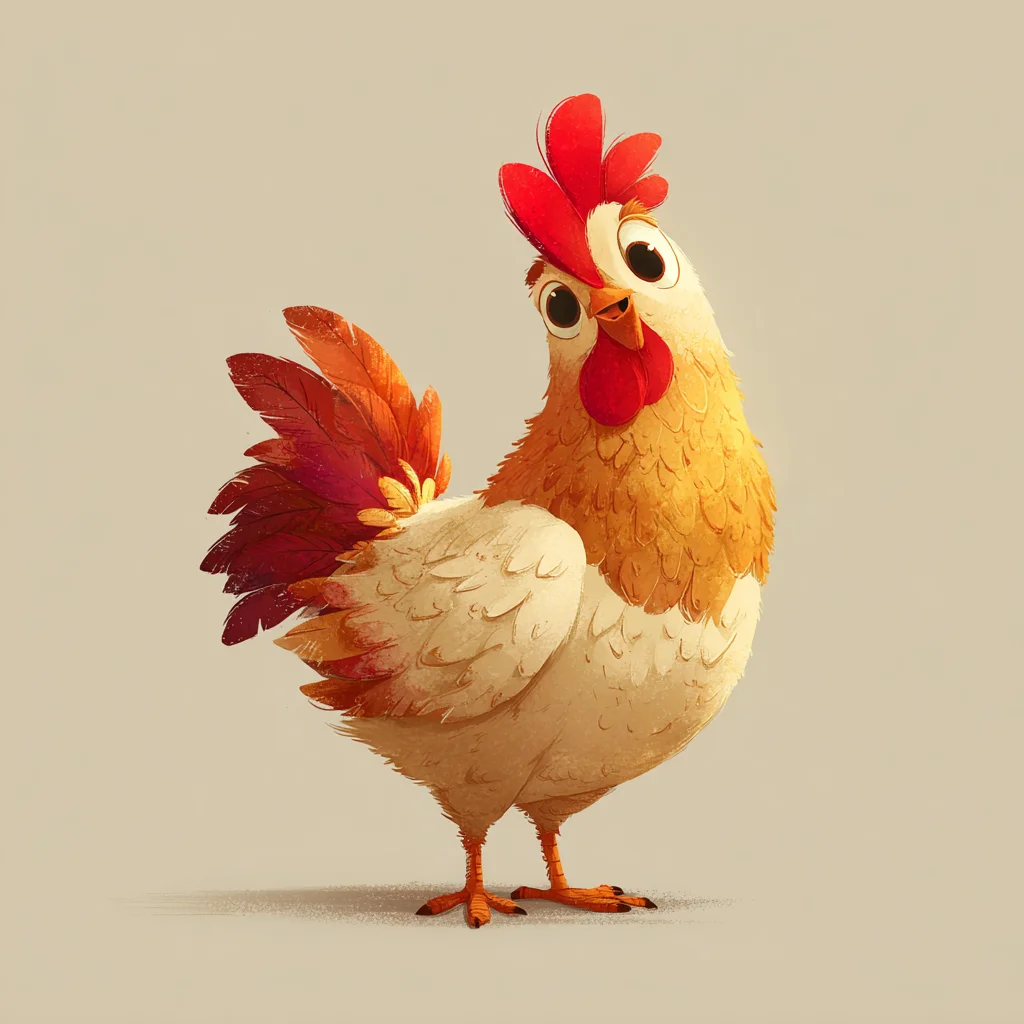
Chicken

Chicken

A domesticated fowl, a subspecies of the red junglefowl. One of the most common and widespread domestic animals.

VS
Death

Death

The only certainty in life besides taxes.

Battle Analysis

Adaptability death Wins
30%
70%
Chicken Death

Chicken

The chicken demonstrates extraordinary biological adaptability. From arctic conditions in Siberia to tropical environments in Southeast Asia, chickens thrive across virtually every climate humans inhabit. Selective breeding has produced over 500 distinct breeds, ranging from tiny bantams weighing 500 grams to Jersey Giants exceeding 6 kilograms. Chickens adapt readily to free-range, caged, and backyard environments alike. Their omnivorous diet allows them to consume grains, insects, kitchen scraps, and commercial feed with equal facility. This remarkable plasticity explains their global success.

Death

Death exhibits perfect and absolute adaptability. It operates equally effectively in all environments, at all temperatures, across all species. Death adapts to advances in medicine by finding new vectors; it accommodates changes in lifestyle by adjusting its timeline. When one cause of death is eliminated, others emerge to maintain death's inevitable presence. Death requires no evolutionary adjustment, no selective breeding, no environmental modification. It simply persists, the ultimate adaptive system that has never failed to reach any organism eventually, regardless of that organism's own adaptive capabilities.

VERDICT

Chickens show impressive biological adaptability, but death demonstrates absolute adaptability across all conditions and all living things.
Daily utility chicken Wins
70%
30%
Chicken Death

Chicken

The practical utility of the chicken proves remarkably diverse. A single bird produces approximately 300 eggs annually under optimal conditions, providing high-quality protein with minimal environmental footprint. Chicken meat features in countless dishes, from the simplest roast to the most elaborate ceremonial feast. Beyond nutrition, chickens provide pest control, fertiliser production, and companionship. The feathers find use in pillows, insulation, and traditional crafts. Even the bones serve purposes in stock-making and traditional medicine. Few creatures offer such comprehensive daily utility to human existence.

Death

Death's daily utility, whilst less immediately apparent, proves foundational to existence itself. Without death, ecosystems would collapse under the weight of immortal organisms competing for finite resources. The recycling of biological matter through death enables new life to emerge. Death provides the urgency that motivates achievement, the poignancy that enriches relationships, and the framework within which meaning itself becomes possible. Medical professionals, funeral directors, and grief counsellors all derive their livelihoods from death's daily presence. Death, in essence, makes the very concept of daily utility meaningful.

VERDICT

For practical daily purposes, the chicken offers tangible, renewable benefits whilst death's utility remains largely philosophical.
Symbolic value death Wins
30%
70%
Chicken Death

Chicken

The chicken carries substantial symbolic weight across cultures. In Western contexts, the bird often represents cowardice, though this association proves relatively recent and culturally specific. More universally, the chicken symbolises fertility, motherhood, and the dawn. The rooster's crow marking sunrise features in mythologies from Portugal to Japan. In Chinese astrology, the Rooster represents punctuality, honesty, and confidence. The question of which came first, the chicken or the egg, has served as philosophical shorthand for causation dilemmas for millennia. Christianity employs the rooster as a symbol of Peter's denial and subsequent redemption.

Death

Death commands perhaps the richest symbolic vocabulary in human culture. The Grim Reaper, Anubis, Hades, Yama, and countless other personifications reflect humanity's attempts to give form to the formless. Death symbolises both ending and transformation, fear and liberation, punishment and peace. Every culture has developed unique symbols for death: skulls, hourglasses, wilting flowers, setting suns. The symbolic resonance of death underpins entire artistic movements, from memento mori paintings to gothic literature. No concept in human experience has generated such profound and varied symbolic expression.

VERDICT

The chicken holds meaningful symbolism, but death's symbolic vocabulary spans every culture and artistic tradition in human history.
Global recognition death Wins
30%
70%
Chicken Death

Chicken

The chicken enjoys near-universal recognition across human civilisations, appearing on every inhabited continent and featuring prominently in cuisines from Kentucky to Karachi. Archaeological evidence suggests chickens accompanied human migration across the Pacific, reaching South America before European contact. The bird's distinctive silhouette and vocalisation patterns are identifiable to children as young as eighteen months, making it one of the first animals most humans learn to recognise. From the sacred chickens of Roman augury to the modern logo of countless fast-food establishments, this bird has achieved remarkable cultural penetration.

Death

Death maintains absolute global recognition, acknowledged by every human society that has ever existed. No culture has failed to develop elaborate rituals, beliefs, and artistic expressions surrounding mortality. The concept transcends linguistic barriers, understood intuitively by all conscious beings. Death appears in the earliest cave paintings, the most sophisticated philosophical treatises, and every religious tradition without exception. Its recognition requires no marketing budget, no brand ambassadors, no social media presence. Death simply is, and this existential certainty ensures a recognition rate that no chicken, however famous, could ever approach.

VERDICT

Whilst chickens achieve impressive global reach, death maintains universal recognition without exception across all conscious beings and cultures.
Historical significance death Wins
30%
70%
Chicken Death

Chicken

The domestication of the chicken represents one of humanity's most consequential agricultural achievements. Evidence from Neolithic sites in China suggests chickens were initially kept not for food but for cockfighting, only later becoming a dietary staple. The bird played crucial roles in religious ceremonies from ancient Greece to pre-Columbian America. Chickens accompanied Columbus to the New World and Captain Cook across the Pacific. The development of industrial poultry farming in the twentieth century fundamentally altered human nutrition, making animal protein accessible to populations previously unable to afford it regularly.

Death

Death has shaped every aspect of human civilisation since consciousness first emerged. The awareness of mortality is theorised to be the driving force behind religion, philosophy, art, medicine, and the very concept of legacy. Egyptian pyramids, Chinese terracotta armies, and European cathedrals all represent responses to death's inevitability. The fear of death has launched wars; the acceptance of death has ended them. Every advance in medicine represents humanity's ongoing negotiation with death. One might argue, as many philosophers have, that civilisation itself exists primarily as a death-denial mechanism.

VERDICT

Chickens have shaped agriculture significantly, but death has shaped the entirety of human civilisation and consciousness itself.
👑

The Winner Is

Death

42 - 58

This examination reveals a contest between the tangible and the abstract, between the nourishing presence of poultry and the inescapable horizon of mortality. The chicken, that remarkable product of domestication, offers humanity practical benefits of considerable value: sustenance, livelihood, and the simple pleasure of fresh eggs at breakfast. In the arena of daily utility, the chicken proves genuinely superior, providing returns that death, for all its cosmic significance, cannot match in practical terms.

Yet when we expand our view to encompass the broader questions of recognition, significance, symbolism, and adaptability, death's advantages become overwhelming. Death shapes the very consciousness through which we perceive chickens. It provides the framework of urgency within which chicken farming, and indeed all human activity, takes place. The chicken exists within the context that death creates, making this less a fair competition than a confrontation between figure and ground.

The final accounting must therefore acknowledge death's fundamental primacy whilst recognising the chicken's genuine excellence within its more limited domain. Both remain inescapable features of human existence, yet only one defines the boundaries of that existence itself. The chicken feeds us admirably until that moment arrives when death collects what was always owed.

Chicken
42%
Death
58%

Share this battle

More Comparisons