
Topic Battle

Where Everything Fights Everything

Chicken

Chicken

A domesticated fowl, a subspecies of the red junglefowl. One of the most common and widespread domestic animals.

VS
Pizza

Pizza

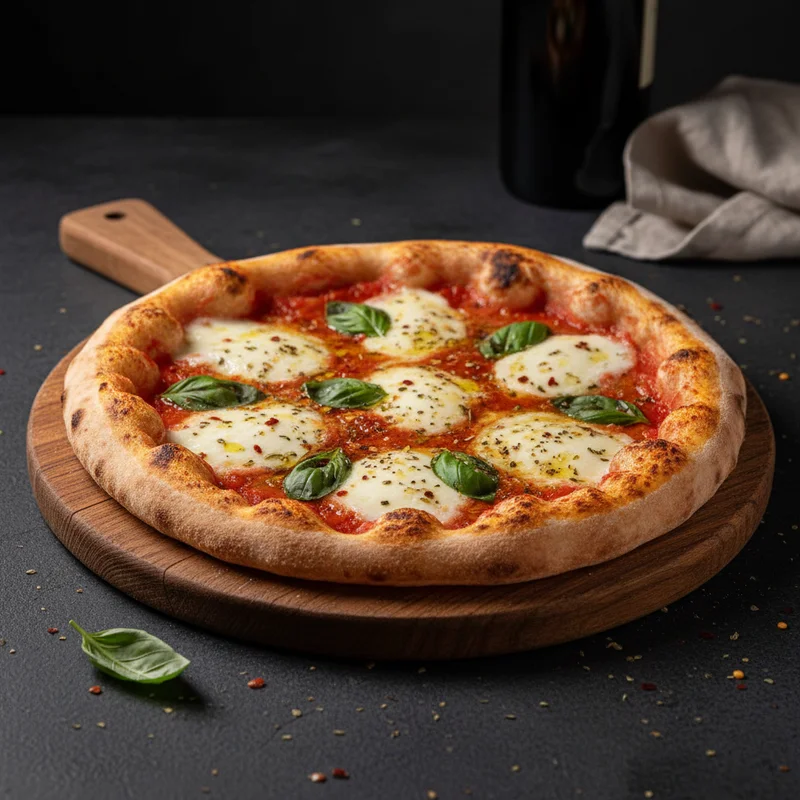
A flat disc of bread that convinced the world that putting everything on top of something is a legitimate cuisine. Somehow both a $1 slice and a $40 artisanal experience, depending on how seriously you take yourself.

The Matchup

In the annals of human sustenance, few comparisons present such a striking study in contrasts as that between Gallus gallus domesticus, the common chicken, and the Italian flatbread preparation known colloquially as pizza. Both entities occupy positions of considerable importance within global food systems, yet their fundamental natures could scarcely be more divergent.

The chicken represents approximately 8,000 years of deliberate selective breeding, transforming a modest Southeast Asian jungle fowl into what is now the single most numerous bird species on Earth. Current estimates place the global chicken population at approximately 33 billion individuals, outnumbering humans by a factor of four to one. This is, by any reasonable measure, a successful organism.

The pizza, by contrast, is not an organism at all. It is an arrangement of processed wheat flour, tomato-based sauce, and melted cheese, typically presented in circular form. It does not breathe, reproduce, or possess any capacity for independent action. It originated in Naples during the 18th century, though flatbreads with toppings have existed in various forms since antiquity. One walks. The other decidedly does not. Both now compete for position as humanity's preferred source of convenient protein delivery.

Battle Analysis

Portability Pizza Wins
30%
70%
Chicken Pizza

Chicken

The portability of Gallus gallus domesticus presents certain logistical considerations that warrant frank discussion. The organism weighs between 2-5 kilograms in mature form and possesses a temperament that might charitably be described as variable regarding transportation.

Historical evidence confirms successful chicken transport across considerable distances. The species accompanied Polynesian voyagers across thousands of miles of Pacific Ocean. Spanish conquistadors transported chickens to the Americas. British colonists brought specimens to Australia. In each case, the chickens arrived alive and capable of reproduction, suggesting that transport, whilst not trivial, is demonstrably achievable.

Modern portability is complicated by the chicken's biological requirements. The organism requires ventilation, temperature regulation within certain parameters, and access to water. It produces waste during transit that requires management. It may vocalise at inconvenient moments, particularly males at dawn. Airlines have specific policies regarding poultry transport that suggest accumulated experience with suboptimal outcomes.

The living chicken is, in transportation terms, cargo with opinions.

Pizza

Pizza has been specifically optimised for portability. The circular format fits efficiently within square boxes that stack with mechanical precision. The structural integrity of the product, whilst temperature-dependent, permits transport across distances limited primarily by thermal degradation thresholds.

The delivery pizza industry processes approximately 3 billion pizzas annually in the United States alone, representing a logistics operation of considerable sophistication. Purpose-built insulated bags maintain serving temperature during transit periods of 30-45 minutes. Motorcycle and automobile delivery infrastructure has evolved specifically to move pizza efficiently through urban environments.

The frozen pizza format extends portability indefinitely. A pizza maintained at -18 degrees Celsius can be transported globally, stored for months, and prepared at the destination without quality degradation that consumers appear to notice or, apparently, mind.

Pizza is, in the logistical sense, a solved problem. It stays where placed, requires no feeding during transit, does not attempt escape, and generates no waste products during transportation.

VERDICT

Portability assessment produces one of the clearer differentials in this comparison. Pizza has been engineered for transport. Chickens have been engineered for egg production, with portability representing, at best, a secondary consideration.

The practical implications are significant. One can carry a pizza on public transport without attracting regulatory attention. The same cannot be reliably said of live poultry in most jurisdictions. One can leave a pizza unattended briefly without risk of escape. Chickens have demonstrated considerable initiative in self-liberation scenarios.

Pizza wins this category through deliberate design optimisation. It is lightweight, dimensionally stable, behaviourally predictable, and silent. The chicken, for all its merits, remains an organism with autonomous movement capability that complicates transport logistics considerably.

Versatility Chicken Wins
70%
30%
Chicken Pizza

Chicken

The versatility of Gallus gallus domesticus represents one of the more remarkable achievements in biological utility. The species provides not one but multiple distinct outputs from a single production unit.

Primary outputs include eggs, produced at rates of approximately 250-300 annually per laying hen, and meat, with commercial broilers reaching market weight of 2-3 kilograms within 42 days. However, the inventory extends considerably further. Feathers provide insulation material for bedding products. Manure serves as high-nitrogen fertiliser suitable for agricultural application. The species has been employed in pest control operations, consuming up to 80 ticks and numerous insects during daily foraging activities.

Perhaps most remarkably, the chicken has demonstrated utility in therapeutic contexts. The practice of keeping chickens for emotional support has gained recognition in clinical literature. The organism can be prepared in no fewer than 147 documented culinary methods across global cuisines, from Coq au Vin to Chicken Tikka Masala, from Kung Pao to Kentucky Fried. It is, in the biological sense, a Swiss Army knife that happens to cluck.

Pizza

Pizza possesses what might charitably be described as configurational versatility. The base format of dough, sauce, and cheese permits substantial variation in toppings, resulting in an estimated 34,000 possible combinations available through major commercial providers.

Regional adaptations have produced the thin-crust Roman style, the deep-dish Chicago interpretation, the charred Neapolitan original, and the controversial Detroit variant featuring caramelised cheese edges. Specialty preparations include breakfast pizzas, dessert pizzas, and the thoroughly concerning phenomenon of the pizza cone.

However, and this must be stated plainly, pizza can only be one thing: pizza. It cannot produce eggs. It cannot consume agricultural pests. It cannot provide companionship, alarm services, or fertiliser. It cannot become soup, curry, or sandwich without fundamentally ceasing to be pizza. Its versatility operates exclusively within the narrow domain of 'things that can be placed atop baked dough,' which, while extensive, represents a categorical limitation that the chicken does not share.

VERDICT

The versatility assessment reveals a substantial differential favouring the biological entity. While pizza offers impressive variety within its format, the chicken provides variety across entirely different categories of utility.

A single chicken can, over its productive lifespan, generate eggs, meat, fertiliser, pest control services, therapeutic benefit, and ultimately compost. A pizza, regardless of its toppings, can only ever be consumed once in a single format. The chicken is a renewable multi-function platform; the pizza is a single-use consumable.

This category belongs to the chicken by virtue of its dimensional advantage. It operates across multiple utility vectors simultaneously, whilst pizza, for all its topping permutations, remains fundamentally one-dimensional. The mathematics of versatility favour feathers over flatbread.

Global reach Chicken Wins
70%
30%
Chicken Pizza

Chicken

The global distribution of Gallus gallus domesticus constitutes one of the more successful colonisation events in biological history. The species now maintains permanent populations on every continent except Antarctica, and even there, research stations have been known to harbour small flocks.

Conservative estimates place chickens in 97% of the world's nations, with populations ranging from backyard specimens numbering in the dozens to industrial operations containing millions of individuals. The species has adapted to climatic conditions spanning arctic-adjacent regions of Scandinavia to equatorial territories where ambient temperatures would challenge most organisms.

Remarkably, the chicken achieved this distribution without motorised transport, accompanying human migration patterns across millennia through means that remain partially mysterious to agricultural historians. The species arrived in the Americas before Columbus, likely via Polynesian voyagers. It reached remote Pacific islands through means that suggest either extraordinary navigational assistance or a level of maritime capability that the chicken has chosen not to repeat.

Pizza

Pizza has executed what marketing professionals might term a highly successful global rollout. From its Neapolitan origins, the format has established commercial presence in approximately 185 countries, with major chain operations spanning six continents.

The adaptive capacity of pizza deserves acknowledgment. Local markets have embraced modified versions incorporating regional preferences: sweetcorn and mayonnaise in Japan, banana and curry in Sweden, canned tuna in Germany, and various permutations involving pineapple that have generated heated international discourse.

However, pizza's global reach remains fundamentally dependent on infrastructure requirements that chickens do not share. Pizza requires flour mills, tomato processing facilities, cheese production, and oven technology. The chicken requires only feed, water, and a reasonable expectation of not being consumed by predators. In regions lacking pizza delivery infrastructure, the chicken continues to thrive, whilst pizza exists only as aspirational concept.

VERDICT

Global reach assessment must consider both current presence and independence of distribution mechanisms. By the first metric, both contenders demonstrate impressive coverage. By the second, the chicken reveals a decisive advantage.

Pizza's global presence requires continuous supply chain maintenance. Disruption to flour production, tomato supplies, or commercial refrigeration systems would cause pizza availability to collapse within days. The chicken, by contrast, is self-replicating. Even complete collapse of commercial agriculture would not immediately eliminate chicken populations.

The chicken wins this category through resilient omnipresence. It has achieved global distribution through methods requiring no infrastructure more complex than a basket and a boat. Pizza's impressive penetration remains contingent on industrial civilisation's continued function, a condition the chicken does not require.

Sustainability Chicken Wins
70%
30%
Chicken Pizza

Chicken

The sustainability profile of the backyard Gallus gallus domesticus approaches what environmental scientists might describe as elegant circularity. The organism consumes food waste, insects, and grain, converting these inputs into eggs, meat, and high-quality nitrogen-rich fertiliser.

Energy requirements derive ultimately from solar radiation, processed through the intermediary of photosynthetic plants. The chicken requires no batteries, no electrical grid connection, and no fossil fuel inputs beyond those embedded in commercial feed production. Its waste products enhance soil fertility rather than requiring disposal infrastructure.

Heritage breed chickens can reproduce without artificial intervention, creating genuinely perpetual production systems. A flock established today could, theoretically, provide eggs and meat for centuries without additional external inputs beyond basic feed and predator protection. The carbon footprint of a backyard egg approaches levels that industrial food systems cannot replicate.

It must be acknowledged that industrial chicken production presents a substantially different environmental profile, with concentrated animal feeding operations generating significant waste management challenges. However, the species itself remains capable of sustainable existence when managed appropriately.

Pizza

Pizza sustainability presents a complex accounting challenge. The product requires coordination of multiple agricultural systems: wheat cultivation, tomato production, dairy operations, and various topping ingredients, each with distinct environmental footprints.

The flour component alone involves industrial agriculture, mechanical harvesting, milling operations, and transportation networks. Cheese production requires dairy cattle, which generate methane emissions substantially exceeding those of poultry operations. Tomato sauce involves processing facilities with considerable energy requirements.

The pizza box introduces additional considerations. Cardboard production requires timber harvesting, pulping operations, and manufacturing processes. Contaminated pizza boxes frequently cannot be recycled, creating landfill burden. The average pizza delivery involves a motor vehicle journey that may, in certain configurations, represent the largest single component of the meal's carbon footprint.

Pizza cannot be described as inherently unsustainable, but it requires extensive industrial coordination that the chicken's biological self-sufficiency does not demand.

VERDICT

Sustainability comparison reveals a fundamental structural advantage for biological systems over manufactured food products. The chicken operates as a closed-loop biological processor; pizza represents the output of complex industrial supply chains.

The decisive factor is reproducibility without industrial inputs. A breeding pair of chickens can, given adequate conditions, produce generations of offspring indefinitely. Pizza cannot reproduce under any circumstances. Each pizza represents a discrete manufacturing event requiring fresh inputs.

The chicken wins through biological self-sufficiency. It is, in the environmental accounting sense, a system rather than a product. Pizza remains dependent on systems external to itself, systems that require continuous resource inputs and generate cumulative environmental burdens.

Entertainment value Chicken Wins
70%
30%
Chicken Pizza

Chicken

The entertainment portfolio of Gallus gallus domesticus exceeds what casual observers might anticipate. The species demonstrates complex social behaviours, including dominance hierarchies that have contributed the phrase 'pecking order' to the English language.

Chickens possess individual personalities that regular observers learn to distinguish. Some specimens display curiosity, approaching novel objects for investigation. Others maintain cautious dispositions. Certain individuals develop apparent fondness for specific human handlers, following them about the property and vocalising upon their return.

The rooster's crow, while potentially inconvenient in residential contexts, represents reliable natural entertainment that requires no batteries, streaming subscription, or internet connectivity. The species produces a range of vocalisations, from contentment clucks to predator alarm calls, that experienced keepers learn to interpret.

Competitive poultry showing maintains a global following, with champion specimens commanding prices exceeding those of many consumer electronics. The chicken dance, performed by the birds themselves in dustbath contexts, provides genuinely engaging viewing for those who appreciate biological behaviour observation.

Pizza

Pizza provides entertainment primarily through anticipatory satisfaction. The ordering process, the delivery wait, the box opening ceremony, and the initial consumption phase collectively generate positive neurochemical responses in most human subjects.

The consumption experience offers sensory entertainment: the stretch of melted cheese, the crunch of properly prepared crust, the flavour combinations that skilled practitioners have refined over centuries. Competitive pizza eating represents a niche entertainment format with dedicated viewership.

Pizza-making itself provides entertainment for participants, with dough tossing emerging as a recognised skill demonstrated in competitive contexts. The spectacle of a skilled pizzaiolo stretching dough through aerial rotation attracts observers in establishment with open kitchen configurations.

However, pizza's entertainment value is largely consumption-dependent. An uneaten pizza provides minimal ongoing entertainment. It cannot be observed behaving. It does not respond to its environment. It simply exists, in gradually declining condition, until consumed or discarded.

VERDICT

Entertainment value assessment reveals a durational advantage for the biological contender. Pizza provides concentrated entertainment across a brief consumption window. Chickens provide ongoing entertainment across lifespans measured in years.

The chicken offers interactive entertainment possibilities unavailable to pizza. It can be observed, approached, and in appropriately socialised specimens, handled. It responds to environmental stimuli in ways that maintain observer interest. Pizza offers no equivalent responsive engagement.

The chicken wins through sustained entertainment delivery. A single chicken can provide years of behavioural observation, regular egg-related satisfaction, and the simple pleasure of watching an organism pursue its biological imperatives. Pizza provides intense but terminally brief entertainment, concluding permanently upon consumption.

👑

The Winner Is

Chicken

55 - 45

This analysis concludes with a 55-45 victory for Gallus gallus domesticus across the evaluated metrics. The chicken secured victories in versatility, global reach, sustainability, and entertainment value, whilst pizza claimed portability as its sole categorical win.

The margin reflects the fundamental advantage of biological systems over manufactured products. The chicken is a platform capable of multiple outputs, self-replication, and genuine environmental integration. Pizza, for all its considerable merits as a food product, remains a single-use consumable dependent on industrial supply chains.

This verdict should not be interpreted as dismissive of pizza's contributions to human satisfaction. The format has achieved remarkable global penetration, provides genuine comfort during periods of emotional complexity, and has developed delivery infrastructure rivalling postal services in efficiency. These achievements deserve recognition.

However, when forced to render judgment, the evidence favours the organism over the arrangement. The chicken has sustained human populations for eight millennia through methods requiring no more technology than basic husbandry. Pizza, delightful though it remains, requires civilisation to function. The chicken requires only feed, water, and the passage of time.

Chicken
55%
Pizza
45%

Share this battle

More Comparisons