
Topic Battle

Where Everything Fights Everything

Coffee

Coffee

A brewed drink prepared from roasted coffee beans, the seeds of berries from certain Coffea species. The world's second-most traded commodity.

VS
Area 51

Area 51

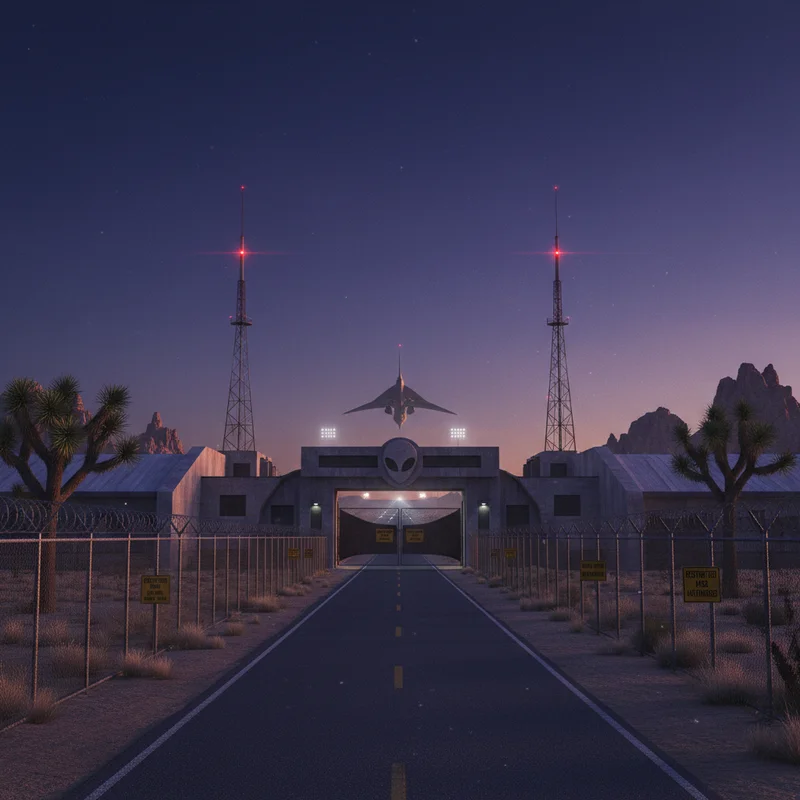
US military base and alien conspiracy hotspot.

Battle Analysis

Economic impact coffee Wins
70%
30%
Coffee Area 51

Coffee

The global coffee industry generates approximately $460 billion annually, employing over 125 million people across cultivation, processing, distribution, and retail sectors. The emergence of specialty coffee culture has created entirely new economic categories: the barista as artisan, the roaster as auteur, the coffee shop as third place between home and work. Starbucks alone operates 35,000 locations across 80 countries, while independent cafés number in the millions. Coffee futures trading on commodity exchanges influences the economic stability of entire nations. Ethiopia derives 60% of its foreign exchange from coffee exports. The beverage has, quite literally, built economies.

Area 51

Area 51's economic contribution operates through more oblique channels. The classified budget for the installation remains unknown, though estimates suggest the broader black budget for defence research exceeds $80 billion annually. Tourism to the surrounding area—particularly the town of Rachel, Nevada (population: 54)—generates modest revenue through alien-themed motels and extraterrestrial-branded merchandise. The cultural industry inspired by Area 51, however, proves more substantial: films, television series, video games, and literature featuring the facility have generated billions in entertainment revenue. The 2019 'Storm Area 51' Facebook event attracted 2 million RSVPs, demonstrating remarkable engagement metrics for a restricted military installation.

VERDICT

Coffee's half-trillion dollar annual economy dwarfs Area 51's indirect cultural revenue by orders of magnitude.
Conspiracy density area_51 Wins
30%
70%
Coffee Area 51

Coffee

Coffee harbours its own constellation of conspiracies, though they tend toward the mundane-sinister rather than the extraterrestrial. Theories persist regarding caffeine addiction by design, with some researchers suggesting that coffee companies deliberately cultivate dependency through careful manipulation of roasting temperatures and caffeine concentrations. The destruction of indigenous coffee economies, the exploitation of farmers receiving mere pennies per pound, and the environmental devastation of monoculture farming—these are coffee's open secrets. Yet perhaps the greatest conspiracy is how a substance that causes anxiety, insomnia, and cardiac arrhythmia in excessive doses has been normalised as an essential component of professional competence.

Area 51

Area 51 represents the motherlode of conspiracy culture, a gravitational centre around which all other theories orbit. The facility has been linked to: recovered extraterrestrial spacecraft, reverse-engineered alien technology, time travel experiments, weather manipulation programmes, interdimensional portals, and the faking of the Apollo moon landings. The 1947 Roswell incident, though occurring 800 miles away, has become inextricably linked to Area 51 in popular imagination. The U.S. government's official acknowledgment of the facility's existence in 2013 did nothing to diminish speculation—indeed, many interpreted confirmation as proof that the real secrets lie elsewhere. This recursive paranoia demonstrates Area 51's unique position in conspiracy epistemology.

VERDICT

Area 51's conspiracies span multiple genres and have sustained cultural momentum for over seven decades without resolution.
Global accessibility coffee Wins
70%
30%
Coffee Area 51

Coffee

Coffee demonstrates unprecedented global penetration, with an estimated 400 billion cups consumed annually across 70 producing nations. The infrastructure supporting coffee distribution represents one of humanity's most sophisticated supply chains, second only to petroleum in traded commodity value. From the Coffea arabica plantations of Ethiopia to the vending machines of Tokyo, coffee has achieved what no military force could: voluntary worldwide adoption. The beverage requires no security clearance, no background check, and no special permissions—merely the modest exchange of currency for liquid consciousness enhancement.

Area 51

Area 51 maintains the opposite approach to accessibility: deliberate, enforced exclusion. The installation's perimeter is monitored by motion sensors, security cameras, and personnel authorised to use deadly force. Trespassing carries penalties including fines up to $1,000 and six months imprisonment. The facility does not appear on public U.S. government maps, and even commercial satellite imagery is restricted. While approximately 1,500 employees commute daily via unmarked aircraft from Las Vegas, the general public's access remains limited to staring at distant hangars through binoculars from public land. This scarcity, however, has only intensified global fascination.

VERDICT

Coffee's universal availability across all continents and socioeconomic strata represents a categorical victory in accessibility.
Longevity of mystique coffee Wins
70%
30%
Coffee Area 51

Coffee

Coffee's mystique has endured for over five centuries since its emergence from Ethiopian highlands. The beverage survived prohibition attempts by Ottoman sultans, papal condemnation, and periodic health scares linking it to cancer, heart disease, and stunted growth—all subsequently reversed by further research. Each generation rediscovers coffee's allure: the beatniks found it in espresso bars, millennials in artisanal pour-overs, and Generation Z in viral TikTok recipes. The substance's fundamental mystery—how burned seeds dissolved in hot water produce transcendence—remains philosophically unresolved despite complete chemical analysis. Coffee's mystique derives from experiential irreducibility: knowing the mechanism does not diminish the magic.

Area 51

Area 51's mystique is comparatively young, dating primarily from 1989 when Bob Lazar claimed employment at a subsidiary facility called S-4, where he allegedly worked on extraterrestrial propulsion systems. Prior to this disclosure, the base was merely another classified military installation. The mystique has proven remarkably durable, surviving official acknowledgment, declassified documents, and the death of key witnesses. However, Area 51's allure depends upon maintained secrecy—full disclosure would collapse its cultural function. Coffee faces no such vulnerability: complete transparency about its chemistry has only deepened appreciation. Area 51's mystique is contingent; coffee's is essential.

VERDICT

Coffee's five-century mystique has survived complete scientific understanding, while Area 51's depends on sustained concealment.
Influence on human behaviour coffee Wins
70%
30%
Coffee Area 51

Coffee

Coffee's influence on human behaviour operates at the neurochemical level. Caffeine, the world's most widely consumed psychoactive substance, blocks adenosine receptors in the brain, preventing the onset of drowsiness whilst triggering dopamine release. This mechanism has fundamentally altered human productivity patterns: the industrial revolution, the Enlightenment, and the digital age all coincided with widespread coffee adoption. Research indicates that caffeine improves cognitive function, reaction time, and mood—effects so profound that withdrawal is now recognised as a clinical syndrome. Coffee has, in essence, reprogrammed human circadian rhythms to suit economic rather than biological imperatives.

Area 51

Area 51's behavioural influence manifests through epistemological rather than chemical pathways. The facility has trained generations to question official narratives, to seek hidden truths beneath surface explanations. This disposition—sometimes called conspiratorial thinking—now permeates political discourse, public health debates, and social media ecosystems. The 2019 viral event demonstrated Area 51's capacity to mobilise collective action: approximately 3,000 individuals actually travelled to the Nevada desert, despite knowing the 'raid' was satirical. The facility has become a Rorschach test for institutional trust, with one's beliefs about its contents revealing deeper orientations toward authority and evidence.

VERDICT

Coffee's direct neurochemical modification of billions of brains daily exceeds Area 51's memetic influence on behaviour.
👑

The Winner Is

Coffee

58 - 42

This investigation reveals a fundamental asymmetry between our subjects. Coffee operates through radical openness: its chemistry is documented, its supply chains are traceable, its effects are measurable. Yet this transparency has not diminished its hold on human civilisation. Quite the contrary—coffee's power derives from its capacity to deliver reliable transcendence within entirely explicable parameters. It is magic that survives examination.

Area 51, conversely, derives all significance from concealment. Strip away the secrecy, and one finds merely aircraft hangars, research laboratories, and administrative buildings—impressive, certainly, but not inherently more mysterious than any other classified installation. The facility's cultural power is entirely derivative of what it refuses to reveal. This represents a structural weakness: Area 51's mystique is perpetually vulnerable to disclosure.

The scoring reflects coffee's comprehensive superiority across measurable criteria whilst acknowledging Area 51's undeniable cultural significance. With a final tally of 58-42, coffee claims victory not through dominance in any single category but through consistent excellence across all domains of human experience. The beverage has achieved what Area 51 can only aspire to: permanent integration into the fabric of daily existence, undiminished by familiarity, strengthened by repetition.

Coffee
58%
Area 51
42%

Share this battle

More Comparisons