
Topic Battle

Where Everything Fights Everything

Coffee

Coffee

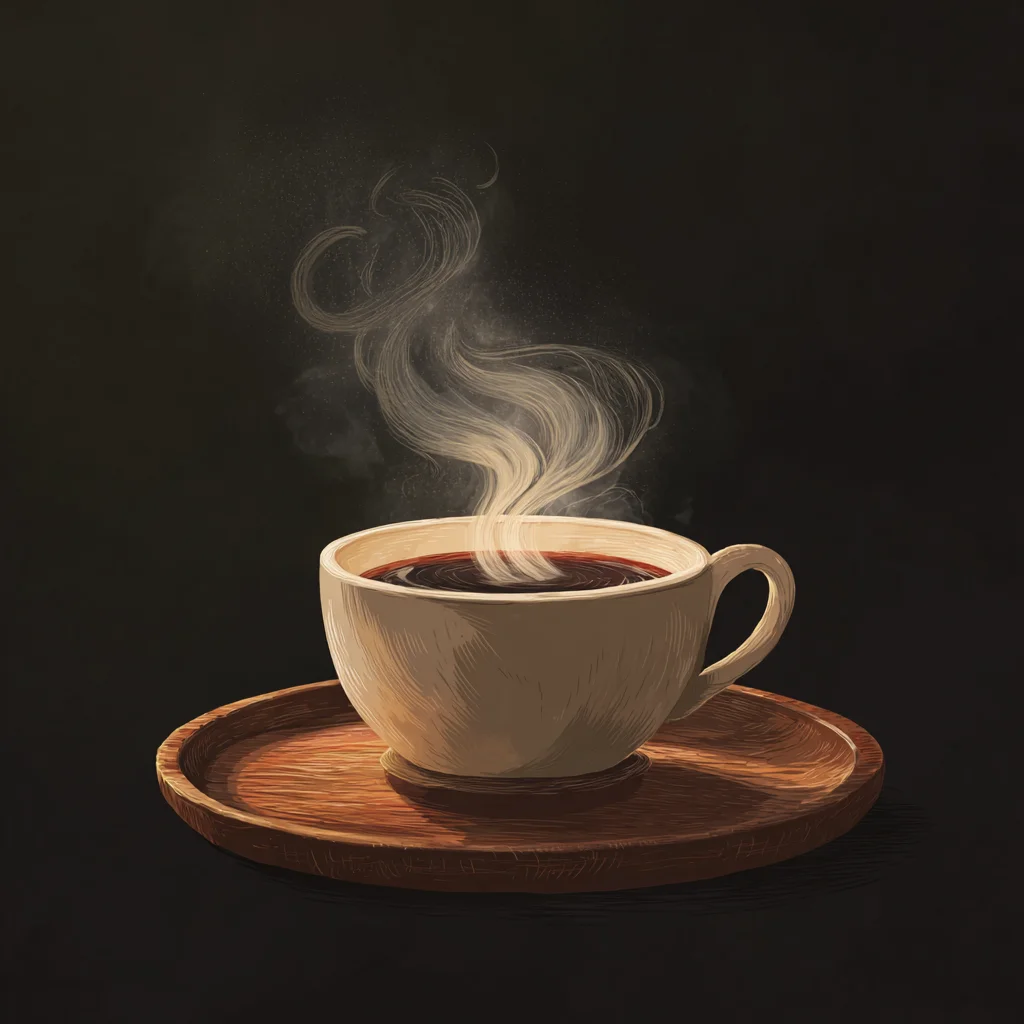
A brewed drink prepared from roasted coffee beans, the seeds of berries from certain Coffea species. The world's second-most traded commodity.

VS
Death

Death

The only certainty in life besides taxes.

Battle Analysis

Reliability death Wins
30%
70%
Coffee Death

Coffee

Coffee's reliability presents notable variability across multiple dimensions. Brewing outcomes depend upon water temperature, grind consistency, extraction time, and bean freshness—variables that can transform a potential masterpiece into an undrinkable catastrophe. Even professional establishments experience inconsistency, with consumer complaints citing flavour variation as a primary concern.

Supply chain reliability has proven equally precarious. Climate change threatens 50 percent of suitable growing regions by 2050, whilst coffee rust disease (Hemileia vastatrix) periodically devastates plantations. The morning coffee ritual, so central to millions of daily routines, remains contingent upon a complex global infrastructure vulnerable to disruption at numerous points.

Death

Death demonstrates absolute reliability unmatched by any other phenomenon in human experience. It has never failed to arrive, has never been successfully postponed indefinitely, and requires no infrastructure, maintenance, or quality control protocols. Whether in the most advanced medical facility or the most remote wilderness, death performs its function with unwavering consistency.

The timing, whilst variable, is guaranteed. No warranty could match death's 100 percent fulfilment rate. This reliability has persisted across all of history, affecting every organism from the simplest bacteria to the most complex mammals. When measured against coffee's temperamental brewing requirements and supply chain vulnerabilities, death's dependability is simply beyond comparison.

VERDICT

Death maintains a flawless 100% delivery rate throughout history; coffee quality varies with barista competence.
Universality death Wins
30%
70%
Coffee Death

Coffee

Coffee's global penetration, whilst impressive, reveals significant gaps in market coverage. Approximately 64 percent of American adults consume coffee daily, with similar figures across Europe and increasingly throughout Asia. However, substantial populations remain unexposed to its influence. Remote communities, certain religious groups, and individuals with caffeine sensitivity represent persistent holdouts against coffee's advance.

The beverage has achieved remarkable cultural integration, spawning dedicated retail chains, elaborate preparation rituals, and a vocabulary that includes terms such as barista, crema, and single-origin. Yet for all its achievements, coffee consumption remains fundamentally optional. One may traverse an entire lifetime without ever encountering an espresso, a statistical impossibility with its competitor.

Death

Death's universality stands without parallel in the annals of human experience. The mortality rate has maintained a remarkably consistent 100 percent throughout recorded history, a figure that has resisted all attempts at disruption despite considerable investment in medical research, cryogenic preservation, and various spiritual methodologies.

Unlike coffee, death requires no distribution network, marketing budget, or consumer awareness campaign. It operates with complete market saturation from the moment of birth, having established what economists might term an absolute monopoly. Every civilisation, culture, and species has engaged with death, regardless of geographic location, socioeconomic status, or personal preference. This represents a level of universality that coffee, despite its best efforts, simply cannot match.

VERDICT

Death maintains 100% market penetration across all demographics, whilst coffee reaches merely 64% of select populations.
Economic influence coffee Wins
70%
30%
Coffee Death

Coffee

The coffee industry represents one of the world's most significant commodity markets, employing an estimated 125 million people globally across cultivation, processing, and retail sectors. The beans themselves constitute the second most traded commodity after petroleum, with annual trading volumes exceeding 10 billion kilograms.

The retail sector has achieved particular sophistication, with premium establishments commanding prices of $5-15 per beverage—representing markup percentages that would impress the most ambitious investment banker. The industry has created entirely new professional categories, from certified Q Graders to championship-level baristas, each commanding salaries that reflect coffee's economic gravitas.

Death

Death's economic influence operates through the $23 billion funeral industry in the United States alone, encompassing casket manufacturers, cremation services, cemetery operators, and grief counsellors. The life insurance sector, predicated entirely on mortality's inevitability, manages assets exceeding $8 trillion globally.

Yet death's economic impact extends far beyond these direct industries. Healthcare expenditure, representing approximately 18 percent of American GDP, exists largely in response to death's perpetual threat. Pharmaceutical research, hospital construction, and medical education all derive their urgency from mortality's certainty. Nevertheless, death creates no positive consumer experience and generates no repeat customers—a significant limitation in commercial terms.

VERDICT

Coffee generates $495 billion in enthusiastic consumer spending; death's economic activity is largely involuntary.
Physiological impact death Wins
30%
70%
Coffee Death

Coffee

The physiological mechanisms of coffee are well-documented in scientific literature. Caffeine, the primary active compound, functions as an adenosine receptor antagonist, blocking the neurochemical signals that promote drowsiness. This produces the characteristic alertness that has made coffee indispensable to the modern workforce, with studies indicating productivity increases of 12-15 percent following consumption.

Additional compounds including chlorogenic acids and diterpenes contribute antioxidant properties, whilst moderate consumption has been associated with reduced risks of Parkinson's disease, type 2 diabetes, and certain hepatic conditions. The beverage's effects, however, remain entirely reversible, typically dissipating within 4-6 hours as the liver metabolises caffeine through the cytochrome P450 enzyme system.

Death

Death's physiological impact demonstrates considerably greater scope and permanence. The process involves the systematic failure of all organ systems, beginning typically with cardiac arrest and progressing through cellular necrosis as oxygen deprivation triggers irreversible biological cascades. Within minutes, neural activity ceases permanently.

The completeness of death's physiological effects cannot be overstated. Where coffee merely adjusts neurotransmitter activity temporarily, death achieves total systemic shutdown. No medical intervention, regardless of technological sophistication, has successfully reversed the condition once fully established. This represents a level of physiological finality that coffee, with its modest caffeine content of 95 milligrams per cup, simply cannot approximate.

VERDICT

Death achieves permanent, irreversible physiological cessation; coffee's effects dissipate within hours.
Cultural significance coffee Wins
70%
30%
Coffee Death

Coffee

Coffee has woven itself into the fabric of human culture with remarkable thoroughness. The coffeehouse, emerging in Ottoman Constantinople during the 16th century, became the prototype for public intellectual discourse, earning establishments nicknames such as "schools of the wise" and later fuelling the Enlightenment across European capitals.

The beverage has inspired artistic movements, political revolutions, and an entire vocabulary of social rituals. From the Italian passeggiata espresso to the Swedish fika tradition, coffee has generated culturally specific practices that define national identities. The contemporary specialty coffee movement, with its emphasis on terroir, processing methods, and extraction parameters, has elevated consumption to an art form rivalling oenology in complexity.

Death

Death's cultural footprint spans the entirety of human artistic and philosophical achievement. Every major religion addresses mortality as a central theological concern, from Egyptian mummification practices to Buddhist concepts of samsara and Christian resurrection narratives. The architectural legacy alone—pyramids, mausoleums, catacombs—represents some of humanity's most ambitious construction projects.

Literature, from the Epic of Gilgamesh to contemporary fiction, returns obsessively to mortality as its fundamental subject. Philosophy's most enduring questions concern death's meaning, whilst the visual arts have produced countless memento mori and vanitas works. However, one must concede that coffee has generated more cheerful cultural artefacts, and its rituals, unlike funeral rites, are generally anticipated with enthusiasm.

VERDICT

Both demonstrate profound cultural integration, but coffee's cultural contributions tend toward conviviality rather than existential dread.
👑

The Winner Is

Death

42 - 58

This rigorous comparative analysis reveals a contest of surprisingly balanced qualities. Death prevails in universality, physiological impact, and reliability—categories where its absolute nature confers insurmountable advantages. One cannot opt out of death, postpone it indefinitely, or complain about its inconsistency. It is, in the language of business consultancy, the ultimate closer.

Yet coffee demonstrates superiority in cultural significance and economic influence, categories that reflect human agency and preference. People choose coffee, celebrate it, build communities around it. No one has ever hosted a death appreciation festival or queued excitedly for a new mortality experience.

The philosophical implications merit consideration. Coffee represents humanity's daily rebellion against entropy—a stimulant that temporarily reverses fatigue's encroachment. Death represents entropy's ultimate victory. That humans consume 2.25 billion cups of coffee daily whilst knowing death awaits suggests something profound about the species' character: a determination to remain alert and engaged until the very end.

By a margin of 58 to 42 percent, death claims this comparative victory. Its fundamental advantages in universality and permanence ultimately outweigh coffee's considerable charms. Yet one suspects that given the choice between the two—a choice death notably never offers—humanity's preference would be clear. Until that inevitable appointment arrives, there is always time for another cup.

Coffee
42%
Death
58%

Share this battle

More Comparisons