Topic Battle

Where Everything Fights Everything

Coffee

Coffee

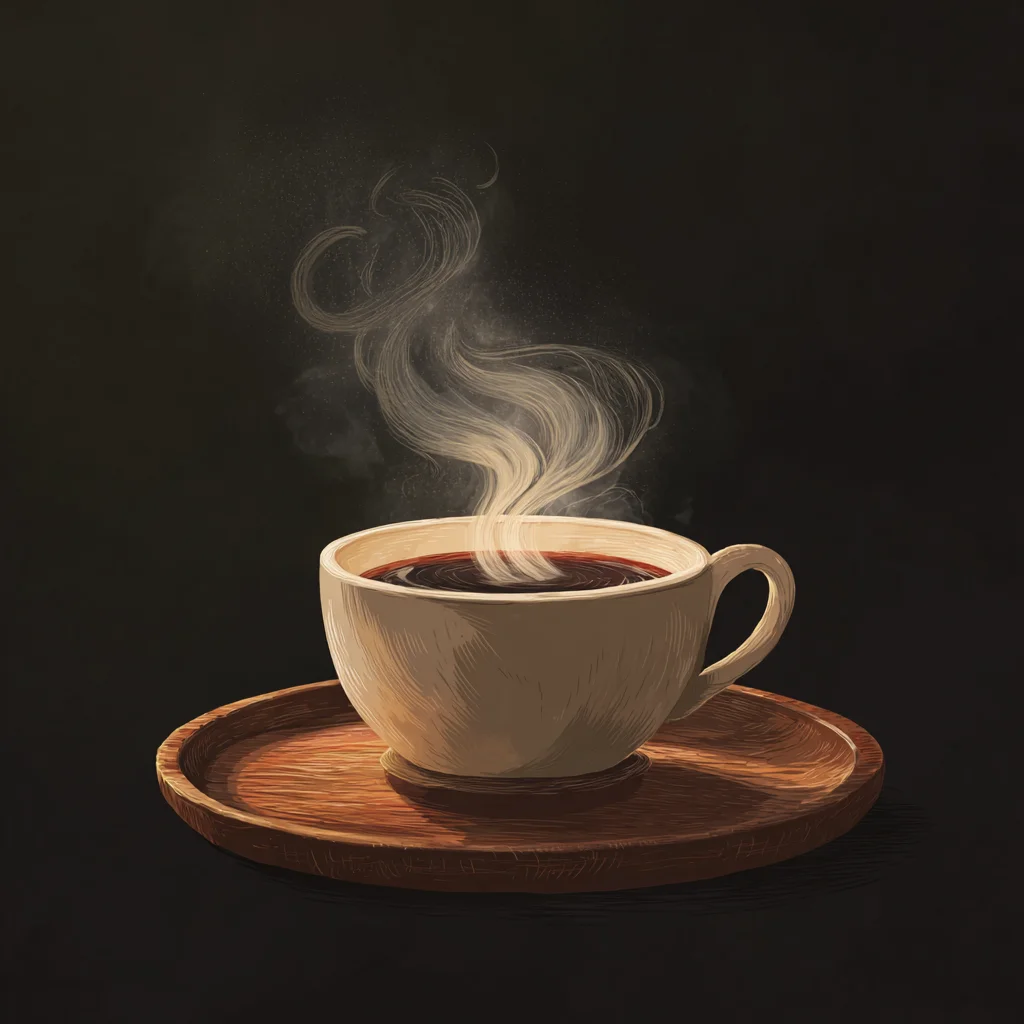
A brewed drink prepared from roasted coffee beans, the seeds of berries from certain Coffea species. The world's second-most traded commodity.

VS
Elsa

Elsa

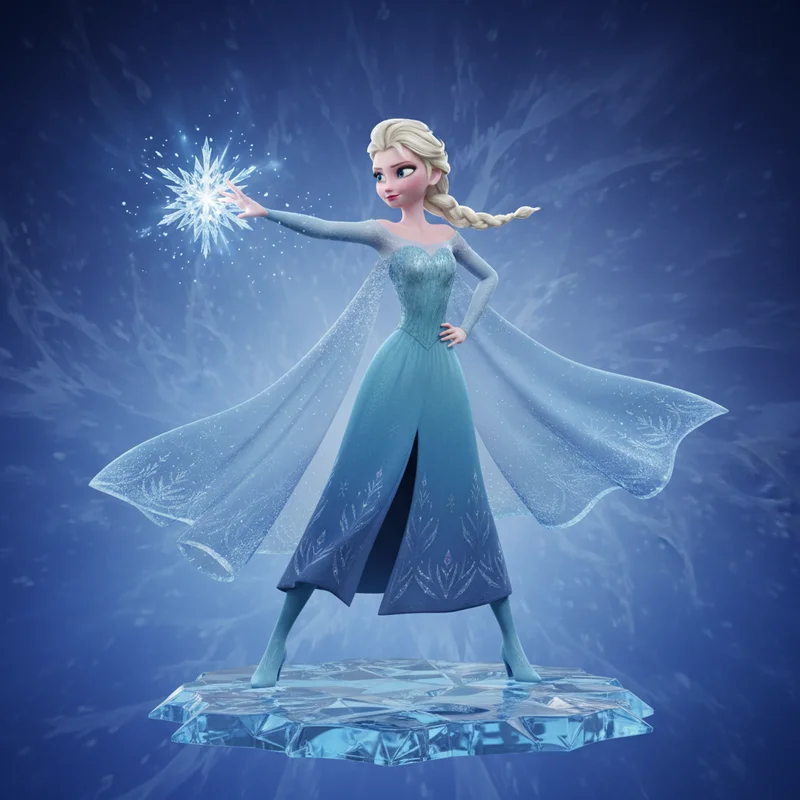
Ice queen who couldn't let it go.

Battle Analysis

Thermal influence elsa Wins
30%
70%
Coffee Elsa

Coffee

Coffee operates within a remarkably specific thermal window of effectiveness. Served ideally between 60-65 degrees Celsius, the beverage represents humanity's mastery over heat transfer in service of pleasure. The warming effect extends beyond mere physics; studies indicate that holding a warm cup of coffee increases subjects' perception of interpersonal warmth in others—a phenomenon known as embodied cognition. The global coffee industry has, in essence, monetised the human craving for warmth in a universe that tends inexorably toward entropy.

Yet coffee's thermal influence remains fundamentally passive and borrowed. The liquid does not generate heat; it merely retains it temporarily before surrendering to the ambient temperature of meeting rooms and car cup holders worldwide.

Elsa

Elsa possesses what can only be described as absolute cryokinetic sovereignty. Her abilities, first manifested in early childhood, allow for the spontaneous generation of ice and snow through mechanisms that flagrantly violate the first law of thermodynamics. She has demonstrated the capacity to create sentient snow creatures, construct architecturally sound ice palaces, and plunge entire kingdoms into perpetual winter—all without apparent caloric expenditure.

The scale of her thermal manipulation defies quantification. A single emotional outburst can blanket a Nordic fjord in meters of snow, whilst a focused effort created an ice staircase capable of supporting human weight. From a pure physics standpoint, Elsa represents an unlimited source of negative thermal energy, making her perhaps the most dangerous individual ever animated by Disney's studios.

VERDICT

Coffee borrows heat temporarily; Elsa generates cold ex nihilo, violating thermodynamics with aristocratic indifference.
Economic footprint coffee Wins
70%
30%
Coffee Elsa

Coffee

The global coffee industry represents one of humanity's most sophisticated economic ecosystems, valued at approximately $495 billion annually. The supply chain alone employs over 125 million people across 70 countries, from Ethiopian highlands to Brazilian plantations, from Italian roasteries to Seattle-based multinational corporations that have convinced millions that paying seven dollars for flavoured milk is a reasonable lifestyle choice.

Coffee has spawned entire categories of economic activity: barista certification programmes, single-origin subscription services, the controversial yet unstoppable pumpkin spice industrial complex. The beverage has become so economically integrated that coffee futures serve as a leading indicator for emerging market health.

Elsa

Elsa's economic contribution flows primarily through the Disney merchandising apparatus, a machine of such efficiency that it would make Henry Ford weep with admiration. The Frozen franchise has generated over $14 billion in total revenue, with Elsa merchandise accounting for approximately 60% of that figure. The song 'Let It Go' alone has been downloaded, streamed, and sung by exhausted parents enough times to constitute its own economic sector.

However, Elsa's economy remains fundamentally parasitic upon the Disney corporate structure. She generates no independent wealth, employs no farmers, and cannot be traded on commodity exchanges. Her economic influence, whilst substantial, exists entirely within the realm of intellectual property licensing.

VERDICT

Coffee employs 125 million humans across real supply chains; Elsa's billions flow through a single entertainment corporation.
Cultural penetration coffee Wins
70%
30%
Coffee Elsa

Coffee

Coffee culture has infiltrated every stratum of human society with the thoroughness of a particularly ambitious root system. The coffeehouse, originating in 15th-century Yemen, became the prototype for what sociologist Ray Oldenburg termed the 'third place'—neither home nor work, but essential nonetheless. The Enlightenment was arguably caffeinated; the French Revolution was certainly planned over espresso's ancestors.

Today, coffee serves as the universal social lubricant, the acceptable first-date beverage, the excuse for workplace breaks, and the primary reason anyone voluntarily enters a Starbucks at 6:47 AM. It has transcended mere consumption to become a identity signifier: tell me your coffee order, and I will tell you your socioeconomic aspirations.

Elsa

Elsa's cultural penetration, whilst more recent, achieved a velocity rarely seen outside of viral pathogens. Within eighteen months of Frozen's release, 'Let It Go' had been performed at school talent shows, wedding receptions, and at least one inadvisable karaoke attempt in every developed nation. The phrase entered common parlance as shorthand for emotional liberation, often deployed without irony by management consultants.

Yet Elsa's cultural footprint remains generationally bounded. Those born before 1990 can navigate life without encountering her; those born after 2025 may view her as their parents' nostalgia. Coffee, meanwhile, has maintained cross-generational relevance for over five centuries.

VERDICT

Coffee has shaped civilisation for 500 years across all demographics; Elsa peaked in 2014 with a five-year-old audience.
Existential resilience coffee Wins
70%
30%
Coffee Elsa

Coffee

Coffee has survived every attempt at eradication, prohibition, and cancellation. Pope Clement VIII refused to ban it despite pressure from clergy who viewed it as a Muslim beverage. Ottoman sultans threatened death to coffeehouse patrons; coffeehouses multiplied. King Charles II of England attempted to suppress coffee establishments as hotbeds of sedition; his decree lasted eleven days before public outcry forced its withdrawal.

The beverage has proven culturally antifragile—each attack strengthening its position. Even modern health concerns about caffeine have been largely neutralised by studies suggesting moderate consumption may reduce mortality risk. Coffee, it seems, has achieved a form of institutional immortality.

Elsa

Elsa's existential security depends entirely upon the continued relevance of the Disney corporation and the willingness of future generations to engage with early 21st-century animated content. The history of popular culture is littered with once-dominant figures now forgotten: who now celebrates Betty Boop, or recalls the cultural dominance of Popeye?

Disney's own archives contain characters of formerly immense popularity who have faded into licensing obscurity. Elsa's perpetuation requires active corporate investment in sequels, merchandise lines, and theme park attractions. Without this institutional life support, she risks fading into the same nostalgic half-life occupied by the animated stars of previous generations.

VERDICT

Coffee has survived papal condemnation and royal prohibition for centuries; Elsa requires continuous Disney investment to remain relevant.
Psychological dependency coffee Wins
70%
30%
Coffee Elsa

Coffee

Caffeine dependency affects approximately 90% of adults in Western nations, making coffee perhaps the most successful psychoactive substance in human history. The compound works by blocking adenosine receptors, effectively tricking the brain into believing it is not tired—a neurochemical sleight of hand that has enabled everything from the Industrial Revolution to the modern technology sector.

Withdrawal symptoms include headaches, irritability, fatigue, and a phenomenon researchers have termed 'general existential malaise.' The dependency is so normalised that abstaining from coffee is often viewed with the same suspicion reserved for those who claim to enjoy waking early. Coffee has achieved the remarkable feat of making addiction socially obligatory.

Elsa

Elsa's psychological hold operates through different mechanisms entirely. Children aged three to eight exhibit what child psychologists have termed Elsa fixation syndrome, characterised by compulsive viewing of Frozen films, insistence on wearing blue dresses regardless of season, and the belief that siblings should resolve conflicts through elaborate musical numbers.

For adults, Elsa represents a more complex psychological anchor: the promise that emotional authenticity leads to self-actualisation, conveniently packaged with an emotionally manipulative orchestral arrangement. Yet this attachment fades with age; few forty-year-olds maintain active Elsa obsessions, whilst coffee dependency only strengthens through the decades.

VERDICT

Coffee creates lifelong neurochemical dependency affecting billions; Elsa's psychological grip loosens by approximately age nine.
👑

The Winner Is

Coffee

54 - 46

The confrontation between Coffee and Elsa reveals itself, upon rigorous examination, to be a contest between ancient and universal appeal versus concentrated but temporally bounded cultural impact. Elsa's powers may violate the fundamental laws of physics, but she cannot escape the fundamental laws of cultural entropy.

Coffee's victory emerges not from any single dramatic triumph but from the relentless accumulation of mundane necessity. It has woven itself so thoroughly into the fabric of human civilisation that its removal would constitute a greater disruption than any fictional ice age. Elsa, for all her magical prowess and emotional resonance, remains a product—brilliantly marketed, deeply beloved by its target demographic, but ultimately dependent upon corporate machinery and generational attention spans.

The ice queen's powers are formidable within her narrative context; in our reality, she exists only as intellectual property. Coffee, by contrast, is tangibly, chemically, economically real, and shows no signs of relinquishing its position as humanity's preferred legal stimulant. In the long march of cultural evolution, the warm cup always outlasts the cold crown.

Coffee
54%
Elsa
46%

Share this battle

More Comparisons