
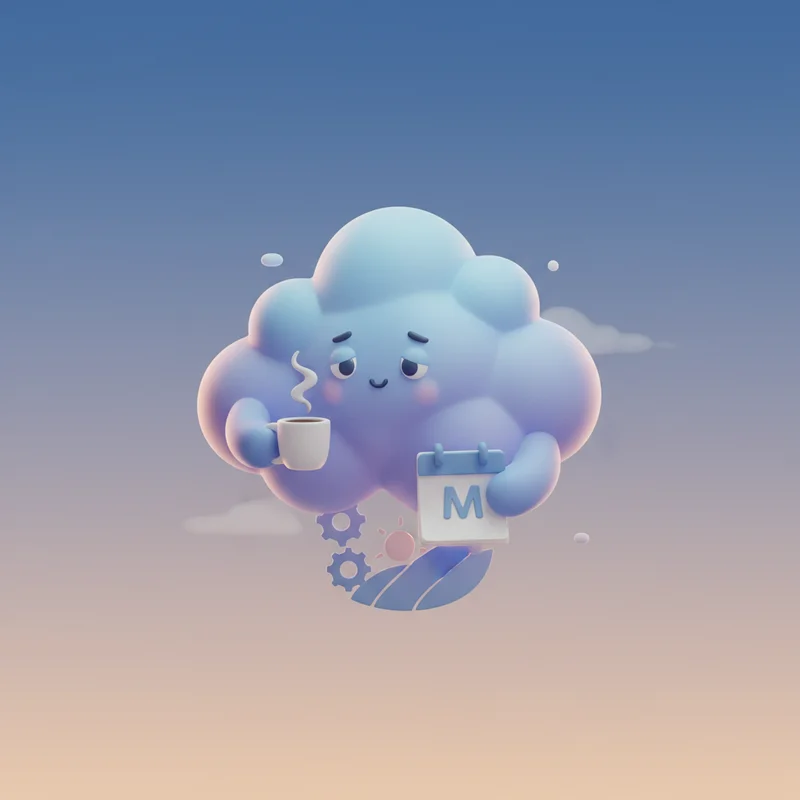
Topic Battle

Where Everything Fights Everything

Coffee

Coffee

A brewed drink prepared from roasted coffee beans, the seeds of berries from certain Coffea species. The world's second-most traded commodity.

VS
Monday

Monday

The day that exists purely to remind you that weekends are finite. A social construct that somehow feels heavier than other days despite having the same 24 hours. Coffee's best customer.

The Matchup

In the vast tapestry of human civilization, few relationships have proven as paradoxically essential as that between coffee and Monday. One is universally beloved, sought after with desperate urgency in the predawn darkness. The other arrives with the mechanical inevitability of planetary rotation, greeted with groans that echo across open-plan offices worldwide.

Coffee, the dark extract of roasted Coffea arabica and Coffea canephora seeds, has served humanity since Ethiopian goat herders first noticed their livestock exhibiting unusual enthusiasm after consuming certain berries. Today, approximately 2.25 billion cups are consumed daily, with a statistically significant percentage occurring between 6:00 and 9:00 AM on Mondays.

Monday, the first day of the standard Western work week, occupies a unique position in human consciousness. Named for the Moon in various Germanic languages, it has accumulated cultural baggage sufficient to inspire songs, cartoons, and a persistent condition researchers have termed Monday morning syndrome. Studies indicate that heart attack rates increase by 20% on Mondays, a statistic that explains much about the species' relationship with weekly cyclical time.

What follows is an examination of these two entities across standardized metrics, though the reader should note that their evaluation cannot be fully separated. As naturalists have observed in other symbiotic relationships, attempting to assess one partner without reference to the other proves fundamentally incomplete.

Battle Analysis

Reliability Monday Wins
30%
70%
Coffee Monday

Coffee

Coffee demonstrates exceptional reliability as a chemical delivery system. The beverage contains caffeine in concentrations ranging from 95 to 200 milligrams per standard cup, with absorption into the bloodstream occurring within 15-45 minutes of consumption. This pharmacological predictability has made coffee the cornerstone of morning rituals across six continents.

The reliability extends to procurement. Modern supply chains have achieved remarkable consistency, with coffee available at over 35,000 Starbucks locations, countless independent cafes, petrol stations, hospital waiting rooms, and any other venue where humans might find themselves requiring chemical fortification. Even in remote locations, instant coffee powder provides a reliable, if aesthetically compromised, backup option.

However, coffee's reliability contains an embedded irony. The very consistency of its effects creates tolerance and dependency, requiring ever-increasing consumption to achieve baseline functionality. Regular consumers who miss their morning coffee report symptoms including headache, irritability, and what can only be described as a general inability to participate in civilization. The reliable solution has created a reliable problem.

Monday

Monday arrives with the absolute certainty of astronomical mechanics. Unlike coffee, which requires cultivation, harvesting, processing, and distribution, Monday simply occurs. It has done so since humanity first decided to organize time into seven-day cycles, and it will continue doing so until the rotation of Earth ceases or the Gregorian calendar undergoes fundamental revision.

This reliability manifests with clockwork precision. Every 168 hours, without exception, Monday returns. It does not require supply chains, quality control, or consumer demand. It cannot be depleted, postponed, or avoided through strategic scheduling. Those who attempt to flee Monday through international travel discover that it merely arrives in a different time zone, often compounded by jet lag.

The psychological reliability of Monday deserves particular note. Researchers have documented consistent patterns of decreased mood, reduced motivation, and impaired cognitive performance occurring specifically on this day. This reliability, while unwelcome, provides predictability that human scheduling systems have come to depend upon. Without Monday, the concept of the weekend loses structural meaning.

VERDICT

When evaluating pure reliability, Monday achieves a perfect score through existential inevitability. Coffee, despite remarkable supply chain achievements, remains subject to crop failures, shipping disruptions, and the occasional barista who fails to understand the critical importance of their role in maintaining social order.

Monday requires no maintenance, no cultivation, and no human intervention. It is, in the strictest sense, more reliable than sunrise, as even our star will eventually exhaust its hydrogen supply while the abstract concept of Monday will persist as long as calendars exist. This victory, like Monday itself, arrives whether we wish it to or not.

Global reach Monday Wins
30%
70%
Coffee Monday

Coffee

Coffee has achieved remarkable planetary distribution. Cultivation occurs across approximately 70 countries in the equatorial band, with Brazil, Vietnam, Colombia, and Ethiopia leading production. Consumption has penetrated virtually every nation, with annual global consumption exceeding 10 million metric tons of roasted beans.

The coffee industry generates approximately $465 billion annually, ranking as one of the world's most traded commodities. Cultural penetration varies by region, with Northern European countries consuming over 10 kg per capita annually while tea-preferring nations in Asia demonstrate lower but growing adoption rates.

Coffee infrastructure spans the globe through international chains and local establishments. However, this reach remains unevenly distributed. Significant populations in Africa and Asia continue to prefer tea or other beverages. Coffee's global reach, while impressive, has not achieved universal adoption. The beverage remains culturally specific despite its worldwide availability.

Monday

Monday achieves absolute global reach through the mechanism of temporal universality. Every location on Earth that utilizes the Gregorian calendar, which encompasses approximately 99.9% of international commerce and communication, experiences Monday. There are no Monday-free zones, no populations exempt from its weekly arrival.

The cultural expression of Monday varies, but its structural presence remains constant across civilizations. In Japan, it is Getsuyoubi. In Arabic-speaking nations, Yawm al-Ithnayn. In Russia, Ponedelnik. Despite linguistic and cultural variation, the concept of a designated first day of the work week has achieved near-total global adoption.

Even societies with different traditional calendars have largely synchronized with the international Monday standard for purposes of commerce and communication. The International Organization for Standardization designates Monday as the first day of the week in ISO 8601, ensuring that global business operates on synchronized weekly cycles. Monday's reach is not merely global but institutionally mandated.

VERDICT

Global reach comparison produces definitive results in Monday's favor. While coffee has achieved impressive market penetration, it remains a physical product subject to distribution limitations, cultural preferences, and economic accessibility.

Monday transcends these constraints through temporal omnipresence. One cannot choose to live in a location without Monday, cannot afford Monday or fail to afford it, cannot prefer an alternative to Monday in any practical sense. Coffee reaches billions; Monday reaches every human being operating within standard calendrical systems. This is not a close comparison.

Social impact Coffee Wins
70%
30%
Coffee Monday

Coffee

Coffee has constructed an elaborate social infrastructure around its consumption. The coffeehouse, emerging in 17th century Ottoman society, created spaces for intellectual exchange that historians credit with nurturing the Enlightenment, planning revolutions, and providing venues for what modern professionals describe as networking.

The phrase "let's grab a coffee" has achieved status as universal social currency. It functions as invitation to job interviews, romantic encounters, business negotiations, and friendly reunions. Coffee provides the pretense; human connection provides the purpose. Approximately 65% of American adults consume coffee during working hours, transforming coffee breaks into essential moments of workplace socialization.

The coffee industry employs over 125 million people worldwide, from farmers in Ethiopian highlands to baristas crafting elaborate foam art in metropolitan cafes. This economic ecosystem has created livelihoods, communities, and an entire vocabulary of Italian-derived terminology that participants deploy with varying degrees of accuracy.

Monday

Monday's social impact manifests primarily through shared collective dread. The phenomenon transcends cultural boundaries, creating unexpected solidarity among office workers, students, and anyone whose obligations follow weekly cyclical patterns. The question "how was your weekend?" exists specifically as a Monday morning social ritual, providing structure for interactions that might otherwise collapse into silent despair.

Monday has generated substantial cultural output. The Bangles' "Manic Monday" achieved number two on the Billboard Hot 100. The animated cat Garfield built an empire on documented Monday hatred. Office humor worldwide has converged on Monday as reliable comedic territory, suggesting a universal human experience that comedy instinctively recognizes.

From a structural perspective, Monday provides the organizational framework upon which modern economies depend. Without the psychological reset of the weekend followed by Monday's recommencement of obligations, productivity patterns would lose coherence. Monday is not beloved, but it is, in its way, architecturally necessary for contemporary civilization.

VERDICT

The social impact comparison reveals fundamentally different mechanisms. Coffee creates positive social infrastructure, providing occasions and venues for human connection. Monday creates social cohesion through shared adversity, the communal bond of collective suffering.

While both demonstrate significant impact, coffee's contribution proves more constructive. The coffeehouse has served as incubator for intellectual movements; Monday morning has served primarily as subject for complaint. Coffee brings people together around pleasure; Monday brings people together around survival. For social impact measured as positive contribution, coffee prevails decisively.

Sustainability Monday Wins
30%
70%
Coffee Monday

Coffee

Coffee cultivation presents considerable environmental challenges. The crop requires specific climatic conditions found in the equatorial band, with production concentrated in regions facing increasing pressure from climate change. Studies indicate that by 2050, suitable coffee-growing land may decline by 50% due to rising temperatures and altered precipitation patterns.

Water consumption in coffee production reaches 140 liters per cup when accounting for full lifecycle requirements. Deforestation for coffee plantation expansion has contributed to habitat loss across Latin America, Africa, and Southeast Asia. The industry's carbon footprint, including transportation of beans across hemispheres, adds further environmental burden.

Sustainability initiatives have proliferated in response. Rainforest Alliance certification, Fair Trade programs, and shade-grown cultivation methods attempt to address environmental and social concerns. However, these represent remediation of an inherently resource-intensive system rather than fundamental sustainability. The global coffee habit depends on continuous extraction from ecosystems under increasing stress.

Monday

Monday achieves perfect environmental sustainability through the elegant mechanism of requiring absolutely no physical resources whatsoever. As an abstract temporal concept, Monday produces no carbon emissions, consumes no water, and occupies no land that might otherwise support biodiversity.

The sustainability of Monday extends to infinite temporal horizons. Unlike coffee, which depends on climate conditions that may become unsuitable within decades, Monday will continue to occur regardless of environmental changes. Even in scenarios of civilizational collapse, the rotation of Earth will continue producing days, and human survivors may well choose to designate one of them as the beginning of their weekly cycle.

This sustainability does come with psychological costs that some might consider a form of resource depletion. Human motivation, depleted every Monday morning, requires recovery time. However, the weekend exists specifically to address this cyclical exhaustion, creating a closed-loop system that has functioned for millennia without external inputs.

VERDICT

The sustainability comparison produces an unambiguous result. Coffee, despite genuine industry efforts toward environmental responsibility, remains fundamentally a physical product requiring agricultural production, processing, and global distribution. Monday requires nothing but the continued rotation of Earth on its axis.

From a strict environmental accounting perspective, Monday achieves perfect sustainability through non-existence as a physical entity. This victory may strike coffee enthusiasts as unfair, pitting a beloved beverage against an abstract concept that cannot be held to material standards. Such objections, while understandable, do not change the analytical outcome. Monday wins through ontological advantage.

Entertainment value Coffee Wins
70%
30%
Coffee Monday

Coffee

Coffee provides entertainment through multiple sensory and social channels. The aroma alone, produced by over 800 volatile compounds released during brewing, has been documented to improve mood and cognitive performance even before consumption. The ritual of preparation, from grinding beans to watching espresso extract, offers meditative satisfaction to practitioners.

The coffee world has developed elaborate entertainment infrastructure. Latte art competitions draw international audiences. Coffee tourism generates revenue across producing regions from Colombia to Ethiopia. The Netflix documentary "Caffeine" and numerous coffee-focused publications demonstrate sustained public interest in coffee as entertainment subject matter.

Perhaps most significantly, coffee enables other forms of entertainment by providing the alertness necessary to enjoy them. Late-night conversations, early-morning adventures, and extended creative sessions all depend on coffee's stimulant properties. The beverage serves as infrastructure for human enjoyment rather than entertainment in itself, a distinction that paradoxically enhances its entertainment value.

Monday

Monday's entertainment value derives primarily from the rich comedic tradition it has inspired. The concept of Monday hatred has generated content across every entertainment medium. Garfield's Monday-based humor sustained a comic strip for over four decades. Office Space, The Office, and countless workplace comedies mine Monday for reliable laughs.

Social media has amplified Monday as entertainment content. Monday memes constitute a recognizable genre, with weekly cycles of content creation and sharing that mirror Monday's own cyclical arrival. The shared experience of Monday dread creates community through commiseration, a form of entertainment through collective catharsis.

However, the entertainment value of Monday remains fundamentally reactive. Monday itself provides no pleasure; only the humor generated in response to its arrival offers entertainment. This distinction matters significantly. Monday is the subject of entertainment rather than its source, the straight man in a comedy duo that humanity has constructed around it. The jokes require Monday, but Monday does not require the jokes.

VERDICT

Entertainment value assessment reveals coffee's clear superiority. While Monday has inspired substantial comedic output, this represents humanity coping with adversity rather than genuine entertainment provision.

Coffee delivers pleasure directly through sensory experience, social ritual, and biochemical enhancement. Monday delivers pleasure only through the humor constructed to process its weekly arrival. The distinction between causing entertainment and inspiring entertainment about oneself proves decisive. Coffee wins by providing actual enjoyment rather than serving as comedic subject matter.

👑

The Winner Is

Coffee

55 - 45

This analysis concludes with a 55-45 victory for coffee, though the outcome requires substantial contextual interpretation. Coffee prevails in social impact and entertainment value, categories measuring positive contribution to human experience. Monday claims reliability, sustainability, and global reach through the inherent advantages of being an abstract temporal concept rather than a physical product.

The deeper finding, however, concerns the symbiotic relationship between these competitors. Coffee exists in its present form largely because Monday exists. The desperate morning consumption patterns that drive the global coffee industry emerge directly from the psychological demands Monday places on the human species. Without Monday, coffee might remain a pleasant luxury rather than a survival necessity.

Conversely, Monday without coffee would prove substantially more difficult to endure. The beverage provides the chemical fortification necessary to face what natural selection did not equip humans to face: the fluorescent-lit reality of another work week beginning. Their relationship transcends competition; they have evolved together, each depending on the other for their current cultural positions.

Coffee wins this comparison because it represents the solution to a problem that Monday creates. In the eternal struggle between the beverage and the day, humanity has clearly chosen sides, queuing at coffee shops every Monday morning in silent testimony to which entity they would prefer to eliminate. Coffee is loved; Monday is endured. That fundamental asymmetry determines the final outcome.

Coffee
55%
Monday
45%

Share this battle

More Comparisons