
Topic Battle

Where Everything Fights Everything

Coffee

Coffee

A brewed drink prepared from roasted coffee beans, the seeds of berries from certain Coffea species. The world's second-most traded commodity.

VS
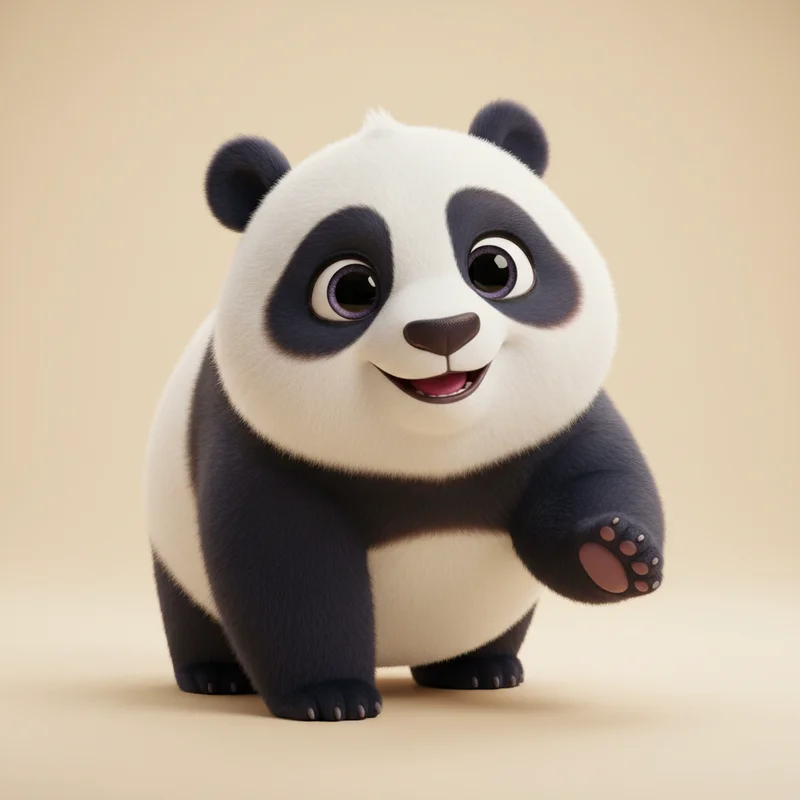
Panda

Panda

Beloved bamboo-eating bear from China, famous for black-and-white coloring and conservation symbolism.

Battle Analysis

Accessibility Coffee Wins
70%
30%
Coffee Panda

Coffee

Coffee is available within walking distance of most humans in developed nations, and increasingly in developing ones. Instant varieties have penetrated markets where fresh water remains inconsistent. The beverage costs between pennies and pounds depending on one's tolerance for pretension. From petrol stations to Michelin-starred establishments, coffee adapts to every economic stratum. It requires no appointment, no visa, and no emotional preparation. It simply exists, waiting, in approximately 38,000 Starbucks locations alone.

Panda

Viewing a panda requires either significant travel or extraordinary fortune in zoo proximity. Approximately 600 pandas exist in captivity globally, distributed across fewer than 50 locations outside China. Wait times for panda exhibits can exceed two hours. The animals spend 55% of their time sleeping and may not deign to be visible during one's allocated viewing window. The panda is not inaccessible because it is rare; it is inaccessible because it simply cannot be bothered to participate in its own celebrity.

VERDICT

Coffee's universal availability versus the panda's cultivated scarcity creates no contest. One can be acquired in minutes; the other requires planning, travel, and the acceptance that the main attraction may be facing the wrong direction.

Sustainability Panda Wins
30%
70%
Coffee Panda

Coffee

Coffee cultivation presents a paradox of planetary proportions. The industry has driven deforestation across equatorial regions, with an estimated 2.5 million acres of forest cleared in Central America alone. Water usage is prodigious, requiring up to 140 litres to produce a single cup when accounting for cultivation and processing. Yet the industry has also pioneered shade-grown and rainforest-certified practices, demonstrating that even addiction can develop a conscience when consumers are willing to pay a premium for it.

Panda

The panda represents conservation's most expensive success story. Decades of breeding programmes, habitat restoration, and international cooperation have elevated the species from Endangered to Vulnerable status. Wild populations have increased by approximately 17% since intensive conservation began. The panda's ecological role as a bamboo ecosystem engineer supports countless other species. However, the resources required to save one photogenic bear could theoretically protect dozens of less charismatic species. Evolution did not design the panda for survival; humanity has simply refused to accept the rejection.

VERDICT

Coffee destroys habitats to create itself. The panda's mere existence has preserved thousands of square kilometres of forest that would otherwise have succumbed to development. In sustainability terms, lethargy proves superior to productivity.

Economic impact Coffee Wins
70%
30%
Coffee Panda

Coffee

The global coffee trade supports the livelihoods of approximately 125 million people, from smallholder farmers in Ethiopia to baristas in Brooklyn who consider themselves 'coffee artists'. The industry's economic footprint encompasses agriculture, processing, shipping, roasting, retail, and the inexplicable markup that allows a handful of beans and hot water to cost more than a meal. Coffee shops have become so ubiquitous that their density now serves as a legitimate indicator of neighbourhood gentrification.

Panda

Pandas generate economic activity through tourism, conservation funding, and an merchandise empire of staggering proportions. A breeding pair on loan generates approximately 1 million dollars annually in fees alone, before considering ticket sales, souvenirs, and the premium that 'panda-adjacent' businesses command. Edinburgh Zoo reported a 51% increase in visitors following their panda acquisition. The bear does nothing but eat and sleep, yet commands appearance fees that would make Hollywood agents weep.

VERDICT

The panda monetises lethargy with admirable efficiency, yet coffee's 460-billion-dollar industry dwarfs even the most optimistic valuations of global panda-related commerce. One creates jobs; the other creates queues.

Global influence Coffee Wins
70%
30%
Coffee Panda

Coffee

Coffee has infiltrated every inhabited continent, establishing itself in over 80 countries as either a crop or an obsession. The beverage commands morning rituals from Tokyo to Toronto, with an estimated 2.25 billion cups consumed daily worldwide. It has toppled governments, funded revolutions, and inspired a vocabulary so extensive that ordering a simple drink now requires a linguistics degree. The phrase 'but first, coffee' has appeared on enough merchandise to constitute a minor environmental disaster in its own right.

Panda

The panda's influence, whilst geographically concentrated, operates through diplomatic channels that coffee can only dream of. China has deployed pandas as instruments of soft power since the 1950s, with 'panda diplomacy' affecting international relations with over two dozen nations. A single panda loan can thaw diplomatic freezes that sanctions could not. Yet the species' wild population remains confined to a handful of mountain ranges in central China, covering approximately 20,000 square kilometres. Influence without expansion: a peculiar imperial strategy.

VERDICT

Whilst the panda has mastered the art of diplomatic manipulation, coffee has achieved total territorial saturation. One cannot escape coffee. One can, with moderate effort, avoid pandas entirely.

Cultural significance Coffee Wins
70%
30%
Coffee Panda

Coffee

Coffee has inspired artistic movements, philosophical debates, and the entirety of modern work culture. The coffeehouse tradition birthed the Enlightenment's intellectual discourse, with establishments like Lloyd's Coffee House eventually becoming Lloyd's of London. Coffee breaks are now legally mandated in numerous countries. The beverage has its own international day (October 1st), its own academic journal, and has appeared in approximately 47% of all film scenes involving writers or detectives. It is the only drug openly discussed in professional settings.

Panda

The panda has transcended biology to become pure symbol. As the WWF logo since 1961, it represents global conservation efforts whilst simultaneously representing Chinese national identity. The panda appears on currency, postage stamps, and as the mascot for events ranging from the Olympics to local primary schools. Its image has been reproduced more frequently than most religious iconography. The panda's cultural significance is inversely proportional to its survival skills: the less capable the animal appears, the more humanity adores it.

VERDICT

Both have achieved cultural saturation, yet coffee has shaped human civilisation's operating hours for four centuries. The panda inspires affection; coffee enables function. Civilisation chose its champion when it chose to wake up.

👑

The Winner Is

Coffee

58 - 42

The evidence, when examined with appropriate scholarly detachment, reveals a clear hierarchy. Coffee emerges victorious with a score of 58 to the panda's 42, though this numerical supremacy belies a more complex relationship between humanity and its chosen dependencies.

Coffee has achieved what the panda cannot: indispensability. Remove coffee from human civilisation, and productivity would collapse within seventy-two hours. Remove pandas, and humanity would experience collective mourning whilst continuing to function at full economic capacity. The bean has made itself essential; the bear has made itself adorable. Both strategies have merit, yet only one has restructured the fundamental architecture of human society.

The panda's consolation lies in its emotional monopoly. No amount of coffee has ever made a human weep from sheer cuteness. No latte has inspired international diplomatic agreements. The panda operates in the realm of feeling; coffee, in the realm of doing. That humanity has chosen to spend more on doing than feeling tells us rather more about our species than about either competitor.

Coffee
58%
Panda
42%

Share this battle

More Comparisons