
Topic Battle

Where Everything Fights Everything

Coffee

Coffee

A brewed drink prepared from roasted coffee beans, the seeds of berries from certain Coffea species. The world's second-most traded commodity.

VS
Pikachu

Pikachu

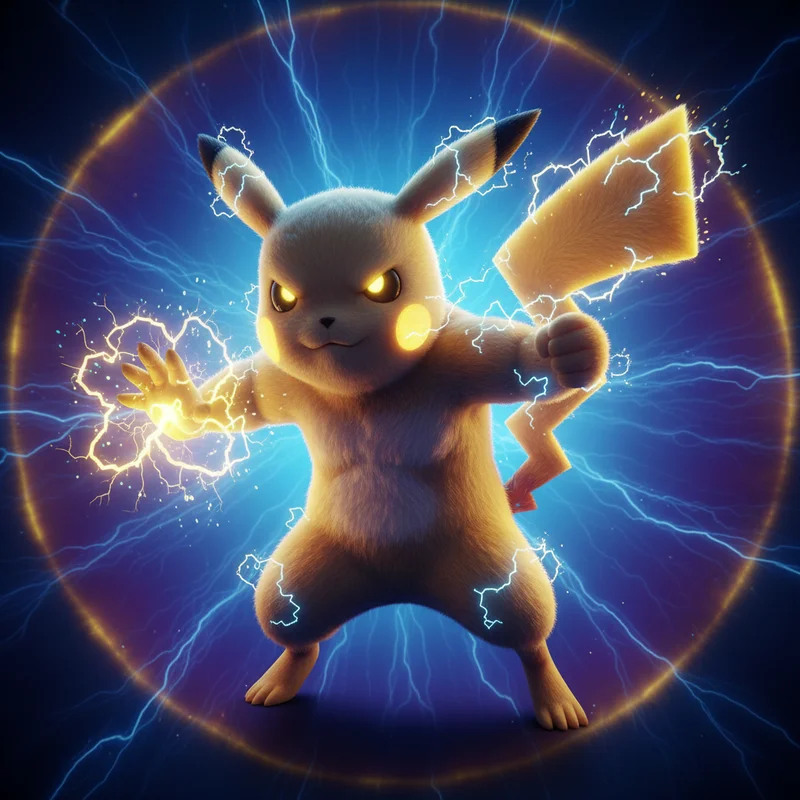
Electric mouse Pokemon and franchise mascot.

Battle Analysis

Energy delivery Coffee Wins
70%
30%
Coffee Pikachu

Coffee

Coffee delivers energy through a well-documented biochemical mechanism. Caffeine molecules cross the blood-brain barrier within 15-45 minutes of consumption, blocking adenosine receptors and thereby preventing the sensation of tiredness. A standard 240ml serving contains approximately 95mg of caffeine, sufficient to increase alertness for 3-5 hours in the average adult.

The delivery system is remarkably efficient: liquid form ensures rapid gastric absorption, whilst the ritual of preparation provides anticipatory psychological benefits. Coffee's energy output is measurable, predictable, and sanctioned by medical professionals worldwide as generally safe for healthy adults.

Pikachu

Pikachu's energy delivery operates through entirely different mechanisms. The creature's cheek pouches store electrical energy measured at approximately 10,000 volts, according to canonical Pokedex entries. However, this energy is notably unavailable for human consumption without significant risk of cardiac arrest.

Pikachu's contribution to human energy levels is therefore indirect, manifesting through emotional stimulation rather than biochemical intervention. Viewing Pikachu imagery has been observed to increase dopamine levels in subjects aged 25-40, particularly those who experienced the late 1990s. This effect, whilst real, cannot substitute for actual metabolic energy provision.

VERDICT

Coffee provides measurable, consumable energy through established biochemical pathways; Pikachu's 10,000 volts remain therapeutically inaccessible.
Cultural influence Pikachu Wins
30%
70%
Coffee Pikachu

Coffee

Coffee has shaped human civilisation for approximately five centuries. The coffeehouses of 17th-century London incubated the insurance industry (Lloyd's), scientific discourse (Royal Society), and financial markets (Stock Exchange). The beverage has inspired artistic movements, fuelled revolutions, and fundamentally altered working patterns across industrialised nations.

Contemporary coffee culture has evolved into a sophisticated aesthetic system, complete with specialised vocabulary, equipment hierarchies, and social signalling mechanisms. The concept of 'coffee culture' now encompasses everything from Ethiopian ceremony to Melbourne latte art competitions.

Pikachu

Pikachu's cultural influence, whilst compressed into merely three decades, demonstrates exceptional intensity. The character has become a de facto ambassador for Japanese popular culture, appearing alongside Hello Kitty and Mario as globally recognised symbols of kawaii aesthetics.

Pikachu's image has adorned commercial aircraft, appeared in the Macy's Thanksgiving Day Parade, and been featured in a Hollywood feature film. The creature served as official mascot for the Japanese national football team during the 2014 World Cup. Few fictional entities have achieved comparable diplomatic status.

VERDICT

Whilst coffee's historical influence runs deeper, Pikachu has achieved unprecedented cultural penetration velocity, becoming a global icon within a single generation.
Addiction potential Coffee Wins
70%
30%
Coffee Pikachu

Coffee

Coffee's addiction profile is well-documented in medical literature. Regular consumption leads to physical dependence, with withdrawal symptoms including headache, fatigue, irritability, and decreased cognitive function appearing within 12-24 hours of cessation. The World Health Organisation recognises caffeine dependence as a clinical condition.

Approximately 90% of adults in Western nations consume caffeine regularly, with many unable to function optimally without their morning dose. The economic implications of this dependence are substantial, driving a global coffee market valued at over $450 billion annually.

Pikachu

Pikachu engages different dependency mechanisms. No physical withdrawal symptoms have been documented, yet the psychological attachment demonstrated by dedicated fans exhibits characteristics consistent with behavioural addiction. The compulsion to collect, the distress at missing limited releases, and the substantial time investment in gameplay suggest powerful engagement loops.

Pokemon's game mechanics were specifically designed to exploit variable ratio reinforcement schedules, the same psychological principle underlying gambling addiction. However, Pikachu fandom rarely interferes with employment or relationships to clinically significant degrees.

VERDICT

Coffee produces medically recognised physical dependence affecting the majority of adults; Pikachu's hold, whilst commercially effective, lacks clinical classification.
Global accessibility Coffee Wins
70%
30%
Coffee Pikachu

Coffee

Coffee maintains an extraordinary global distribution network. Cultivation occurs across the 'Bean Belt' between the Tropics of Cancer and Capricorn, with Brazil alone producing 2.68 million metric tonnes annually. Processing, roasting, and retail operations span every inhabited continent, ensuring availability in formats ranging from freeze-dried instant to single-origin pour-over.

The infrastructure supporting coffee accessibility represents centuries of colonial trade routes, industrial revolution logistics, and modern supply chain optimisation. A human in virtually any urban centre can locate coffee within walking distance, often available 24 hours daily.

Pikachu

Pikachu's accessibility presents a more complex picture. Whilst the intellectual property is owned by The Pokemon Company and licensed globally, the creature itself exists in fictional form only. Physical Pikachu acquisition is impossible by any currently available technology.

Pikachu merchandise, however, demonstrates remarkable penetration. Pokemon products are available in over 100 countries, with the franchise maintaining official presence across Asia, Europe, North America, and Oceania. The distinction between 'access to Pikachu' and 'access to Pikachu representations' remains philosophically significant for this assessment.

VERDICT

Coffee exists in physical form and is immediately purchasable; Pikachu remains confined to two-dimensional representations and plush approximations.
Morning effectiveness Coffee Wins
70%
30%
Coffee Pikachu

Coffee

Coffee's morning effectiveness represents its primary evolutionary advantage in human society. The beverage transforms non-functional pre-caffeine humans into productive economic units within approximately 20 minutes. This transformation is so reliable that many employers tacitly subsidise coffee provision, recognising its role in workplace functionality.

Studies indicate that morning coffee consumption improves reaction time, sustained attention, and verbal memory. The ritual aspects further contribute, providing structured transition from sleep state to work state through familiar sensory experiences.

Pikachu

Pikachu's morning effectiveness is limited by several factors. Engaging with Pikachu content requires active screen time, which conflicts with morning preparation activities. The creature cannot be consumed during commuting, showering, or dressing, severely restricting its integration into morning routines.

Furthermore, Pikachu's characteristic utterance of its own name, whilst endearing, does not provide the neurochemical intervention required to overcome sleep inertia. Morning Pikachu engagement is more commonly associated with children avoiding school preparation than adults achieving workplace readiness.

VERDICT

Coffee integrates seamlessly into morning routines whilst providing measurable cognitive enhancement; Pikachu requires dedicated attention without biochemical return.
👑

The Winner Is

Coffee

58 - 42

Coffee emerges victorious in this comprehensive assessment of morning motivation providers, securing 58% of weighted criteria points against Pikachu's respectable 42%. The margin reflects a fundamental asymmetry: Coffee exists in a form humans can actually consume.

This analysis has demonstrated that whilst both entities command remarkable global influence, their contributions to human functionality operate on entirely different planes. Coffee provides tangible biochemical intervention, transforming sleep-addled individuals into functional participants in economic activity. Pikachu provides emotional satisfaction and nostalgic comfort, valuable in their own right but fundamentally unable to block adenosine receptors.

The verdict should not diminish Pikachu's achievements. The creature has become a cultural ambassador, a merchandising phenomenon, and a genuine source of joy for hundreds of millions. In any competition not specifically requiring morning functionality, Pikachu would present formidable opposition.

However, when the alarm sounds at 6:30 AM and human consciousness reluctantly engages, only one of these competitors can provide the intervention required. Coffee has been performing this service for five centuries. Pikachu, for all its electrical potential, cannot substitute for properly roasted Coffea arabica.

The winner, by decisive margin, is Coffee.

Coffee
58%
Pikachu
42%

Share this battle

More Comparisons