
Topic Battle

Where Everything Fights Everything

Crocodile

Crocodile

Ancient apex predator unchanged for millions of years, featuring death roll attacks and maternal care.

VS
Pizza

Pizza

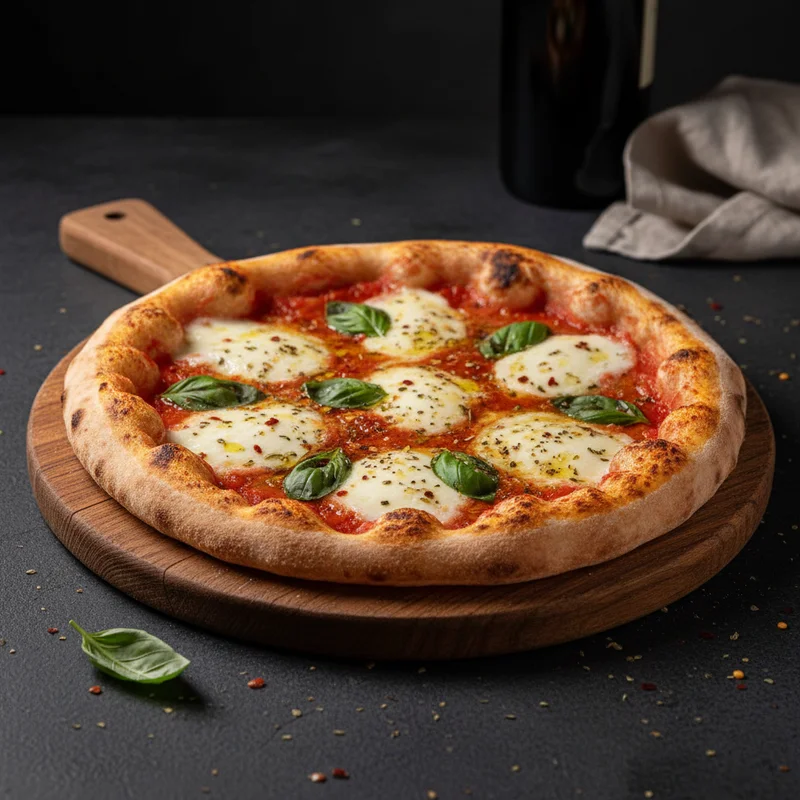
A flat disc of bread that convinced the world that putting everything on top of something is a legitimate cuisine. Somehow both a $1 slice and a $40 artisanal experience, depending on how seriously you take yourself.

The Matchup

In the grand theatre of comparison, certain matchups present themselves with an air of inevitable absurdity that demands serious academic attention. The pairing of Crocodylus, the ancient reptilian order that has observed the rise and fall of dinosaurs with apparent indifference, against the Neapolitan pizza, a circular arrangement of carbohydrates that has conquered the modern world through sheer deliciousness, represents precisely such a confrontation.

The crocodile is a masterwork of evolutionary engineering. Having emerged approximately 200 million years ago during the Triassic period, the crocodilian lineage has survived five mass extinction events, including the asteroid impact that eliminated the dinosaurs. Today, 24 species of crocodilians occupy freshwater habitats across Africa, Australia, Asia, and the Americas. They are, in the most literal sense, living fossils that have observed humanity's entire existence with the cold patience of apex predators.

The pizza, meanwhile, traces its modern origins to 18th-century Naples, where impoverished citizens discovered that flatbread topped with tomatoes, cheese, and olive oil constituted both affordable sustenance and genuine culinary achievement. In less than three centuries, this humble creation has established itself in virtually every nation on Earth, becoming perhaps the most universally beloved food format in human history. One has survived asteroid impacts. The other has conquered the species that invented nuclear weapons. Both, in their own ways, represent remarkable success stories.

Battle Analysis

Speed Crocodile Wins
70%
30%
Crocodile Pizza

Crocodile

The Crocodylus genus has cultivated a relationship with speed that might generously be described as strategically selective. For extended periods, crocodiles demonstrate velocity figures indistinguishable from stationary objects. They float. They bask. They achieve a metabolic efficiency that permits survival on approximately 50 meals per year, a feeding frequency that would concern medical professionals if applied to mammals.

However, the crocodile's apparent lethargy conceals explosive capability. During strike events, large crocodiles achieve acceleration rates exceeding those of most sports cars. The Crocodylus porosus, or saltwater crocodile, can launch its body from water at speeds approaching 12 metres per second, closing distances of several metres in fractions of a second. This ambush velocity has remained essentially unchanged for 200 million years, suggesting that evolution concluded the crocodile had, in the terminology of product development, solved the problem.

On land, crocodiles demonstrate sustained movement capabilities that surprise observers expecting permanent aquatic residence. The so-called 'gallop' gait permits speeds of 14-17 kilometres per hour over short distances. This is not, admittedly, competitive with mammalian sprinters, but it substantially exceeds what most humans anticipate when encountering reptiles assumed to be sluggish. Many such assumptions have ended poorly for the human involved.

Pizza

Pizza approaches the concept of speed from a perspective of absolute philosophical disengagement. It does not move. It has never moved under its own power. It possesses no capacity for movement whatsoever, lacking both the musculature and the neurological infrastructure that movement requires.

One might argue that pizza achieves considerable velocity through delivery infrastructure. The modern pizza delivery system can transport a prepared pizza from oven to consumer in approximately 30-45 minutes, covering distances that would have seemed miraculous to medieval observers. Delivery vehicles navigate traffic patterns with urgency approaching emergency services. In certain metropolitan areas, pizza arrives faster than ambulances, a statistical reality that raises questions about civic priorities.

Yet this velocity belongs to the delivery system, not to the pizza itself. Remove the external transportation apparatus, and the pizza's inherent speed becomes apparent: precisely zero. A pizza left unattended will remain in its exact position until acted upon by external forces, whether human hands, gravitational events, or the gradual processes of decomposition. It is, in the Newtonian sense, an object entirely at rest.

VERDICT

The speed assessment produces a result so unambiguous that extensive analysis seems almost redundant. The crocodile possesses speed. The pizza possesses none whatsoever. This represents not a marginal differential but a categorical distinction between entities capable of motion and entities that are, fundamentally, stationary objects.

The crocodile's ambush velocity represents 200 million years of refined predatory engineering. Every component of its muscular and skeletal system has been optimised for the explosive acceleration that transforms patience into prey capture. The pizza has undergone no such optimisation, being, as previously noted, incapable of any movement regardless of duration or motivation.

The crocodile wins this category through the simple fact of possessing locomotion. Any speed, however modest, exceeds the pizza's zero. The margin of victory is not merely substantial but infinite in percentage terms, as any positive number divided by zero approaches infinity.

Durability Crocodile Wins
70%
30%
Crocodile Pizza

Crocodile

The durability credentials of Crocodylus operate across multiple temporal scales, each more impressive than the last. At the individual level, large crocodiles demonstrate lifespans exceeding 70 years in wild conditions, with some specimens in captivity reaching ages beyond a century. These are not fragile organisms requiring careful environmental management; they are biological tanks that persist through conditions that would eliminate most vertebrates.

The crocodilian immune system represents a particular marvel of evolutionary engineering. Research has identified powerful antimicrobial peptides in crocodile blood capable of destroying bacteria, fungi, and viruses that resist conventional antibiotics. Crocodiles routinely sustain injuries during territorial disputes and mating activities that would prove fatal to mammals, yet heal without apparent infection. They are, in immunological terms, remarkably difficult to kill.

At the lineage level, crocodilian durability becomes genuinely extraordinary. The order has maintained essentially unchanged body plans for 200 million years, surviving the Cretaceous-Paleogene extinction event that eliminated approximately 75% of all species on Earth. When an asteroid the size of Manhattan impacted the Yucatan Peninsula, crocodiles observed from their freshwater habitats and continued about their business. They have outlasted the dinosaurs, the mega-fauna, and multiple ice ages. They will, in all probability, outlast us.

Pizza

Pizza durability presents certain definitional challenges that must be addressed before meaningful analysis can proceed. In its freshly prepared state, pizza demonstrates a functional lifespan measured in hours. The window of optimal consumption begins approximately two minutes after oven extraction and closes, according to culinary purists, within twenty minutes. Beyond this threshold, quality degradation becomes increasingly apparent.

Refrigeration extends pizza viability to approximately 3-4 days, though texture and flavour characteristics evolve in ways that consumers may or may not find acceptable. The reheated pizza represents a distinct experience from the fresh original, prompting ongoing debates within food science circles about whether it constitutes the same entity or a derivative product.

Frozen pizza achieves durability figures approaching 12-18 months when maintained at appropriate temperatures. This represents impressive longevity for an organic food product, though it requires continuous energy input to maintain the thermal conditions that prevent decomposition. Remove the freezer, and the pizza rapidly reverts to its natural trajectory toward biological breakdown.

VERDICT

The durability comparison reveals a differential spanning eight orders of magnitude. Individual crocodiles persist for decades. The crocodilian lineage has persisted for hundreds of millions of years. Pizza, even under optimal storage conditions, measures its existence in months. The comparison is less a contest than a demonstration of categorical difference.

The crocodile's durability derives from biological systems refined across geological time periods. Its immune system, regenerative capacity, and metabolic efficiency collectively produce an organism that requires active effort to destroy. Pizza's durability derives from temperature manipulation and packaging technology, interventions that delay but cannot prevent eventual degradation.

The crocodile wins through the accumulated advantage of evolutionary permanence. It is not merely durable as an individual but durable as a design, a body plan that has required no significant modification since before mammals existed. Pizza, by contrast, begins decomposing the moment it exits the oven, its brief existence a temporary arrangement of ingredients awaiting inevitable dissolution.

Global reach Pizza Wins
30%
70%
Crocodile Pizza

Crocodile

Crocodylus maintains natural populations across a geographic range that spans four continents. The saltwater crocodile occupies coastal territories from eastern India through Southeast Asia to northern Australia, representing one of the largest distributions of any living reptile. The Nile crocodile ranges across sub-Saharan Africa. American crocodiles inhabit regions from Florida through Central America to northern South America.

However, crocodilian distribution faces significant thermal constraints. These ectothermic organisms require warm climates to maintain metabolic function, restricting their range to tropical and subtropical regions. No wild crocodile populations exist in Europe, most of Asia, or the majority of North America. The species has achieved incomplete global coverage by virtue of basic biological requirements.

Human intervention has extended crocodile presence through zoological collections and farming operations. Crocodiles now reside in facilities across all populated continents, including regions far beyond their natural thermal tolerance. This artificial distribution demonstrates that crocodiles can exist globally given appropriate environmental support, even if natural colonisation remains climatically impossible.

Pizza

Pizza has executed what might be termed a complete global colonisation event. The format has established commercial presence in approximately 185 countries, representing coverage that approaches theoretical maximum. From Tokyo to Toronto, from Sydney to Stockholm, from Buenos Aires to Bangkok, pizza establishments operate with the quiet ubiquity of a truly universal phenomenon.

This distribution has occurred through cultural adaptation rather than biological constraint. Pizza requires no particular climate, no specific ecosystem, no narrow range of environmental conditions. It requires only flour, tomatoes, cheese, and heat, all of which can be provided through supply chains that now span the planet. The format has demonstrated remarkable plasticity, incorporating local ingredients and preferences without losing its essential identity.

Perhaps most remarkably, pizza has achieved this distribution within approximately 150 years of serious international expansion. Italian immigration to the United States established the beachhead. American commercial innovation developed the delivery model. Global franchising completed the coverage. What required evolution 200 million years to achieve partially, pizza has accomplished completely through the application of capitalism and carbohydrates.

VERDICT

Global reach assessment produces pizza's second categorical victory. The format has achieved near-complete global coverage through mechanisms that bypass biological constraints entirely. Temperature, habitat, and evolutionary history present no obstacles to pizza distribution. The result is presence figures that crocodiles cannot physically match.

The crocodile's distribution limitations reflect fundamental biology. Ectothermic metabolism requires warmth. Aquatic lifestyle requires water bodies. Predatory ecology requires prey populations. These requirements collectively restrict crocodilians to perhaps 30% of the Earth's land surface. Pizza faces no equivalent constraints, requiring only commercial infrastructure and consumer demand.

Pizza wins through infrastructural independence from biological limitations. It can exist wherever humans have established supply chains, which is to say, virtually everywhere. The crocodile remains bound by the physics of its physiology, unable to expand beyond regions where cold-blooded survival remains possible.

Affordability Pizza Wins
30%
70%
Crocodile Pizza

Crocodile

The acquisition economics of Crocodylus present considerable variation depending on the intended application. As a leather goods source, crocodiles command premium prices. A genuine crocodile leather handbag from established luxury brands routinely exceeds $10,000, with exceptional specimens reaching figures that would purchase serviceable automobiles. The crocodile, in material terms, is decidedly expensive.

Live crocodiles present their own economic considerations. Captive-bred juveniles from licensed facilities typically range from $100 to $2,000 depending on species, age, and regional availability. However, the total cost of crocodile ownership extends well beyond initial acquisition. Housing requirements include secure enclosures with appropriate water features, heating systems, and reinforced fencing. Annual maintenance costs for adult specimens can exceed $5,000, and that figure excludes the liability insurance that prudent crocodile keepers maintain.

Wild crocodiles, theoretically, cost nothing to acquire, but this observation overlooks several practical considerations. Most jurisdictions impose strict legal prohibitions on wild crocodile capture. Those that permit limited harvesting require licenses and comply with international trade regulations. The physical process of capturing a wild crocodile involves risks that might reasonably be incorporated into cost calculations, as medical expenses and funeral services both represent financial outlays.

Pizza

Pizza has achieved what economists might describe as remarkable price optimisation across market segments. At the accessible end, major chains offer complete pizzas for under $10, with promotional pricing sometimes reducing costs to levels that seem to defy ingredient economics. A family of four can achieve caloric satisfaction for approximately $20-30, a price point that few prepared food categories can match.

The frozen pizza segment extends affordability further still. Supermarket freezer sections offer acceptable pizza products for $3-5, representing per-calorie costs competitive with basic staples. When considered as a protein and carbohydrate delivery system, frozen pizza achieves extraordinary efficiency in the conversion of currency to nutrition.

Premium pizza experiences command higher prices without approaching crocodile territory. A quality Neapolitan pizza from a respected establishment might cost $15-25. The most expensive pizza ever sold, featuring white truffles and gold leaf, commanded $12,000, but this represents theatrical excess rather than standard market pricing. The median pizza transaction falls somewhere between fast-food pricing and casual dining, placing it firmly within accessible territory for most consumers.

VERDICT

Affordability assessment produces pizza's clearest categorical victory. The average pizza costs approximately $15. The average crocodile leather product costs hundreds or thousands of dollars. Live crocodile acquisition and maintenance costs exceed the annual pizza budget of most households. The mathematics favour flatbread decisively.

Pizza's affordability derives from industrial optimisation of every component of its production chain. Wheat, tomatoes, and cheese represent commodity ingredients produced at global scale. Preparation methods have been standardised to minimise labour costs. Delivery infrastructure amortises vehicle expenses across hundreds of transactions. The result is a product that achieves remarkable accessibility.

Pizza wins through systematic cost engineering. It has been designed, whether intentionally or through market evolution, to occupy a price point that maximises consumer access. The crocodile has not been designed at all; it simply exists, its economic positioning determined by scarcity, legal restriction, and the practical challenges of maintaining large predatory reptiles.

Sustainability Crocodile Wins
70%
30%
Crocodile Pizza

Crocodile

The sustainability credentials of Crocodylus derive from a simple observation: the lineage has sustained itself for 200 million years. This represents not a theoretical sustainability model but demonstrated long-term viability across conditions that have eliminated countless other lineages. The crocodile is, in the most literal sense, a proven concept.

Modern crocodilian populations face anthropogenic pressures that historical challenges did not include. Habitat destruction, hunting for leather products, and human-wildlife conflict have reduced numbers across many species. However, conservation efforts have demonstrated that crocodile populations recover rapidly when protected. The American alligator, once endangered, now numbers in the millions following protection measures. The species bounces back with the resilience of organisms that survived asteroid impacts.

Crocodile farming has emerged as a sustainable utilisation model that reduces pressure on wild populations while providing economic value. Well-managed farms produce leather and meat without requiring wild harvest. The crocodile's reproductive capacity, with females producing 20-90 eggs per clutch, supports farming operations that maintain genetic diversity while meeting market demand. It is, in the conservation sense, a success story in progress.

Pizza

Pizza sustainability presents the complex accounting challenges characteristic of processed food products. The format requires coordination of multiple agricultural systems: wheat cultivation, tomato production, dairy operations for cheese, and various topping ingredients, each with distinct environmental footprints that accumulate into considerable aggregate impact.

The wheat component involves industrial agriculture with associated inputs of fertiliser, pesticides, and irrigation water. Tomato production, particularly for processed sauce, requires significant water resources in often water-stressed regions. Cheese production depends on dairy cattle, which generate methane emissions at rates substantially exceeding those of most other protein sources. The cumulative footprint of these inputs is not negligible.

Distribution adds further environmental burden. Delivery vehicles generate emissions with each transaction. Packaging, predominantly cardboard and plastic, creates waste streams that recycling systems handle with variable effectiveness. The convenience that makes pizza appealing comes with carbon costs that more locally-sourced foods might avoid. Pizza is not inherently unsustainable, but it requires continuous industrial support that the crocodile's biological self-sufficiency does not demand.

VERDICT

Sustainability comparison reveals the crocodile's fundamental advantage: it is a self-sustaining biological system rather than a manufactured product requiring continuous inputs. The crocodile has demonstrated 200-million-year sustainability. Pizza has demonstrated sustainability for approximately 200 years, and that period has relied on industrial systems with significant environmental footprints.

The crocodile requires only habitat and prey to persist indefinitely. It requires no supply chains, no manufacturing facilities, no delivery infrastructure, and no packaging systems. It processes solar energy through ecological food webs without human intervention. Pizza requires continuous operation of multiple industrial systems from agriculture through processing through distribution.

The crocodile wins through proven long-term viability. Its sustainability is not modelled or projected but historically demonstrated across timeframes that dwarf human civilisation. Pizza's sustainability depends on continued function of systems that have existed for mere centuries, a track record that cannot compete with geological-scale persistence.

👑

The Winner Is

Crocodile

58 - 42

This analysis concludes with a 58-42 victory for Crocodylus across the evaluated metrics. The crocodile secured victories in speed, durability, and sustainability, whilst pizza claimed affordability and global reach as its categorical wins. The margin reflects the accumulated advantages of 200 million years of evolutionary refinement against 200 years of culinary development.

The crocodile's victories came in categories where biological capability provides decisive advantages. It can move; pizza cannot. It persists for decades; pizza persists for days. It has sustained its lineage across geological timescales; pizza requires continuous industrial support. These are not marginal differences but fundamental categorical distinctions between organisms and manufactured food products.

Pizza's victories occurred in categories where human systems provide advantages unavailable to biology. It costs less because industrial agriculture has optimised ingredient production. It has achieved greater global distribution because it faces no thermal or habitat constraints. These are genuine achievements that demonstrate the power of human commercial innovation, even if they cannot overcome the crocodile's biological advantages in other domains.

The verdict acknowledges both entities' remarkable success within their respective categories. The crocodile represents evolutionary perfection, a design so effective that it has required no modification since before flowers existed. Pizza represents cultural perfection, a format so appealing that it has achieved near-universal human acceptance within historical eyeblinks. Both deserve recognition. But when forced to render judgment, the evidence favours the entity that will still exist when human civilisation has passed into archaeological curiosity.

Crocodile
58%
Pizza
42%

Share this battle

More Comparisons