
Topic Battle

Where Everything Fights Everything

Dog

Dog

Loyal canine companion celebrated for unconditional love, tail wagging, and being humanity's best friend for millennia.

VS
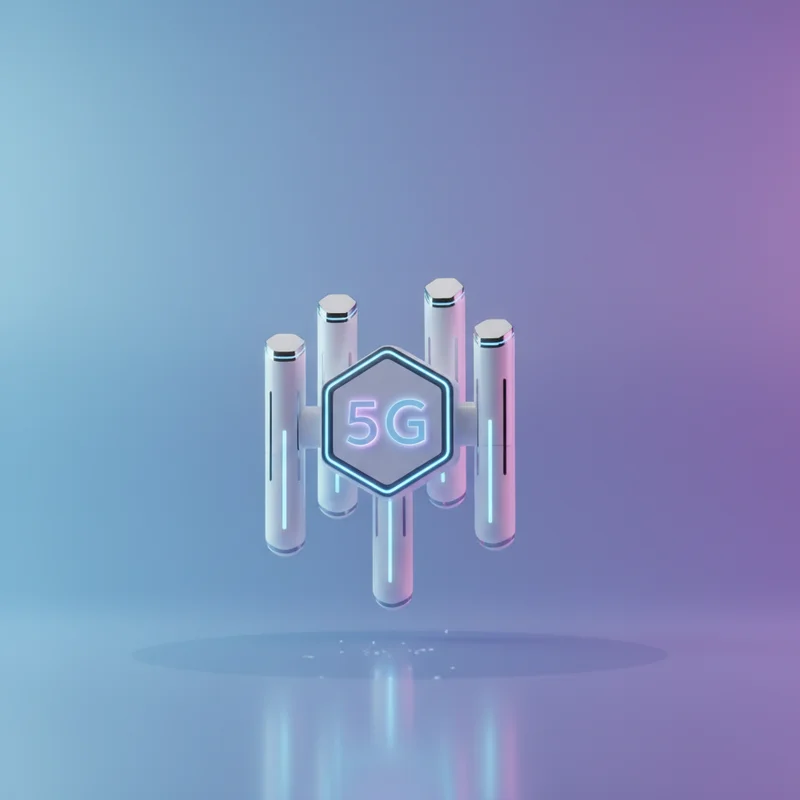
5G Network

5G Network

Next-generation wireless technology and conspiracy theory magnet.

The Matchup

In the early decades of the 21st century, humanity finds itself caught between two powerful forces demanding constant attention. 471 million domestic dogs worldwide compete for human affection against telecommunications infrastructure that promises to deliver up to 10 gigabits per second to increasingly distracted owners. Both entities claim to enhance quality of life. Both require significant investment. Neither understands why you are crying at three o'clock in the morning.

The domestic dog, Canis lupus familiaris, represents 15,000 years of evolutionary refinement into the ultimate companion species. The 5G network, meanwhile, represents approximately a decade of electromagnetic engineering designed to ensure that videos of domestic dogs load without buffering. One operates through the ancient technology of mammalian bonding hormones. The other through millimetre wave propagation and small cell deployment strategies that have generated more conspiracy theories than any telecommunications standard in history.

Battle Analysis

Reliability Dog Wins
70%
30%
Dog 5G Network

Dog

The domestic dog offers reliability that telecommunications engineers can only dream of achieving. A dog will greet its owner with identical enthusiasm whether the absence lasted eight hours or eight minutes. This consistency operates independently of weather conditions, software updates, or the financial health of service providers. Dogs do not experience outages, though they may experience what veterinarians diplomatically term digestive irregularities.

However, canine reliability follows biological rather than human schedules. A dog requiring outdoor facilities at 5:47 AM will require them regardless of public holidays, hangovers, or the owner's fervent wish for additional sleep. This represents reliability of a particularly non-negotiable variety.

5G Network

5G networks promise unprecedented reliability through network densification and redundant infrastructure. Theoretical uptime exceeds 99.999 percent, a figure that translates to approximately five minutes of annual downtime in laboratory conditions. Real-world performance, however, varies according to building materials, atmospheric conditions, and the mysterious tendency of networks to fail precisely when important video calls commence.

Coverage remains geographically uneven. Urban centres enjoy robust connectivity whilst rural users discover that their 5G devices default to 4G, or 3G, or occasionally to what appears to be semaphore.

VERDICT

Dogs deliver consistent emotional service regardless of geography or network congestion. A Labrador functions identically in central London and remote Scotland. 5G cannot make the same claim.

Societal trust Dog Wins
70%
30%
Dog 5G Network

Dog

Dogs enjoy trust levels that politicians and telecommunications executives can only envy. Gallup polling consistently ranks dogs among the most trusted entities in human life, exceeded only by family members and occasionally nurses. This trust has accumulated over millennia of co-evolution, documented service, and an apparent inability to engage in deception more sophisticated than pretending not to have already been fed.

Dogs have never been accused of surveillance, data harvesting, or installing tracking devices in their owners' pockets. Their betrayals, when they occur, involve furniture rather than privacy.

5G Network

5G technology faces a trust deficit unprecedented in telecommunications history. Conspiracy theories linking 5G to various implausible outcomes have spread across social media platforms—ironically often via 5G connections—generating protests and, in some cases, tower arson. Legitimate concerns about surveillance capabilities and data security compound these irrational fears.

Surveys indicate that only 47 percent of consumers fully trust their mobile network providers with personal data. The remaining majority harbour suspicions ranging from mild scepticism to outright paranoia.

VERDICT

Millennia of loyal service have established canine trustworthiness beyond question. 5G has existed for approximately five years and has already generated congressional hearings.

Cost of ownership 5G Network Wins
30%
70%
Dog 5G Network

Dog

The ASPCA estimates annual dog ownership costs between $1,500 and $4,500, encompassing veterinary care, nutrition, grooming, and the replacement of items destroyed during what owners charitably describe as 'playful moments'. Initial acquisition costs vary from free (rescue organisations) to tens of thousands (rare breeds purchased from breeders with waiting lists exceeding the average mortgage term).

Hidden costs compound these figures. Dog-damaged furniture, travel restrictions, and the opportunity cost of walks that cannot be postponed regardless of weather or schedule.

5G Network

Monthly 5G service averages $70-90 in developed markets, yielding annual costs of $840-1,080 for connectivity alone. Device costs, typically $800-1,400 for 5G-capable smartphones, must be replaced every two to three years as manufacturers cease software support for older models. The total cost of 5G participation over a decade approaches $15,000 when including hardware refreshes.

Unlike dogs, 5G costs scale with usage. Unlimited plans prove considerably more limited than marketing materials suggest.

VERDICT

Pure financial analysis favours 5G, though the comparison ignores what economists term non-monetary returns. Dogs cost more and deliver value that accounting cannot capture.

Speed of response 5G Network Wins
30%
70%
Dog 5G Network

Dog

Canine response times to human arrival average under three seconds, encompassing the complete sequence of ear perking, tail activation, and velocity generation toward the source of attention. This response requires no initialisation period, connects immediately upon detection, and operates at maximum capacity regardless of concurrent users. Dogs, remarkably, become more responsive when additional family members arrive, the precise opposite of network behaviour.

However, response speed to commands such as 'come' or 'leave it' varies dramatically by breed, training level, and the relative appeal of the squirrel currently occupying the dog's attention.

5G Network

5G networks achieve latency figures of one to four milliseconds, response times that approach the theoretical minimum imposed by the speed of light through fibre optic cable. This enables real-time applications previously impossible: remote surgery, autonomous vehicle coordination, and the instantaneous delivery of notifications about sales at shops you visited once in 2019.

Yet these speeds apply only under optimal conditions. The journey from tower to device may achieve one-millisecond latency, but the application running on that device may introduce delays measured in geological timescales by comparison.

VERDICT

In pure speed metrics, electromagnetic radiation travelling at 299,792 kilometres per second defeats even the most enthusiastic spaniel. Physics wins this criterion.

Emotional bandwidth Dog Wins
70%
30%
Dog 5G Network

Dog

Dogs process and transmit emotional data through channels that neuroscientists are only beginning to catalogue. Facial expression recognition achieves 75 percent accuracy for human emotional states. Vocal tone analysis operates continuously. Physical positioning communicates comfort, concern, or a request to share whatever you are currently eating. This represents a full-duplex emotional connection that adjusts in real-time to user requirements.

Research from Azabu University confirms that dog-human interaction triggers oxytocin release in both parties, creating what researchers term a bidirectional bonding feedback loop. No technology has successfully replicated this chemical response.

5G Network

5G networks transmit emotional content created by others with exceptional fidelity. 4K video calls preserve facial expressions. High-definition audio captures vocal nuance. Yet the network itself remains categorically indifferent to the emotional state of its users. It will deliver news of tragedy with the same efficiency as notification of a liked photograph.

Attempts to create emotional connections through 5G-enabled devices rely entirely on the humans at either end. The network contributes infrastructure, not empathy.

VERDICT

5G can transmit representations of emotion. Dogs generate and respond to emotion directly. The distinction is categorical.

👑

The Winner Is

Dog

58 - 42

This analysis reveals a competition between entities serving fundamentally different human needs—yet both claiming space in the same limited hours of human attention. 5G networks excel at transmitting information with unprecedented speed and efficiency, reducing latency to figures that satisfy even the most demanding applications. Dogs excel at being present in ways that no electromagnetic transmission can replicate.

The scoring reflects a truth uncomfortable for the telecommunications industry: humans evolved alongside dogs, not alongside millimetre wave propagation. The 58-42 victory for dogs acknowledges that whilst 5G delivers superior measurable performance in technical criteria, dogs deliver superior performance in the metrics that actually matter to human wellbeing.

5G can connect you to anyone in the world. A dog ensures you are not alone when that connection fails to satisfy. In an age of unprecedented connectivity and unprecedented loneliness, the ancient technology of canine companionship retains advantages that fibre optic cables cannot transmit.

Dog
58%
5G Network
42%

Share this battle

More Comparisons