
Topic Battle

Where Everything Fights Everything

Dog

Dog

Loyal canine companion celebrated for unconditional love, tail wagging, and being humanity's best friend for millennia.

VS
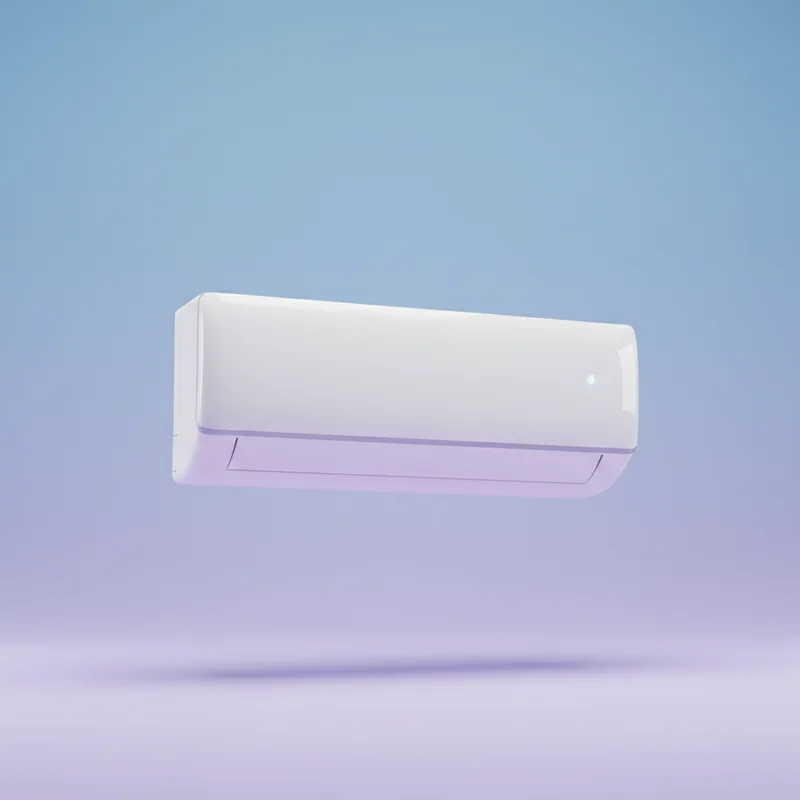
Air Conditioner

Air Conditioner

Climate control device and source of office temperature wars.

The Matchup

In the modern home, two entities compete for the designation of essential comfort provider. 471 million dogs share living quarters with humans worldwide, whilst over 2 billion air conditioning units hum quietly in dwellings across the globe. Both promise to transform domestic spaces into sanctuaries. Both require significant investment. Yet they approach the fundamental challenge of human comfort through radically different methodologies.

The air conditioning unit operates through the vapour-compression refrigeration cycle, a thermodynamic process that extracts heat from interior spaces with mechanical precision. The dog employs a rather different strategy: 15,000 years of co-evolutionary adaptation that has produced a creature capable of generating emotional warmth through tail-based communication, strategic placement of cold noses, and the deployment of what researchers term irresistible facial expressions. One cools the air. The other warms the heart. This analysis examines which provides superior overall domestic value.

Battle Analysis

Long term value Dog Wins
70%
30%
Dog Air Conditioner

Dog

The value proposition of dog ownership extends far beyond simple cost-benefit calculation. Research from Uppsala University, tracking 3.4 million participants, found dog ownership associated with a 33 percent reduction in mortality risk for individuals living alone. Dog owners demonstrate improved cardiovascular health, reduced depression rates, and enhanced social connectedness. The mandatory physical activity, enforced routine, and daily moments of positive interaction accumulate into measurable life extension.

Furthermore, dogs appreciate in emotional value over time. The bond strengthens with shared experience. The elderly dog that has witnessed its owner's major life events carries significance that no appliance can accumulate.

Air Conditioner

Air conditioning units depreciate according to predictable schedules. A well-maintained system lasts 15 to 20 years, during which its value declines from purchase price to eventual scrap metal. The air conditioner's contribution to human wellbeing, whilst genuine during extreme temperatures, does not compound over time. Year ten of air conditioner ownership feels remarkably similar to year one.

Studies do link air conditioning to reduced heat-related mortality and improved sleep quality during summer months. However, these benefits plateau rather than accumulate. The air conditioner delivers consistent, depreciating value until eventual mechanical failure necessitates replacement.

VERDICT

Dogs provide value that compounds emotionally and compounds medically. Air conditioners provide value that depreciates fiscally and remains constant experientially.

Maintenance demands Air Conditioner Wins
30%
70%
Dog Air Conditioner

Dog

Dog ownership constitutes a comprehensive lifestyle commitment. The ASPCA estimates annual costs between $1,500 and $4,500, encompassing food, veterinary care, grooming, boarding, and the replacement of items destroyed during what behaviourists term exploratory chewing episodes. Beyond financial requirements, dogs demand daily walks totalling approximately 30 to 120 minutes, regular feeding schedules, and attention that cannot be postponed regardless of human convenience.

Dogs require vaccination schedules, dental care, and parasite prevention. They must be bathed, brushed, and have their nails trimmed. They produce waste that responsible owners must collect in small plastic bags and carry about until suitable disposal locations present themselves.

Air Conditioner

The air conditioning unit requests remarkably little from its owners. Annual maintenance typically involves filter cleaning or replacement at quarterly intervals, a task requiring perhaps fifteen minutes and minimal technical expertise. Professional servicing is recommended annually, costing between $100 and $300, during which technicians check refrigerant levels and clean coils that the average owner would struggle to locate.

An air conditioner does not require walks. It does not wake its owner at inconvenient hours. It does not require arrangements for care during holidays or develop separation anxiety when left alone. Its demands are documentation-defined and mercifully finite.

VERDICT

Air conditioner maintenance can be scheduled. Dog maintenance is ongoing, unpredictable, and emotionally obligatory.

Companionship quality Dog Wins
70%
30%
Dog Air Conditioner

Dog

Dogs have evolved into what evolutionary biologists describe as obligate companions. Their social cognition has developed to recognise human facial expressions, voice tones, and even pointing gestures, a skill that eludes our closest genetic relatives, the great apes. Research demonstrates that merely gazing into a dog's eyes triggers oxytocin release in both species, creating a biochemical bond that millennia of refinement have optimised for mutual satisfaction.

A dog greets its returning owner with enthusiasm that borders on the theatrical. It positions itself at feet during television viewing. It follows from room to room, maintaining proximity with the dedication of a professional surveillance operative. This constant presence, whilst occasionally inconvenient, addresses a fundamental human need for connection that no amount of climate control can satisfy.

Air Conditioner

The air conditioning unit offers what might charitably be described as ambient presence. Its gentle hum provides white noise that some occupants find comforting, though studies suggest this comfort derives more from acoustic masking than genuine emotional connection. The air conditioner does not notice when its owner returns home. It cannot distinguish between human presence and absence with any degree of interest.

One cannot share news of a promotion with an air conditioner and expect meaningful acknowledgment. One cannot seek comfort from a split system during periods of grief. The air conditioner's companionship consists entirely of maintaining conditions within specified parameters, a service that, whilst valuable, fails to address any dimension of human loneliness.

VERDICT

Air conditioners provide comfort to the body. Dogs provide comfort to the entire emotional apparatus that makes human existence bearable.

Temperature regulation Air Conditioner Wins
30%
70%
Dog Air Conditioner

Dog

The domestic dog represents a remarkable thermal liability in climate management terms. With a core body temperature of approximately 38.5 degrees Celsius, dogs function as mobile heating units, radiating warmth from their fur-covered frames regardless of ambient conditions or human preference. A medium-sized dog generates roughly the same heat output as a 60-watt incandescent bulb operating continuously.

During summer months, this thermal contribution proves distinctly unhelpful. The dog that insists on sleeping pressed against human legs introduces unwanted kilojoules into already struggling cooling systems. Furthermore, dogs demonstrate what meteorologists might classify as perverse thermal behaviour, seeking proximity to their humans precisely when such proximity is least thermally desirable.

Air Conditioner

The air conditioning unit approaches temperature regulation with engineering precision. Modern inverter systems can maintain room temperature within 0.5 degrees Celsius of the target setting, adjusting compressor speed in real-time to respond to thermal fluctuations. A typical split system extracts 2.5 to 7 kilowatts of heat per hour, depending on capacity, transforming oppressive environments into cool sanctuaries with mathematical reliability.

Unlike its canine competitor, the air conditioner does not generate additional heat while attempting to reduce it. It does not pant in ways that remind occupants of the very heat they seek to escape. It simply cycles refrigerant through its copper veins and delivers precisely what was requested.

VERDICT

In pure thermal terms, this category presents no meaningful competition. Dogs actively work against temperature regulation goals whilst air conditioners exist solely to achieve them.

Home security contribution Dog Wins
70%
30%
Dog Air Conditioner

Dog

Dogs provide security services that insurance actuaries have learned to respect. Studies indicate that 74 percent of burglars consider the presence of a dog when selecting targets, with many reporting that barking dogs constitute sufficient deterrent to redirect criminal attention elsewhere. The domestic dog functions as a biological alarm system with features no electronic alternative can replicate: it responds to unusual sounds, unfamiliar scents, and subtle environmental changes that escape human detection.

Even small dogs provide meaningful security value. Their alerting behaviour summons human attention to potential threats, whilst their unpredictability discourages intruders who cannot calculate whether the Chihuahua's confidence reflects genuine defensive capability or mere territorial bluster.

Air Conditioner

The air conditioning unit contributes to home security in one extremely limited capacity: it can be left running to suggest occupancy during absence. This deception, whilst occasionally effective, foolools only the most inattentive criminal observers. The air conditioner cannot detect intrusion, cannot raise alarm, and cannot interpose itself between threats and household members.

In fact, air conditioning units present a security vulnerability. External condenser units indicate to observant individuals that the property contains climate control equipment worth stealing, whilst their noise may mask sounds of forced entry that alert homeowners might otherwise detect.

VERDICT

Dogs provide active, responsive security. Air conditioners provide nothing of the sort and may actually compromise it.

👑

The Winner Is

Dog

58 - 42

This analysis reveals a competition between thermal precision and emotional richness. The air conditioner claims decisive victory in temperature regulation and maintenance simplicity, categories where its mechanical nature constitutes an insurmountable advantage. A dog cannot lower room temperature by 8 degrees Celsius. An air conditioner achieves this without complaint.

Yet the dog prevails in companionship, security, and long-term value, domains where living presence proves irreplaceable. The 58-42 margin reflects a fundamental truth: whilst air conditioning addresses a significant comfort need, dogs address the more profound human requirement for connection. We can survive discomfort; we struggle to thrive in isolation.

The optimal household, this analysis suggests, contains both. The air conditioner maintains conditions in which dogs and humans can comfortably coexist. The dog provides the reason such comfort matters.

Dog
58%
Air Conditioner
42%

Share this battle

More Comparisons