
Topic Battle

Where Everything Fights Everything

Dog

Dog

Loyal canine companion celebrated for unconditional love, tail wagging, and being humanity's best friend for millennia.

VS
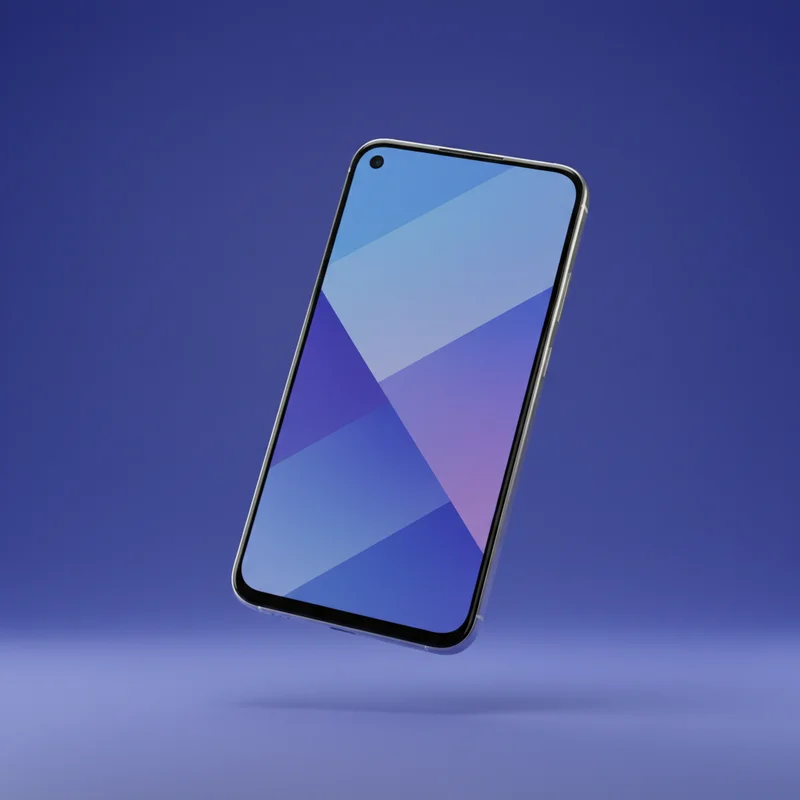
Android Phone

Android Phone

Google's mobile operating system powering billions of devices worldwide.

The Matchup

The modern human faces a peculiar dilemma of attention allocation. 471 million dogs serve as companions worldwide, each demanding eye contact, physical interaction, and the occasional reassurance that they are, indeed, good boys. Meanwhile, 3.6 billion Android devices compete for those same eyes, hands, and emotional bandwidth, offering infinite scrolling where once there was only fetch.

Both entities have been engineered for human engagement. The domestic dog represents 15,000 years of selective breeding, a biological project that transformed wolves into creatures capable of reading human facial expressions with remarkable accuracy. The Android phone represents approximately fifteen years of industrial optimisation, during which engineers perfected the art of making small rectangles irresistible. One wags its tail upon your return. The other vibrates with notifications that simulate the same dopamine response, though considerably less furry.

This analysis examines which companion delivers superior value across metrics that matter to the functioning human: reliability, communication capacity, entertainment provision, loyalty, and the increasingly relevant criterion of attention economics.

Battle Analysis

Loyalty Dog Wins
70%
30%
Dog Android Phone

Dog

The loyalty of the domestic dog has been documented across millennia of human history. From Odysseus's Argos, who waited twenty years for his master's return, to modern service animals that refuse to leave their handlers during medical emergencies, dogs demonstrate fidelity that appears hardwired into their cognitive architecture. Studies at Emory University confirm that dogs' brains activate pleasure centres specifically in response to their owner's scent.

This loyalty requires no contract, no monthly payment, no terms of service agreement. It is offered unconditionally and maintained regardless of the owner's professional success, physical appearance, or social status.

Android Phone

The Android phone's loyalty extends precisely to the boundaries of its warranty period and software support lifecycle. Google provides three to five years of operating system updates for most devices, after which the phone becomes progressively more vulnerable to security exploits and less compatible with modern applications. The device is engineered with planned obsolescence as a feature, not a flaw.

Furthermore, the phone's loyalty is conditional upon continued payment to service providers and app subscriptions. Failure to maintain these arrangements results in immediate degradation of functionality. The phone loves you only whilst you pay.

VERDICT

Dogs remain loyal across an entire lifespan. Android phones remain functional until the next major product release makes them psychologically unacceptable to continue using. This represents fundamentally different commitment models.

Portability Android Phone Wins
30%
70%
Dog Android Phone

Dog

Dogs present significant portability challenges. A typical medium-sized dog weighs between 10 and 25 kilograms and requires transportation via lead, crate, or specialised vehicle restraint. Airlines impose substantial fees and complex documentation requirements for canine travel. Many accommodation providers, restaurants, and public spaces explicitly prohibit dogs, regardless of their temperament.

The dog cannot be silenced during important meetings, cannot be switched to airplane mode, and cannot be placed in a pocket during social situations where its presence might prove awkward.

Android Phone

The Android phone represents a triumph of portability engineering. The average device weighs approximately 180 grams and fits comfortably in any standard pocket. It is permitted in virtually all public spaces, carries no documentation requirements for international travel, and can be rendered silent or invisible at a moment's notice.

This portability enables continuous access to communication, entertainment, and information regardless of location. The phone accompanies its owner everywhere, a presence so constant that its absence generates genuine anxiety in 66 percent of users.

VERDICT

By any objective measurement of transportability, the Android phone achieves categorical superiority. Dogs cannot fit in pockets, operate silently in cinemas, or pass through airport security without extensive bureaucratic preparation.

Reliability Dog Wins
70%
30%
Dog Android Phone

Dog

The domestic dog operates on a schedule of unwavering biological consistency. Feeding times occur at predictable intervals. Walks happen regardless of weather, season, or the human's preference for remaining horizontal. A dog's enthusiasm for greeting its owner at the door maintains 100 percent consistency across days, weeks, and years. This reliability extends to protective behaviours; a dog will bark at perceived threats whether or not its assessment of danger proves accurate.

However, dogs require charging through an elaborate process involving food, water, and veterinary intervention. They cannot be powered down during inconvenient moments, and their functionality degrades noticeably in extreme temperatures or when presented with squirrels.

Android Phone

The Android device promises computational reliability backed by processors executing billions of operations per second. It will perform mathematical calculations without error, store thousands of photographs without complaint, and connect to cellular networks across most of the inhabited world. Its reliability metrics would impress any quality control department.

Yet Android phones suffer from a condition engineers term battery degradation. After two to three years, the lithium-ion cells retain only 80 percent of original capacity. Software updates gradually consume increasing system resources until the device becomes, in technical parlance, frustratingly sluggish. The phone that once delighted becomes an object of daily irritation, a trajectory dogs rarely follow.

VERDICT

Dogs maintain emotional reliability across their entire lifespan. An Android phone maintains peak performance for approximately eighteen months before beginning its descent into obsolescence. Whilst dogs cannot calculate spreadsheets, their consistency of affection represents a more durable form of reliability.

Entertainment value Dog Wins
70%
30%
Dog Android Phone

Dog

The entertainment provided by dogs derives from their status as autonomous agents of chaos. A dog chasing its tail, greeting a known friend, or responding to a squeaky toy with disproportionate enthusiasm generates genuine amusement through unpredictability. Research indicates that watching dogs play reduces cortisol levels by 15 to 30 percent in human observers.

Dogs also facilitate entertainment indirectly by demanding outdoor activity. Dog owners walk an average of 22 additional minutes daily, exposure to environments considerably more stimulating than the interior of one's dwelling.

Android Phone

The Android ecosystem offers access to 3.48 million applications, including streaming services containing more film and television content than any human could consume in multiple lifetimes. Mobile gaming generates $103 billion annually, testament to the device's capacity to engage human attention. Social media platforms, video sharing services, and endless news feeds ensure that boredom need never be experienced again.

This entertainment abundance carries consequences. The average user touches their Android device 2,617 times daily, a frequency that researchers associate with diminished attention spans, disrupted sleep patterns, and what neurologists delicately term dopamine system dysregulation.

VERDICT

Android phones provide more entertainment options. Dogs provide entertainment that does not correlate with increased anxiety and depression in longitudinal studies. Quality defeats quantity.

Communication capability Android Phone Wins
30%
70%
Dog Android Phone

Dog

Dogs communicate through a sophisticated system of multimodal signalling that researchers are only beginning to fully document. Tail position, ear orientation, vocalization frequency, and body posture combine to create a language of approximately thirty distinct signals recognisable to attentive humans. Dogs understand an average of 165 human words, with exceptional individuals comprehending over 1,000.

This communication remains fundamentally local. A dog cannot relay messages across distances, cannot translate languages, and cannot compose text messages on behalf of its owner. Its eloquence is confined to the immediate vicinity.

Android Phone

The Android phone represents humanity's most ambitious communication project. It enables instantaneous global connectivity through voice calls, video conferencing, text messaging, email, and approximately 2.87 million applications designed to facilitate human interaction. It translates between languages in real time. It transcribes speech to text with accuracy exceeding 95 percent.

However, the phone cannot detect emotional nuance beyond the explicit content of messages. It cannot distinguish between a text sent in jest and one sent in genuine distress. It facilitates communication whilst remaining categorically incapable of understanding it.

VERDICT

The Android phone enables communication across any distance with any person possessing compatible technology. Dogs enable communication only with themselves and, occasionally, with nearby cats. For practical information transfer, the phone wins decisively.

👑

The Winner Is

Dog

58 - 42

This analysis reveals a competition between two fundamentally different approaches to companion design. The Android phone excels at tasks requiring digital capability and physical compactness: communication across distances, information retrieval, and entertainment delivery. The dog excels at tasks requiring emotional authenticity and biological presence: genuine loyalty, stress reduction, and the provision of unconditional positive regard.

The scoring reflects the uncomfortable truth that whilst Android phones enable more functions, dogs enable more meaningful experiences. A phone can connect you to anyone in the world, but cannot provide the particular comfort of a warm head resting on your lap during difficulty. A phone can entertain for hours, but its entertainment correlates with worsened mental health outcomes in peer-reviewed research. The 58-42 victory for dogs acknowledges that in the ultimate accounting of human flourishing, authentic companionship outweighs computational capability.

The ideal arrangement, of course, involves both: the dog that reminds you to exist in physical reality, and the phone that handles the administrative requirements of modern existence. But if forced to choose a single companion for a decade of solitude, the evidence favours the one that wags.

Dog
58%
Android Phone
42%

Share this battle

More Comparisons