
Topic Battle

Where Everything Fights Everything

Dog

Dog

Loyal canine companion celebrated for unconditional love, tail wagging, and being humanity's best friend for millennia.

VS
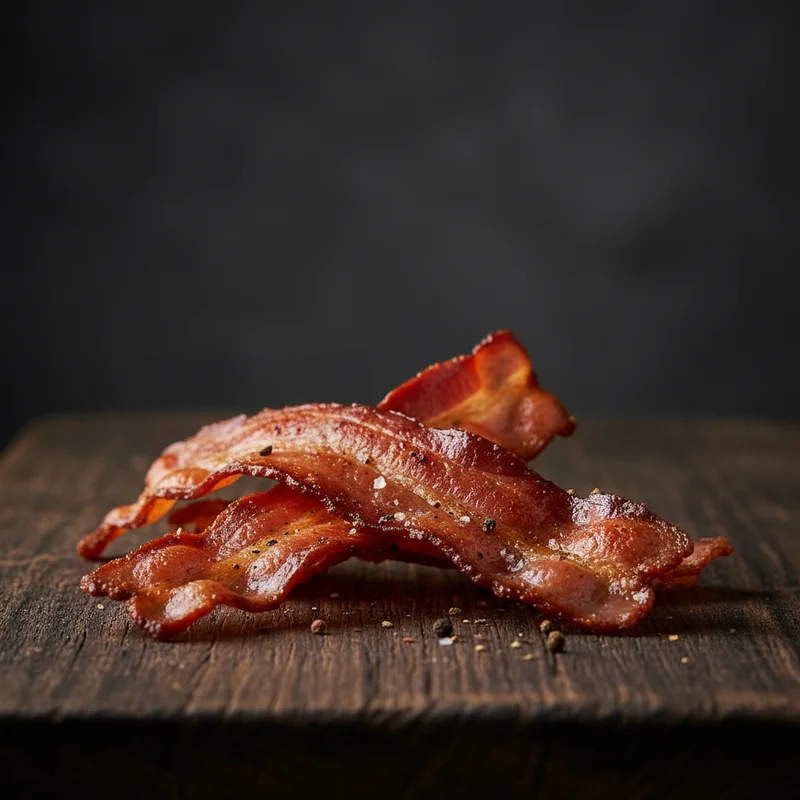
Bacon

Bacon

Cured pork product that improves everything it touches.

The Matchup

In the hierarchy of things humans claim to love, two entities occupy positions of remarkable prominence. 471 million dogs serve as companions across the globe, whilst bacon commands such devotion that Americans alone consume 1.7 billion pounds annually. Both inspire declarations of affection. Both feature prominently in internet culture. Yet one is a sentient being capable of complex emotional bonds, whilst the other is cured pork belly. The fact that this comparison exists at all reveals something rather troubling about human priorities.

Dogs represent Canis lupus familiaris, descendants of wolves who chose proximity to human settlements approximately 15,000 years ago. Bacon represents the belly section of Sus scrofa domesticus, transformed through salt-curing and smoke into what nutritionists describe as a processed meat product and what enthusiasts describe as a reason for living. One evolved alongside humanity. The other was invented by humanity. Both now compete for kitchen supremacy each morning.

Battle Analysis

Cultural significance Dog Wins
70%
30%
Dog Bacon

Dog

Dogs have occupied positions of cultural significance across virtually every human civilisation. Ancient Egyptians mummified dogs alongside pharaohs. The Greeks credited dogs with guarding the underworld. Dogs feature in the mythology, art, and literature of cultures spanning every inhabited continent. They have served as hunters, herders, guardians, and companions throughout recorded history.

In contemporary culture, dogs feature in idioms, literature, and as symbols of loyalty so embedded that their absence would require linguistic reconstruction.

Bacon

Bacon's cultural significance, whilst more recent, demonstrates remarkable intensity. The phrase 'bringing home the bacon' dates to the 12th century. Bacon features in religious dietary restrictions that have shaped civilisations. In contemporary internet culture, bacon achieved a period of memetic dominance during the early 2010s, inspiring bacon-themed products ranging from plausible (bacon jam) to concerning (bacon-scented cologne).

However, bacon's cultural footprint remains confined primarily to discussions of breakfast and novelty products. It has not inspired epic poetry or accompanied explorers to the poles.

VERDICT

Dogs have featured in human culture for millennia across all civilisations. Bacon's cultural peak involved being added to ice cream ironically.

Emotional intelligence Dog Wins
70%
30%
Dog Bacon

Dog

Dogs possess what neuroscientists describe as sophisticated cross-species emotional recognition. Research from the University of Lincoln demonstrates that dogs can match human vocalisations with appropriate facial expressions, indicating comprehension of emotional states across different sensory modalities. They respond to human distress with proximity-seeking behaviour, and studies using fMRI scanning reveal that dogs process human faces in dedicated neural regions analogous to those humans use for recognising other humans.

The hormone oxytocin increases in both dogs and humans during positive interactions, creating what researchers term a bidirectional bonding mechanism. Dogs have spent 15,000 years optimising their ability to read human emotional cues, and the results are measurably impressive.

Bacon

Bacon possesses no emotional intelligence whatsoever. It is rendered pig tissue. It cannot detect sadness, recognise facial expressions, or modify its behaviour based on human emotional states. It offers precisely the same experience whether its consumer has received a marriage proposal or a redundancy notice. This absolute indifference to circumstance is, to certain temperaments, rather refreshing.

Bacon provides what psychologists might term unconditional consistent sensory pleasure, albeit through an entirely different mechanism than emotional connection. It asks nothing of the consumer and judges nothing in return.

VERDICT

Bacon cannot tell when you are crying. It cannot position itself nearby during difficulty. Dogs detect and respond to human emotional states with scientifically documented accuracy.

Long term health impact Dog Wins
70%
30%
Dog Bacon

Dog

Dog ownership correlates with cardiovascular outcomes significant enough to warrant statements from the American Heart Association. A Swedish study tracking 3.4 million participants found dog ownership associated with a 33 percent reduction in mortality risk for individuals living alone. Dog owners demonstrate lower blood pressure, improved cholesterol profiles, and reduced rates of heart attack.

The mechanisms appear multifactorial: enforced physical activity through mandatory walks, stress reduction through companionship, and the establishment of daily routines that structure otherwise chaotic human lives. Dogs, through their demands, impose health upon their owners.

Bacon

The World Health Organisation classifies processed meat, including bacon, as a Group 1 carcinogen, a category shared with tobacco and asbestos. Regular bacon consumption has been associated with increased risks of colorectal cancer, cardiovascular disease, and type 2 diabetes. Each 50-gram serving of processed meat daily increases colorectal cancer risk by approximately 18 percent.

Bacon also contains approximately 42 milligrams of cholesterol and 135 milligrams of sodium per slice, contributing to the very cardiovascular conditions that dog ownership appears to prevent.

VERDICT

Dogs extend lifespan. Bacon, consumed regularly, may abbreviate it. The mathematics here are rather stark.

Morning activation capacity Dog Wins
70%
30%
Dog Bacon

Dog

The domestic dog serves as what researchers term a biological alarm system of exceptional reliability. Dogs requiring morning relief will employ increasingly insistent methods of human activation: direct staring, strategic positioning of cold nose against sleeping face, and vocalisations precisely calibrated to bypass the deepest sleep cycles. Studies indicate dog owners rise 23 minutes earlier on average than their petless counterparts, though whether this constitutes a benefit remains philosophically contentious.

The dog's morning activation requires no preparation, no equipment, and no electricity. It is, however, entirely non-negotiable. Weekends hold no meaning. Bank holidays pass unrecognised. The dog operates on a schedule determined by bladder capacity rather than human convenience.

Bacon

Bacon achieves morning activation through olfactory dominance. The Maillard reaction between amino acids and reducing sugars, occurring at temperatures above 140 degrees Celsius, produces volatile compounds that researchers have documented travelling through multiple rooms and penetrating closed doors. The scent of cooking bacon has been shown to increase heart rate and salivation within seconds of detection.

However, bacon's activation capacity depends entirely upon someone else being awake to cook it. Bacon cannot initiate its own preparation. It lies in refrigerated stasis until human intervention occurs, making it fundamentally passive in the morning ritual. It is the beneficiary of wakefulness, not its cause.

VERDICT

Bacon may provide compelling reasons to remain awake, but dogs ensure you achieve consciousness in the first instance. One cannot enjoy bacon whilst still asleep.

Availability and accessibility Bacon Wins
30%
70%
Dog Bacon

Dog

Dog acquisition involves considerable logistical complexity. Responsible ownership requires research into breed suitability, identification of reputable sources, completion of adoption processes, and initial investments ranging from $500 to $3,000 depending upon pedigree and source. The process from decision to dog-in-residence typically spans weeks to months.

Furthermore, dogs cannot be stored. They require continuous accommodation, and their needs do not pause for holidays, work commitments, or periods of personal difficulty. One cannot purchase a dog, place it in the freezer, and retrieve it when circumstances improve.

Bacon

Bacon demonstrates remarkable accessibility. It is available at virtually every supermarket, convenience store, and petrol station in the developed world. Prices range from $5 to $15 per pound, placing it within reach of most household budgets. The decision-to-consumption timeline can be measured in minutes rather than months.

Bacon also stores conveniently. Refrigerated bacon remains viable for weeks; frozen bacon for months. It makes no demands during storage and registers no complaints about conditions. Its accessibility approaches the universal.

VERDICT

Bacon can be acquired during a petrol station stop. Dog acquisition requires life restructuring. For pure accessibility, bacon wins decisively.

👑

The Winner Is

Dog

58 - 42

This analysis confronts what should be an obvious conclusion yet somehow requires documentation: a living companion outperforms a breakfast item. Dogs claim victory in four of five categories, losing only on availability, a metric where bacon's status as a purchasable commodity naturally provides advantage over a species requiring years of care.

The 58-42 margin reflects an uncomfortable truth. Bacon scores 42 points not because it genuinely competes with dogs across meaningful metrics, but because humans have elevated this particular configuration of cured pork to cultural heights that demand acknowledgment. The devotion inspired by bacon, the t-shirts, the internet declarations, the addition of bacon to fundamentally inappropriate foods, all suggest that what bacon lacks in objective merit it compensates for in irrational enthusiasm.

Dogs extend lifespan. Bacon may shorten it. Dogs provide emotional support. Bacon provides sodium. Dogs will greet you after a difficult day with genuine happiness. Bacon will greet you with nothing because it is incapable of greeting. The comparison exposes rather more about human priorities than perhaps intended.

Dog
58%
Bacon
42%

Share this battle

More Comparisons