
Topic Battle

Where Everything Fights Everything

Dog

Dog

Loyal canine companion celebrated for unconditional love, tail wagging, and being humanity's best friend for millennia.

VS
Banana

Banana

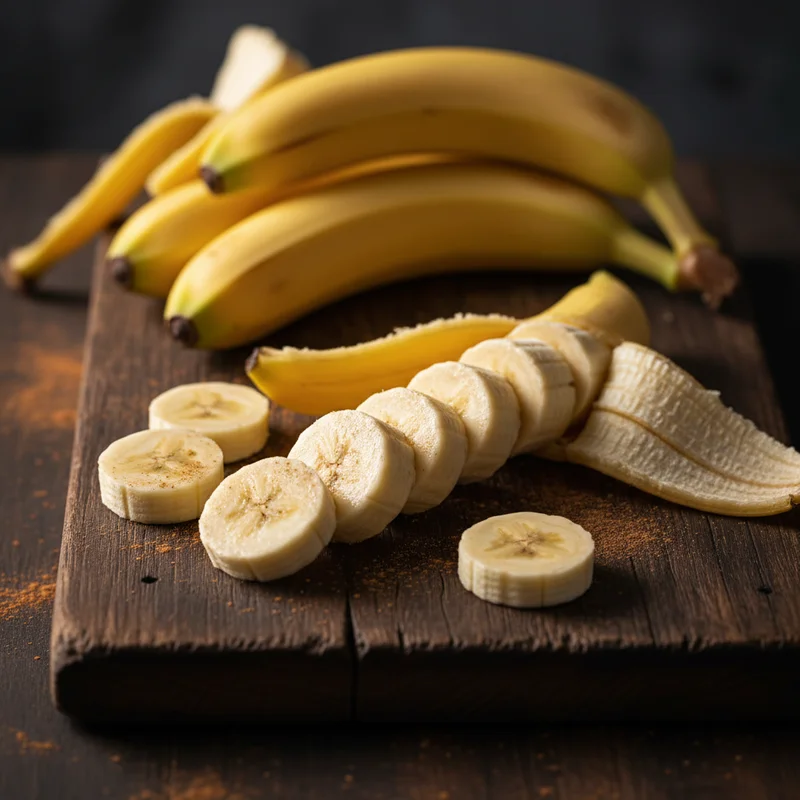
Yellow fruit with built-in packaging and comedy potential.

The Matchup

In the grand taxonomy of things humans keep in their homes, few pairings seem less comparable than the domestic dog and the Musa acuminata, commonly known as the banana. One has co-evolved with humanity over 15,000 years of deliberate domestication, developing an uncanny ability to interpret human emotional states and respond with tail-based communication protocols. The other ripens on a kitchen counter, progressing through a colour spectrum from green to brown with mathematical predictability, requiring no emotional investment whatsoever.

Yet both occupy essential positions in modern domestic life. Global banana production exceeds 150 million tonnes annually, making it the world's most popular fruit. Meanwhile, 471 million dogs serve as companions worldwide, representing an extraordinary commitment of human resources to a species that cannot be consumed without significant social consequences. This analysis applies rigorous comparative methodology to determine which entity delivers superior value to the human condition.

The investigation proceeds without prejudice, though one contestant possesses the capacity to feel prejudice and the other possesses only Musa sapientum genetics.

Battle Analysis

Durability Dog Wins
70%
30%
Dog Banana

Dog

The domestic dog demonstrates a lifespan ranging from 10 to 13 years for most breeds, with smaller varieties occasionally exceeding 15 years under optimal care conditions. During this operational period, the dog maintains continuous functionality, responding to commands, providing companionship, and adapting its behaviour to household requirements. Repair and maintenance occur through veterinary intervention, with annual check-ups recommended and emergency services available for acute malfunction.

Dogs display remarkable resilience to environmental conditions, having accompanied humans across arctic tundra, tropical rainforests, and the full spectrum of biomes between. Their self-repair capabilities include wound healing, bone knitting, and immune responses that neutralise most pathogenic threats without external intervention.

The psychological durability of dogs proves equally impressive. Studies indicate that dogs recover from traumatic experiences more rapidly than humans, displaying what veterinary behaviourists term adaptive emotional resilience.

Banana

The banana exists in a state of accelerated temporal decay. From the moment of harvest, enzymatic processes begin converting starches to sugars whilst the peel progresses through its characteristic colour changes. At room temperature, the window of optimal consumption spans approximately 3 to 5 days. Beyond this period, brown spotting indicates cellular breakdown, and the fruit transitions from food item to compost material.

Refrigeration extends this timeline marginally whilst inducing peel discolouration that consumers find psychologically off-putting despite having no effect on internal quality. Freezing preserves the banana indefinitely but produces a textural outcome suitable only for smoothie incorporation.

A banana cannot repair itself. Bruising is permanent. Splitting is irreversible. The fruit lacks any mechanism for responding to damage beyond continued decomposition. Its durability, in practical terms, measures in days rather than years.

VERDICT

The dog's decade-plus operational lifespan compared to the banana's week-scale viability represents a durability differential exceeding 500:1. Dogs may require maintenance, but they persist. Bananas merely delay their inevitable return to organic matter.

Portability Banana Wins
30%
70%
Dog Banana

Dog

The domestic dog presents what transportation engineers classify as a variable-mass mobility challenge. Breed-dependent weight ranges from 1.5 kilograms for the Chihuahua to 90 kilograms for the English Mastiff, with corresponding transportation requirements scaling accordingly. Smaller specimens may be carried in specialised bags permitted aboard commercial aircraft. Larger variants require dedicated vehicle space and frequently object to prolonged vehicular confinement through vocalisations.

International dog transportation involves veterinary documentation, quarantine considerations, and airline policies that vary by carrier and destination. A journey from London to Sydney with canine accompaniment requires minimum preparation time of three months and expenditure exceeding the cost of the human ticket.

Dogs can, admittedly, transport themselves through ambulation. This capability, whilst impressive, operates at approximately 5-10 kilometres per hour for sustained travel and requires rest stops, hydration, and negotiation of traffic systems designed without canine pedestrians in mind.

Banana

The banana represents a triumph of portable nutrition. The average specimen weighs 120 grams, fits comfortably in any bag, pocket, or hand, and requires no documentation for international transport beyond standard agricultural declarations. Its natural packaging, the peel, provides impact protection superior to most manufactured food containers whilst remaining fully biodegradable.

A banana may be transported from Ecuador to London in refrigerated shipping containers holding 1,200 boxes per container, arriving in edible condition after a 14-day oceanic journey. No banana has ever required a comfort stop. No banana has expressed anxiety about thunderstorms during transit.

The fruit's curved shape, once considered a design inefficiency, actually optimises hand-grip during transport and consumption. Ergonomic analysis confirms the banana as naturally engineered for human portability.

VERDICT

The banana achieves uncontested victory in portability assessment. Whilst dogs possess self-locomotion, this advantage cannot compensate for the logistical complexity their transport demands. One may pocket a banana. One cannot pocket a Labrador.

Affordability Banana Wins
30%
70%
Dog Banana

Dog

Dog ownership initiates with acquisition costs ranging from free (shelter adoption, neighbourhood litter) to $3,000 or more for pedigreed specimens from championship bloodlines. This initial expenditure, however, represents merely the commencement of a decade-long financial commitment. The ASPCA estimates annual dog ownership costs between $1,500 and $4,500, encompassing food, veterinary care, grooming, accessories, and the replacement of household items destroyed during canine recreational activities.

Lifetime cost calculations for a medium-sized dog exceed $15,000 to $50,000 depending on breed, health status, and owner tolerance for premium products. Emergency veterinary care represents a particular financial vulnerability, with single surgical interventions potentially exceeding the original acquisition cost by an order of magnitude.

Dogs also impose opportunity costs. Travel becomes complicated. Spontaneity diminishes. Housing options narrow to pet-friendly accommodations commanding rental premiums.

Banana

The banana operates within an economic model of remarkable efficiency. Retail pricing averages $0.20 to $0.60 per unit in developed markets, representing one of the lowest costs-per-calorie available in the produce section. No ongoing expenses follow purchase. No veterinary care is required. No accessories beyond optional bowl placement are expected.

Even aggressive banana consumption, averaging one fruit daily, produces annual expenditure of approximately $73 to $219. This sum would not cover three months of dog food for a medium-sized breed. The banana demands no deposit, no licensing fee, and no proof of suitable living conditions.

The banana does not depreciate during ownership. Its value at consumption equals its value at purchase, minus the imperceptible decay occurring between transactions. It is, in economic terms, a pure consumable with zero carrying cost.

VERDICT

Annual banana expenditure for daily consumption remains below one percent of minimum dog ownership costs. The banana achieves a cost-efficiency that renders the comparison almost absurd, though we present this finding with appropriate seriousness.

Nutritional value Banana Wins
30%
70%
Dog Banana

Dog

The dog provides no nutritional value within the context of conventional Western dietary frameworks. Whilst certain cultures maintain traditions of canine consumption, the practice remains socially unacceptable across most of the dog's primary companion markets. Regulatory frameworks in these regions classify dogs as companion animals rather than food sources, with consumption potentially triggering legal consequences.

Beyond the ethical and legal constraints, dogs present practical nutritional challenges. They do not ripen. They resist being eaten. Their nutritional processing would require infrastructure that companion animal owners typically lack. The dog's nutritional contribution to human health occurs only indirectly, through the exercise benefits of walking and the stress reduction of companionship.

A dog cannot be incorporated into a smoothie, sliced onto cereal, or baked into bread. Its nutritional value, in direct terms, equals precisely zero for compliant consumers.

Banana

The banana delivers what nutritional science classifies as an exceptionally balanced micronutrient package. A medium specimen provides approximately 110 calories, 450 milligrams of potassium (13 percent of daily requirements), vitamin B6 (25 percent of daily requirements), and 3 grams of dietary fibre. The natural sugar content provides rapid energy release whilst the fibre moderates glycaemic response.

Athletes consume bananas for potassium-mediated muscle function support. Hospitals serve bananas as easily digestible nutrition for recovering patients. The fruit's soft texture makes it accessible to infants and elderly individuals with dental limitations.

Beyond individual consumption, bananas contribute to global food security, providing affordable calories in regions where protein sources remain economically inaccessible. The fruit is, in developmental terms, a democratised nutrition source.

VERDICT

The banana delivers quantifiable nutrition. The dog delivers none that can be legally or ethically accessed. This criterion produces the most unambiguous result in the analysis, with the banana achieving complete victory.

Emotional support capacity Dog Wins
70%
30%
Dog Banana

Dog

The domestic dog has evolved into what neuroscientists describe as an interspecies emotional support system. Research from multiple institutions confirms that dogs can detect human emotional states through facial expression analysis, vocal tone interpretation, and potentially olfactory signals associated with stress hormones. Studies indicate dogs correctly identify human emotions with accuracy exceeding 75 percent, a rate surpassing that of many human relatives.

Physical interaction with dogs triggers measurable hormonal responses in humans. Oxytocin levels increase during positive dog-human contact, whilst cortisol decreases. This biochemical exchange creates what researchers term a mutual bonding feedback loop, wherein both species experience physiological rewards for continued association.

Dogs provide consistent presence during periods of human distress. They do not offer unsolicited advice. They do not minimise concerns. They simply position themselves within proximity and maintain that position until the crisis passes. Therapeutic applications of this capability have produced documented benefits for anxiety, depression, and post-traumatic stress conditions.

Banana

The banana offers no emotional support in any recognised clinical or colloquial definition. It cannot detect human emotional states. It cannot modify its behaviour in response to human needs. It cannot provide the physical warmth associated with mammalian companionship. Upon consumption, it ceases to exist entirely, making follow-up support structurally impossible.

Some individuals report minor mood improvement following banana consumption, attributable to the fruit's tryptophan content and the associated serotonin synthesis pathway. This biochemical effect, however, represents nutrition rather than emotional support, comparable to the mood effects of any caloric intake during hunger states.

A banana cannot distinguish between a human celebrating promotion and a human processing grief. It offers identical response to both scenarios: continued ripening, followed by consumption, followed by non-existence. Its emotional intelligence registers precisely at zero.

VERDICT

The dog's capacity for emotional recognition and responsive comfort represents a categorical advantage the banana cannot contest. One cannot cry on a banana and receive acknowledgment. One cannot receive a banana's welcoming enthusiasm upon returning home.

👑

The Winner Is

Dog

62 - 38

This investigation has compared two entities that share little beyond their presence in human households. The banana claims decisive victories in portability, affordability, and nutritional value, categories where its nature as a simple, consumable fruit provides inherent advantages. It asks nothing of its owners, requires no walking, and never develops separation anxiety. It ripens, it nourishes, and it disappears without complication.

The dog, however, dominates in durability and emotional support capacity, categories that speak to long-term value rather than transactional convenience. A banana provides a moment of nutrition. A dog provides a decade of companionship. A banana cannot greet you at the door. A dog cannot provide potassium.

The final scoring of 62-38 in favour of the dog reflects a fundamental philosophical position: that entities capable of reciprocal relationships ultimately prove more valuable to human flourishing than those that merely fuel it. The banana serves its purpose admirably, but it cannot love you back. This limitation, whilst reasonable for a fruit, proves decisive in comparative assessment.

Dog
62%
Banana
38%

Share this battle

More Comparisons