Topic Battle

Where Everything Fights Everything

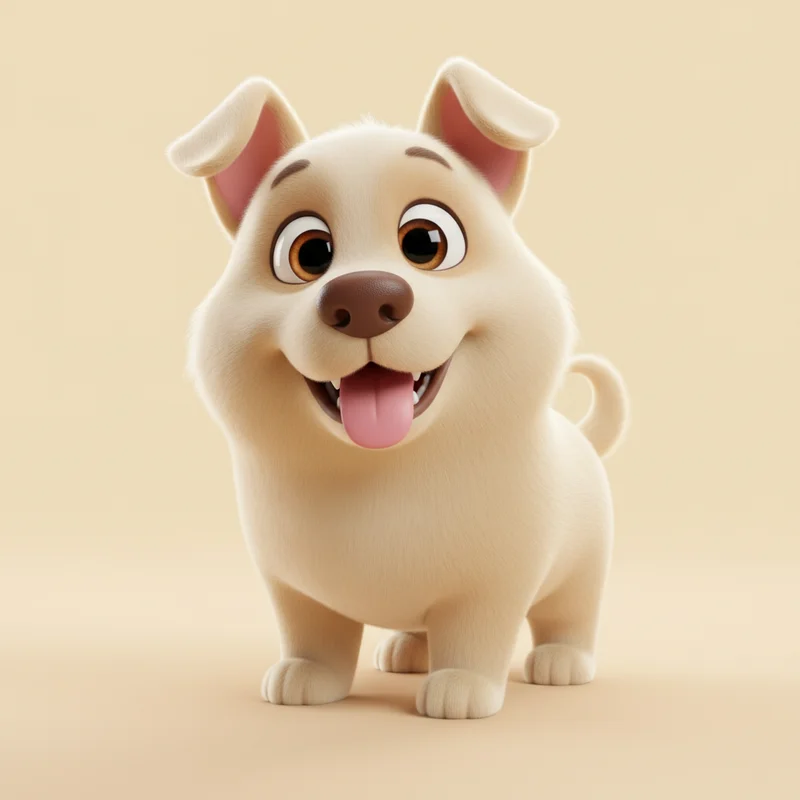
Dog

Dog

Loyal canine companion celebrated for unconditional love, tail wagging, and being humanity's best friend for millennia.

VS
Beer

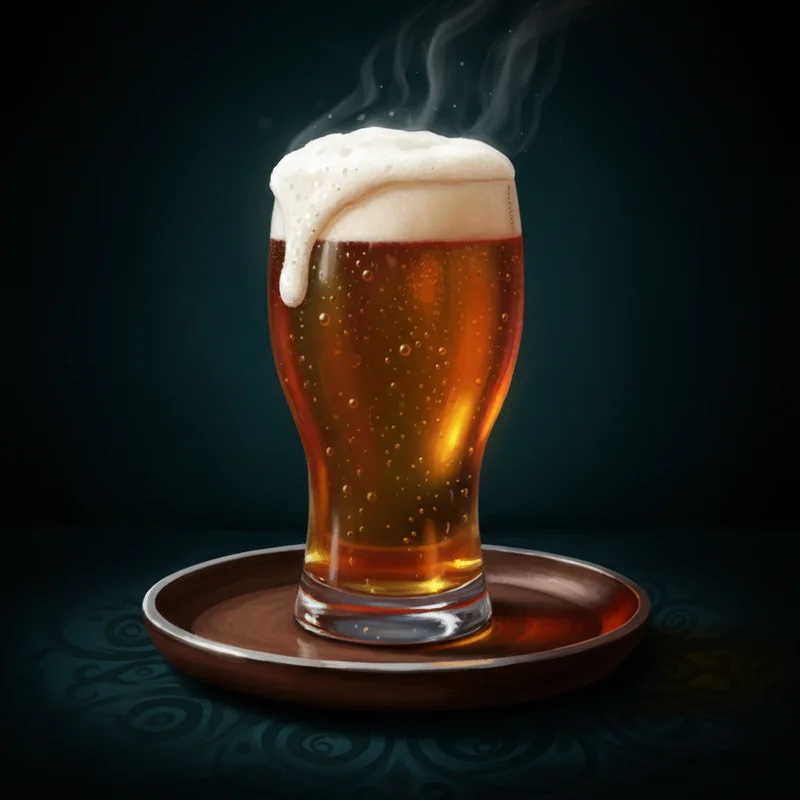
Beer

Fermented grain beverage and social lubricant of civilizations.

The Matchup

Across civilisations and centuries, humans have sought solace in two remarkably different companions. 471 million dogs currently share homes with human families worldwide, whilst 189 billion litres of beer flow through taps, bottles, and cans annually. Both promise relief from the burdens of consciousness. Both have inspired poetry, art, and questionable decision-making. Yet they operate through mechanisms so fundamentally different that comparing them seems almost absurd. Almost.

The dog delivers its benefits through 15,000 years of evolutionary fine-tuning, having adapted from wolf to companion through a process of mutual domestication that altered both species' brain chemistry. Beer, meanwhile, deploys ethanol-mediated GABA receptor modulation, a biochemical intervention humans stumbled upon roughly 13,000 years ago when some fortunate Mesopotamian discovered that fermented grain produced feelings of wellbeing and regrettable singing. One requires walks, veterinary appointments, and the tolerance of fur on furniture. The other requires only a bottle opener and lowered expectations for the following morning.

Battle Analysis

Long term health impact Dog Wins
70%
30%
Dog Beer

Dog

Dog ownership correlates with cardiovascular outcomes significant enough to draw endorsement from the American Heart Association. A Swedish study tracking 3.4 million participants found dog ownership associated with 33 percent reduced mortality risk for individuals living alone. The mechanisms are multifactorial: enforced physical activity from mandatory walks, stress reduction through companionship, and the establishment of routines that structure otherwise chaotic human existence.

Dogs also provide measurable benefits to mental health. Owners report lower rates of depression and anxiety. The elderly with pets demonstrate slower cognitive decline. Children raised with dogs develop stronger immune systems and fewer allergies. The dog, it appears, is good for nearly every human system.

Beer

The epidemiological literature on beer consumption presents a J-shaped mortality curve that confounds simple interpretation. Moderate consumption, defined as one to two units daily, correlates with reduced cardiovascular events compared to complete abstention. Peer-reviewed meta-analyses suggest light beer drinkers may live slightly longer than teetotallers, though researchers continue debating whether this reflects causation or confounding lifestyle factors.

However, the curve turns sharply upward at higher consumption. Liver damage, neurological impairment, increased cancer risk, and a catalogue of social harms accumulate with excessive use. The World Health Organisation notes that alcohol contributes to three million deaths annually, a statistic that significantly undermines beer's position in any health-focused comparison.

VERDICT

Beer offers narrow potential benefits within strict consumption limits. Dogs offer broad health benefits that scale positively with engagement rather than negatively with excess.

Versatility of function Dog Wins
70%
30%
Dog Beer

Dog

The domestic dog has been bred into the most functionally diverse animal on Earth. Guard dogs protect. Therapy dogs heal. Service dogs guide. Search and rescue dogs save lives. Police dogs detect substances no human nose could identify. Herding dogs manage livestock with precision that would require multiple human workers. The range of documented canine capabilities spans security, healthcare, agriculture, entertainment, and companionship, often simultaneously.

Even the average pet dog performs multiple functions: home security through bark-based deterrence, exercise motivation through non-negotiable walk requirements, social facilitation through public adorability, and emotional support through persistent presence.

Beer

Beer serves a narrower functional range, though its proponents argue for remarkable depth within that range. As a beverage, beer hydrates, provides modest nutritional content, and delivers psychoactive effects. As a social tool, it facilitates bonding, celebration, and commiseration. As a cultural artefact, it supports tourism, artisanal craft movements, and centuries of brewing tradition.

Beer also finds application in cooking, where it tenderises meat and adds flavour complexity. More creatively, it serves as slug bait, hair conditioner, and rust remover, though these applications remain tangential to its primary purpose of making humans temporarily less concerned with their problems.

VERDICT

Beer excels within its domain but remains fundamentally a single-category competitor. Dogs operate across so many domains that they defy simple classification.

Stress reduction efficacy Dog Wins
70%
30%
Dog Beer

Dog

The domestic dog functions as a biological stress intervention system of remarkable sophistication. Physical contact with dogs triggers measurable decreases in cortisol, the hormone responsible for the sensation that everything is terrible and getting worse. Research from Washington State University demonstrated that just ten minutes of dog interaction produces significant cortisol reduction in stressed university students, a population whose baseline cortisol levels researchers describe as chronically elevated.

Moreover, dogs provide what psychologists term non-judgmental positive regard. A dog does not care about your performance review. It does not form opinions about your lifestyle choices. It is simply, persistently, delighted by your existence. This unconditional acceptance operates as a psychological buffer against the conditional nature of most human relationships.

Beer

Beer achieves stress reduction through direct neurochemical intervention. Ethanol enhances the effects of GABA, the neurotransmitter responsible for inhibiting neural activity, producing sensations of relaxation that researchers diplomatically characterise as anxiolytic. A single pint can reduce perceived stress by measurable margins within twenty minutes of consumption, a speed of action that no dog, however enthusiastic, can match.

However, beer's stress reduction follows a problematic trajectory. The initial relaxation gives way to impaired judgement, followed by disrupted sleep architecture, culminating in a morning state that researchers have classified as significantly more stressful than the original condition. The loan shark of neurotransmitters, beer charges interest.

VERDICT

Beer provides faster stress relief, but creates tomorrow's stress whilst solving today's. Dogs provide sustainable cortisol management without subsequent biochemical revenge.

Social bonding facilitation Beer Wins
30%
70%
Dog Beer

Dog

Dogs transform their owners into nodes of spontaneous social connection. Studies in the Journal of Social Psychology document that dog walkers receive three times more social approaches from strangers than solo pedestrians. Dog parks function as community centres where humans who share nothing but proximity to defecating animals discover unexpected friendship. The dog serves as conversation catalyst, ice-breaker, and common ground.

Furthermore, dogs facilitate relationships through their demands. The owner who must walk regardless of weather, regardless of inclination, becomes known to neighbours. The regular at the park. The familiar face on the morning route. Community forms around routine presence, and dogs enforce routine presence.

Beer

Beer has lubricated human social interaction since civilisation began. The public house, the biergarten, the sports bar, these institutions exist specifically to combine alcohol with company. Beer provides what sociologists term licensed disinhibition, a socially sanctioned lowering of barriers that permits conversation between strangers who would otherwise maintain proper British reserve. 90 percent of surveyed adults report that moderate alcohol consumption helps them relax in social situations.

The shared round represents a binding social contract. To buy someone a drink is to declare affiliation. To accept is to acknowledge belonging. Beer creates the temporary communities of the evening, even if those communities struggle to remember each other's names the following week.

VERDICT

Dogs build durable community connections, but beer enables immediate social bonding with a broader range of potential companions. The pub welcomes all; the dog park requires dog ownership.

Reliability of companionship Dog Wins
70%
30%
Dog Beer

Dog

The dog has earned its title as humanity's most reliable companion through fifteen millennia of demonstrated loyalty. Dogs do not cancel plans. They do not become distracted by more interesting opportunities. They do not require the mood to be right before offering affection. Research indicates dogs can detect human emotional states with accuracy exceeding 75 percent and respond with appropriate supportive behaviour. They wait by doors. They remember your return time. They celebrate your existence daily, regardless of whether you deserve celebration.

This reliability comes with demands. Dogs require feeding on schedule. They require walks regardless of weather. They require attention when attention may be inconvenient. But the contract is clear and consistently honoured on the canine side.

Beer

Beer offers transactional reliability. It is available when purchased. It delivers its effects as advertised. It does not require emotional investment or suffer feelings of neglect when stored in the refrigerator for extended periods. A beer will wait indefinitely for consumption without developing separation anxiety or destroying furniture.

However, beer's reliability extends only to the immediate transaction. It does not remember your preferences. It does not celebrate your achievements. It does not comfort you with its presence during difficulty. The relationship, if it can be called that, is entirely one-directional. Beer is reliable in the manner of a vending machine, not a companion.

VERDICT

Beer is reliably available. Dogs are reliably devoted. The distinction matters enormously when what you seek is companionship rather than mere refreshment.

👑

The Winner Is

Dog

55 - 45

This analysis reveals a competition between entities occupying fundamentally different categories of human experience. Beer offers a reliable transaction, a beverage that delivers its promised effects without demanding ongoing commitment. Dogs offer a genuine relationship, one that requires investment but returns dividends no fermented grain can match.

The scoring reflects the asymmetry of their contributions to human flourishing. Beer claims social facilitation, where its role in pub culture and celebration remains unmatched by canine companionship. Dogs dominate the remaining categories: stress reduction without consequence, health benefits without dose-dependent reversal, reliability that extends beyond the transactional, and versatility that encompasses the full range of human needs.

The 55-45 margin acknowledges beer's legitimate place in human culture whilst recognising that dogs provide something beer cannot: unconditional positive regard from another conscious being. Both have earned their status as beloved companions. But only one will wait by the door, overjoyed at your return, asking nothing but the continuation of your existence.

Dog
55%
Beer
45%

Share this battle

More Comparisons