Topic Battle

Where Everything Fights Everything

Dog

Dog

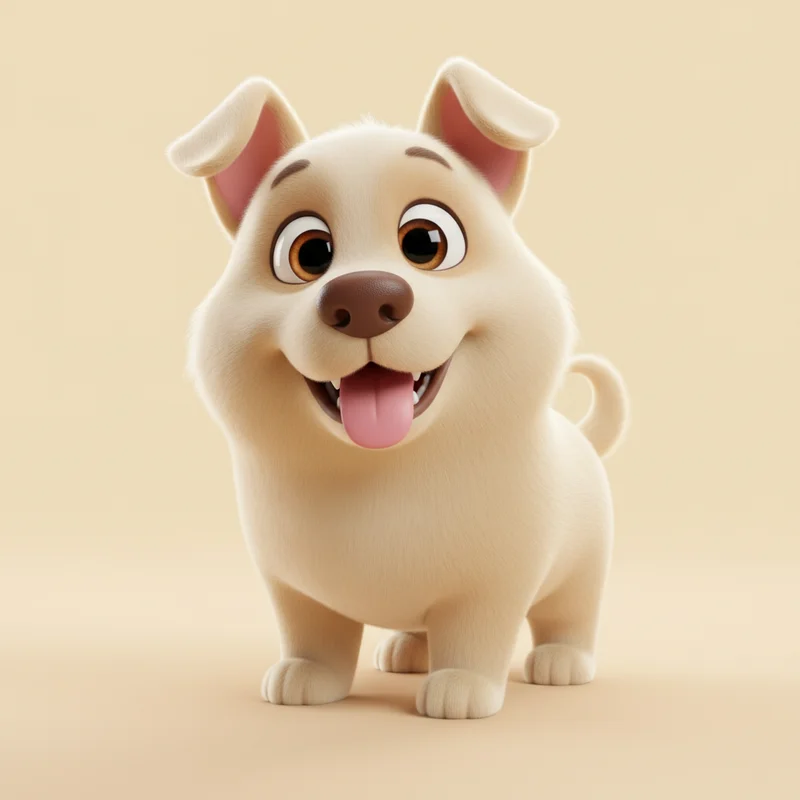
Loyal canine companion celebrated for unconditional love, tail wagging, and being humanity's best friend for millennia.

VS
Bubble Tea

Bubble Tea

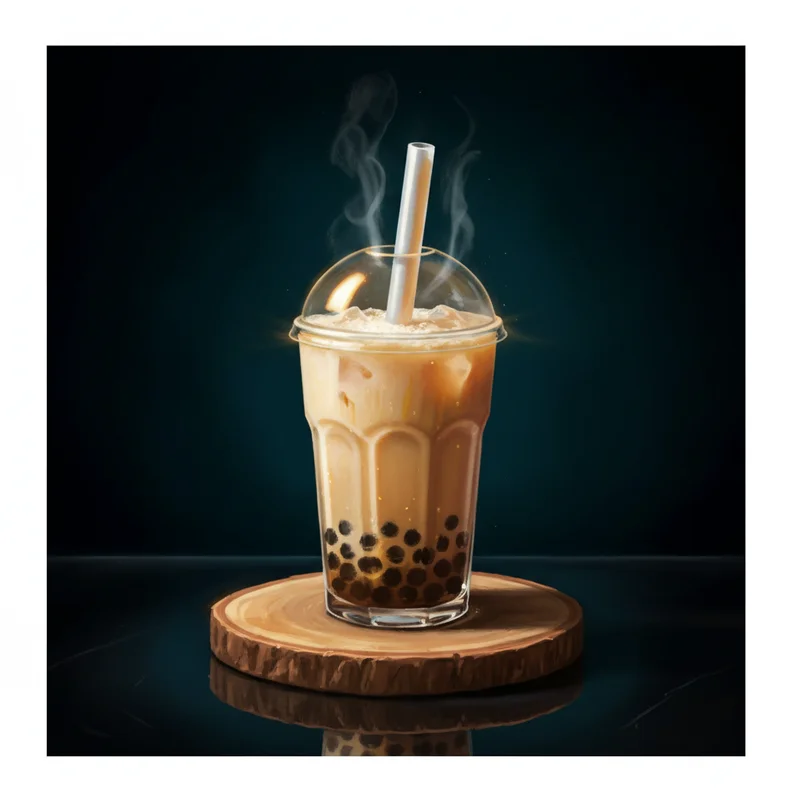
Taiwanese tea with chewy tapioca pearls.

The Matchup

In the contemporary landscape of human devotion, two entities command extraordinary levels of dedication from their adherents. The domestic dog, Canis lupus familiaris, has maintained its position as humanity's preferred non-human companion for approximately 15,000 years. Bubble tea, the Taiwanese innovation combining tea, milk, and tapioca pearls, has achieved global dominance in merely four decades, generating a market valued at $3.4 billion annually.

Both inspire queuing behaviour. Both prompt social media documentation. Both have spawned merchandise, dedicated establishments, and occasionally concerning levels of emotional attachment. Yet these objects of human affection operate through entirely different mechanisms of appeal. One wags its tail upon your return from a brief visit to the postbox. The other provides precisely calibrated sugar delivery through an oversized straw. The question of which merits greater devotion demands rigorous investigation.

Battle Analysis

Health impact Dog Wins
70%
30%
Dog Bubble Tea

Dog

The health benefits of dog ownership have accumulated sufficient evidence to prompt official statements from cardiovascular organisations. A comprehensive Swedish study tracking 3.4 million participants over twelve years found dog ownership associated with a 33 percent reduction in mortality for single-person households. The mechanisms appear multifactorial: enforced physical activity through required walks, reduced stress through companionship, and improved cardiovascular markers through the simple act of petting.

Dog ownership also correlates with enhanced immune function in children, reduced rates of allergic conditions, and improved mental health outcomes across demographic categories. The dog functions as a prescription for wellness that does not require pharmacy collection.

Bubble Tea

Bubble tea presents what nutritionists describe as caloric density challenges. A standard 500ml serving containing full sugar and tapioca pearls delivers approximately 400-600 calories, equivalent to a modest meal. The pearls themselves contribute primarily as simple carbohydrates, offering minimal nutritional complexity beyond energy provision. Regular consumption patterns observed in devoted adherents suggest weekly caloric contributions that merit consideration in dietary planning.

Research from Singapore's Health Promotion Board identified bubble tea as a significant contributor to sugar intake among younger demographics, prompting public health messaging campaigns. The beverage's health impact, it must be noted, trends in directions opposite to those of canine companionship.

VERDICT

Dogs correlate with extended lifespan and improved cardiovascular function. Bubble tea correlates with caloric surplus and dental concerns. The health mathematics are unambiguous.

Aesthetic appeal Bubble Tea Wins
30%
70%
Dog Bubble Tea

Dog

The visual appeal of dogs operates through mechanisms researchers describe as kindchenschema activation, the same large-eye, rounded-feature proportions that trigger nurturing responses toward human infants. This evolutionary hijacking ensures that humans find dogs visually compelling despite, or perhaps because of, their functional uselessness in modern contexts. A dog sleeping in a sunbeam generates genuine emotional responses in observers who would remain unmoved by equally purposeless human activity.

However, dogs present aesthetic variability that complicates consistent documentation. The same animal can appear majestically photogenic in morning light and deeply unfortunate when captured mid-sneeze. Their appearance requires no maintenance beyond that which the owner provides.

Bubble Tea

Bubble tea has been engineered for visual consumption as much as oral. The gradient layering of milk and tea, the visible suspension of tapioca pearls, the condensation patterns on transparent cups, these elements combine to create what marketing professionals term Instagram optimality. A 2022 analysis of social media trends identified bubble tea among the top ten most photographed beverages globally, outperforming traditional competitors including wine and craft cocktails.

The aesthetic consistency is remarkable. Every cup presents as a designed object, its proportions and colours calibrated for maximum visual appeal. Unlike dogs, bubble tea does not unexpectedly roll in substances that compromise its photogenic qualities.

VERDICT

Bubble tea delivers consistent aesthetic performance suitable for documentation. Dogs deliver variable results requiring significant photographic effort and occasional emergency bathing.

Social connectivity Dog Wins
70%
30%
Dog Bubble Tea

Dog

Dogs function as what sociologists term social catalysts, objects that facilitate human interaction that would not otherwise occur. Research published in the Journal of Social Psychology demonstrates that individuals accompanied by dogs receive three times more approaches from strangers than those walking alone. Dog parks serve as community centres where humans discover common ground through their animals' sniffing preferences. The shared experience of dog ownership creates instant conversational common ground between otherwise disconnected individuals.

Dogs create community involuntarily and continuously, simply by existing and requiring outdoor excursions.

Bubble Tea

Bubble tea generates social connectivity through shared cultural participation. The beverage has evolved beyond mere refreshment into a generational marker, a symbol of participation in contemporary taste culture that signals belonging to specific demographic and aesthetic communities. Queuing for bubble tea at popular establishments constitutes a shared experience discussed, documented, and mutually understood by participants.

However, bubble tea consumption permits isolation in ways dog ownership cannot. One may consume bubble tea alone in one's residence without social interaction. One cannot own a dog without eventually encountering other humans during required outdoor activities.

VERDICT

Dogs create mandatory and recurring social connections. Bubble tea permits social participation but does not require it.

Financial commitment Bubble Tea Wins
30%
70%
Dog Bubble Tea

Dog

Dog ownership represents what economists term a long-term capital and operating expense commitment. Initial acquisition costs range from nominal (rescue adoption fees) to substantial (pedigree purchase prices exceeding several thousand pounds). Annual operating costs encompassing food, veterinary care, insurance, grooming, and accessories average $1,500 to $4,500 depending on breed size and medical requirements. A dog's typical lifespan of 10-15 years thus represents a total investment potentially exceeding the value of a modest automobile.

Emergency veterinary interventions can introduce unexpected five-figure expenses with minimal notice. The financial commitment is, in the language of contracts, open-ended and non-negotiable.

Bubble Tea

Bubble tea operates on a pay-per-use model that appeals to commitment-averse consumers. Individual servings range from $4 to $8 in Western markets, with premium variants commanding higher prices. A dedicated consumer purchasing three beverages weekly accumulates annual expenditure of approximately $600-1,200, a sum that permits immediate cessation should circumstances or preferences change.

No emergency bubble tea expenses exist. The beverage does not require insurance, annual check-ups, or replacement of items destroyed during episodes of separation anxiety. Financial commitment terminates with each transaction.

VERDICT

Bubble tea offers flexible commitment without ongoing obligation. Dog ownership demands financial dedication across years regardless of changing circumstances.

Loyalty and consistency Dog Wins
70%
30%
Dog Bubble Tea

Dog

The domestic dog represents perhaps the most successful example of interspecies loyalty engineering in biological history. Studies utilising functional MRI scanning demonstrate that dogs process their owners' scent in the caudate nucleus, the brain region associated with positive expectations and reward. A dog separated from its owner for five minutes will greet their return with enthusiasm indistinguishable from that displayed after a five-day absence. This consistency of affection operates independently of the owner's professional success, physical appearance, or recent decisions.

Research published in Animal Cognition confirms that dogs preferentially approach humans displaying distress, suggesting an innate orientation toward emotional support provision. They do not judge. They do not remember that unfortunate incident at the office party. They simply remain present.

Bubble Tea

Bubble tea offers a different species of consistency: reproducible sensory experience. A taro milk tea with half sugar and extra pearls ordered in London will deliver substantially the same experience as its counterpart in Taipei. This standardisation provides comfort to consumers navigating an unpredictable world. The drink will not have opinions about your lifestyle choices. It will not require explanation of why you have returned home at an unusual hour.

However, bubble tea's loyalty extends only to the duration of its consumption. Approximately twenty minutes after purchase, the relationship concludes with the hollow sound of straw against empty cup. The beverage has no memory of your custom, no recognition of your return. Each transaction begins precisely where the last ended: nowhere.

VERDICT

Dogs provide continuous loyalty across time. Bubble tea provides loyalty measurable in the minutes required for consumption. The temporal mathematics favour the canine.

👑

The Winner Is

Dog

58 - 42

This analysis reveals a competition between fundamentally different modes of devotion. Bubble tea excels as a controlled indulgence, a predictable pleasure that demands nothing beyond its purchase price and imposes no obligations after consumption. Dogs operate as life-restructuring commitments, entities that transform daily routines, social patterns, and long-term health outcomes through their simple presence and persistent requirements.

The 58-42 scoring reflects the weight of evidence across categories of genuine human importance. Dogs claim decisive victories in loyalty, health impact, and social connectivity, the domains that most significantly affect human flourishing over extended timeframes. Bubble tea secures aesthetic appeal and financial flexibility, advantages that matter more in immediate gratification calculations than in long-term life satisfaction metrics.

The dog's victory is not merely numerical but philosophical. Bubble tea asks nothing and, consequently, transforms nothing. Dogs demand everything and, through their demands, offer something bubble tea's perfectly calibrated sweetness cannot provide: a relationship that persists beyond the moment of consumption.

Dog
58%
Bubble Tea
42%

Share this battle

More Comparisons