
Dog
The average domestic dog maintains functional operation for 10 to 13 years, depending upon breed, size, and quality of veterinary intervention. Smaller breeds often exceed 15 years of service, whilst larger breeds may depreciate more rapidly due to increased cardiovascular and skeletal demands. Throughout this operational period, dogs typically improve in utility as training accumulates and behavioural patterns stabilise.
This longevity creates what economists term compound emotional returns. Each year of cohabitation deepens the bond, enhances mutual understanding, and increases the dog's capacity to anticipate and respond to owner requirements.
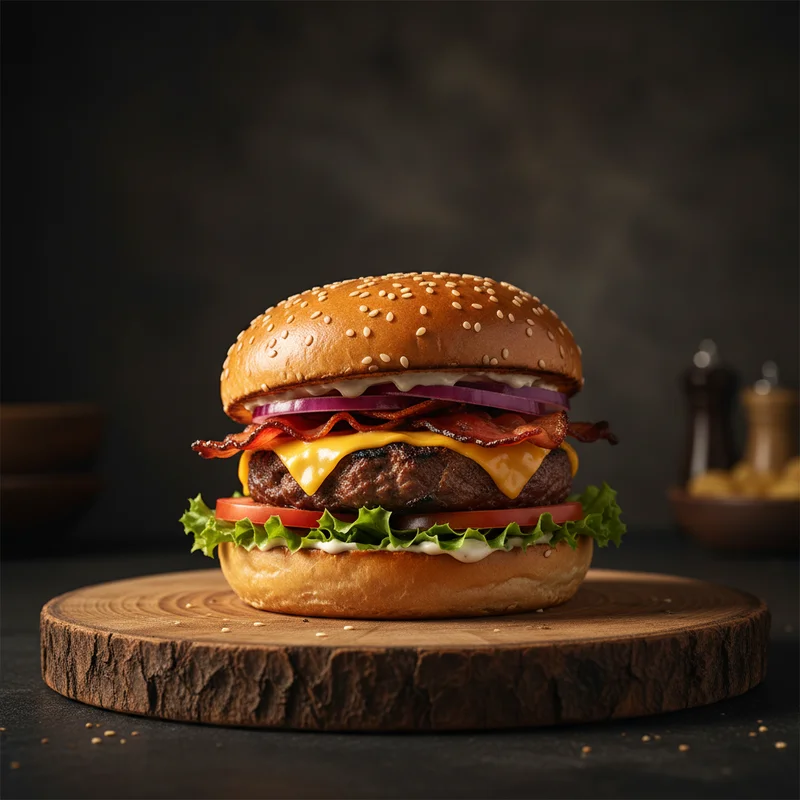
Burger
The burger's operational lifespan presents significant constraints. From moment of assembly, a burger begins thermal degradation. Optimum consumption occurs within seven to twelve minutes of production, after which structural integrity declines precipitously. The bun absorbs moisture, the lettuce wilts, and the cheese adopts a texture that food scientists describe as unappealingly gelatinous.
Refrigeration extends theoretical viability to 3-4 days, though the resulting product bears little resemblance to its freshly prepared state. Attempts to preserve burgers indefinitely produce outcomes documented in several viral internet experiments, none of which inspire confidence in the format's durability.
VERDICT
A dog provides over a decade of continuous service. A burger provides approximately ten minutes of optimum experience before entering irreversible decline.